What Barefoot Sound Makes
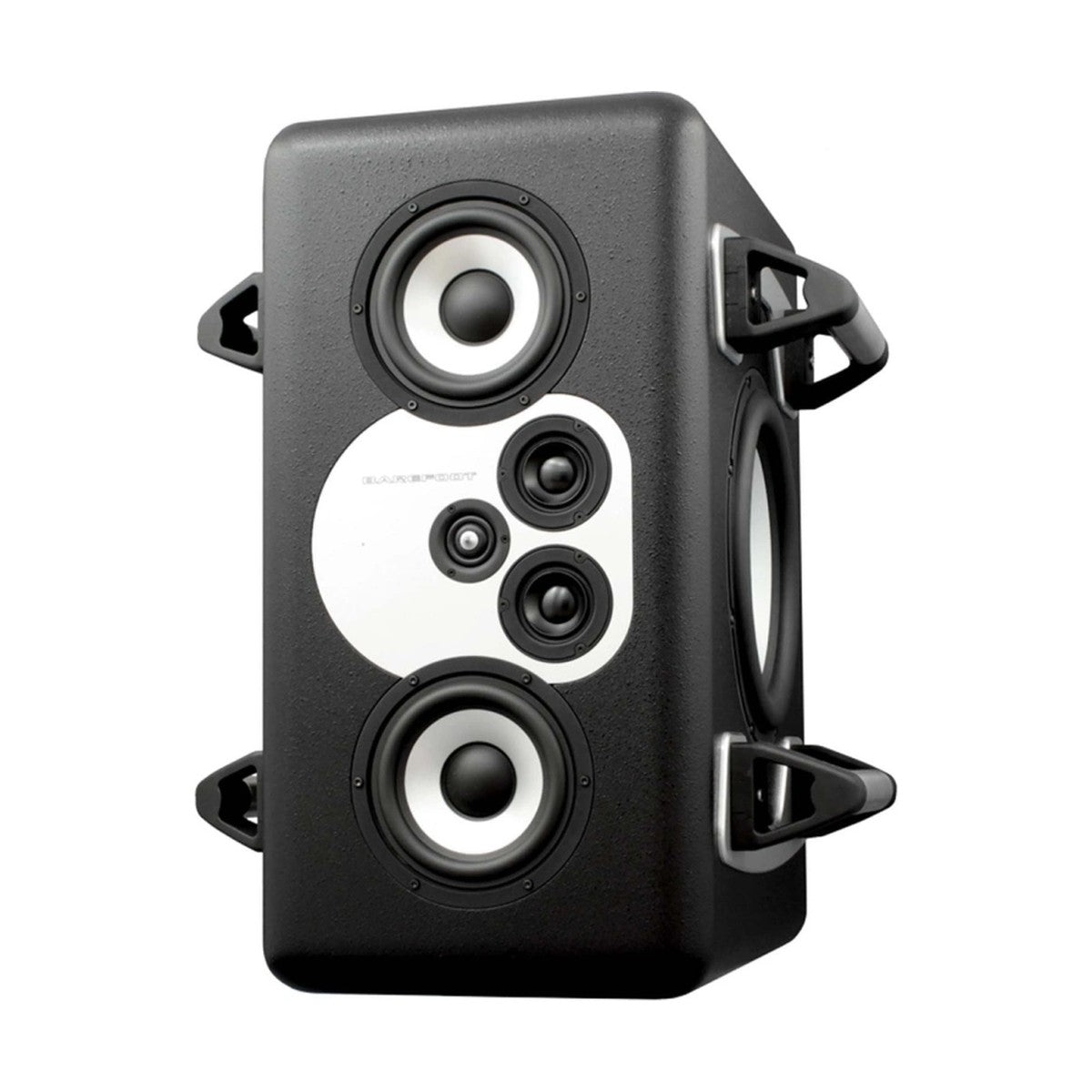
Barefoot Sound builds active studio monitors in Portland, Oregon, and has done so since its first design in 2004. The company was founded by Thomas Barefoot, a physicist who developed semiconductor manufacturing technology at Intel before going out on his own. Three in-house technologies define the range: MEME™, which switches the voicing of the monitor from a remote, Dual-Force™, which cancels cabinet vibration at the source, and the patented SPOC™ conversion stage. Every speaker is assembled and tested in Portland.
Who These Monitors Are For
- Mixing and mastering in a treated room — this is what the range was built for. Low-end resolution is high enough that you hear the difference between two compressor settings on the bass, not just that bass is present.
- Producers working on one pair from sketch to pre-master — the four MEME™ voicings replace the second and third pair of reference speakers.
- Commercial rooms and mastering suites — MiniMain12 and MasterStack12 work as main monitors without giving anything up in the sub range.
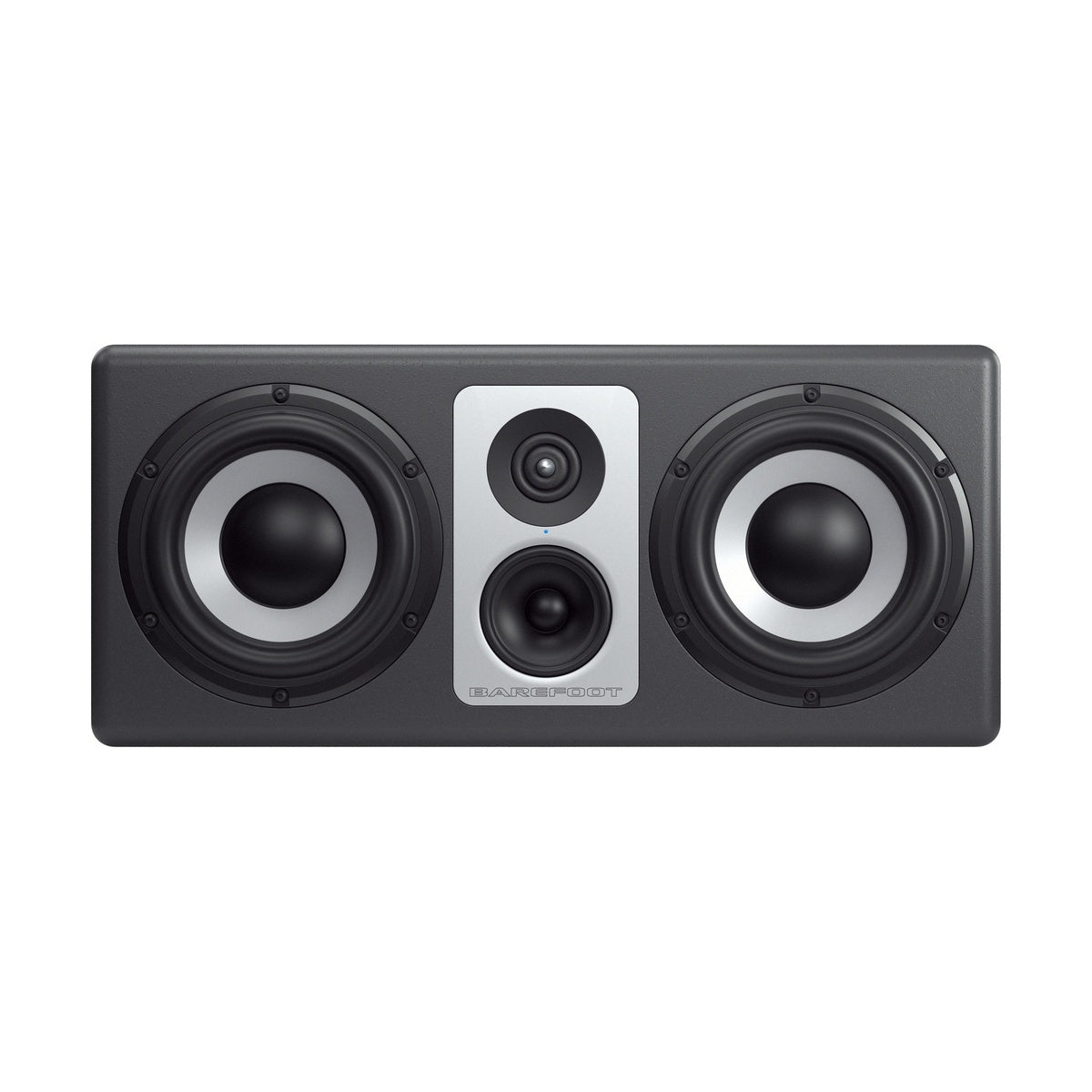
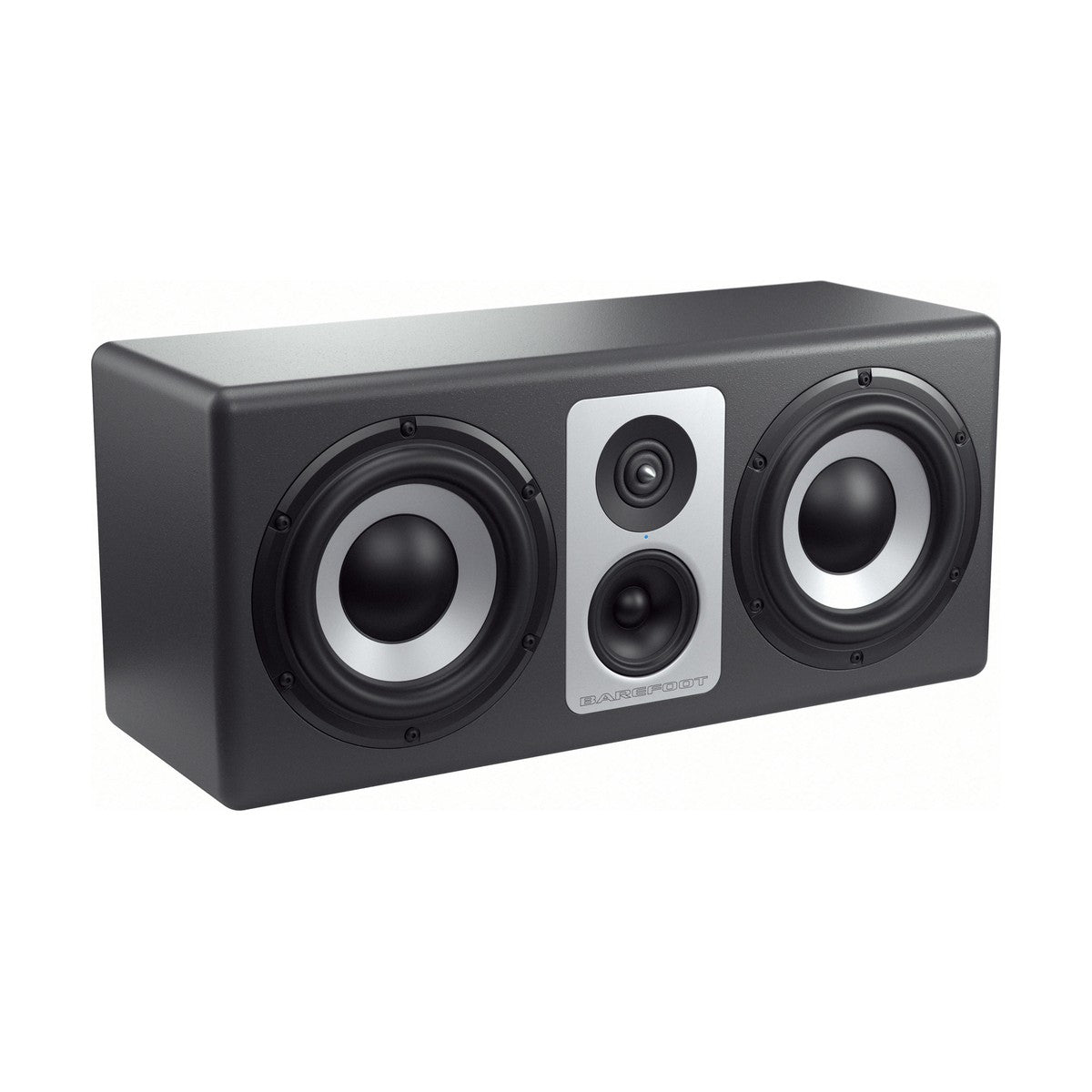
- Post and immersive formats — Footprint03C completes a Footprint03 array as the centre channel.
Who should look elsewhere: in an untreated room where modal behaviour dominates everything below 200 Hz, a monitor with this resolution will mostly show you the room. Money spent on the right monitor after acoustic treatment goes further than the other way round. Barefoot also has no microphone-based room correction — if automatic calibration is what you are shopping for, this is not the brand.
The Product Lines
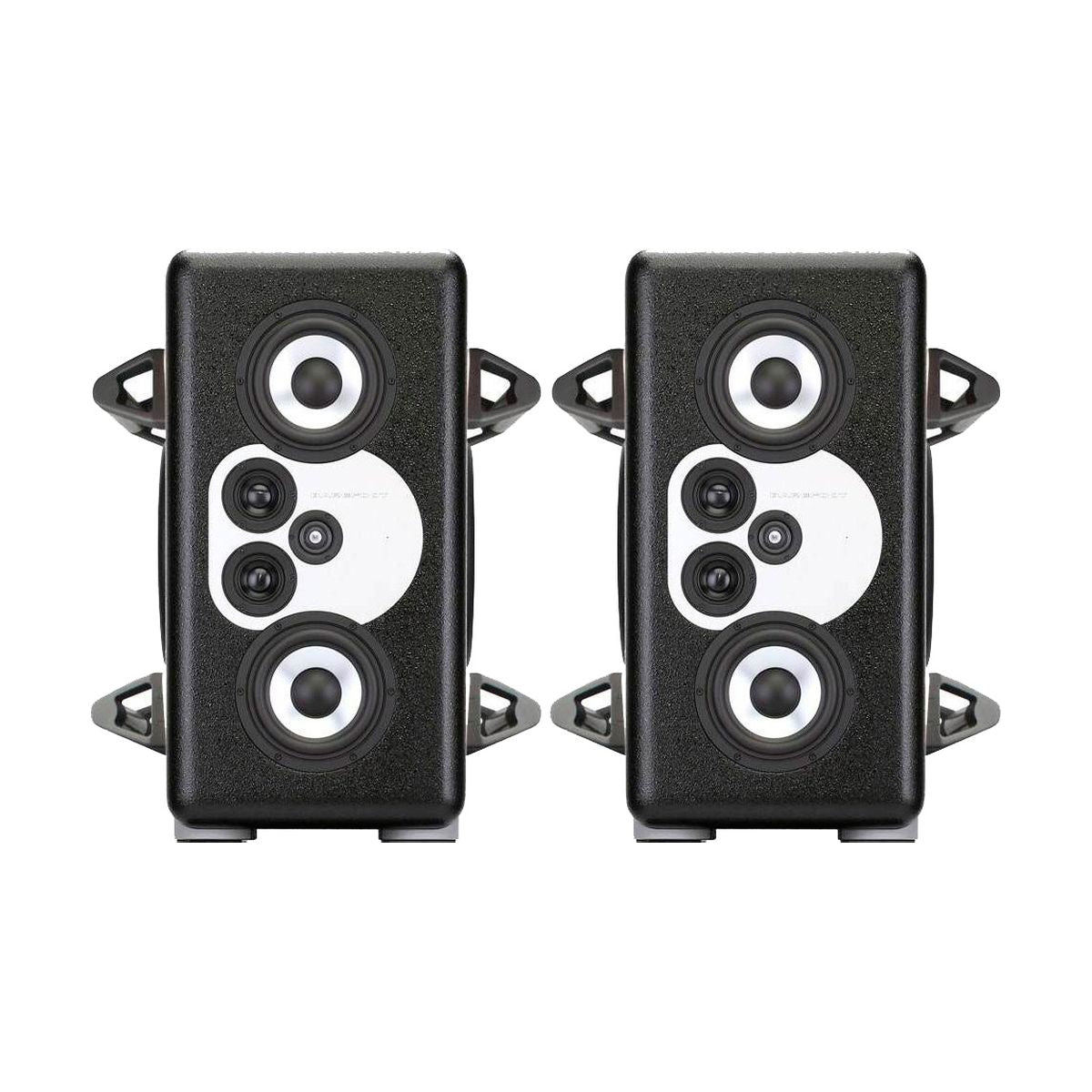
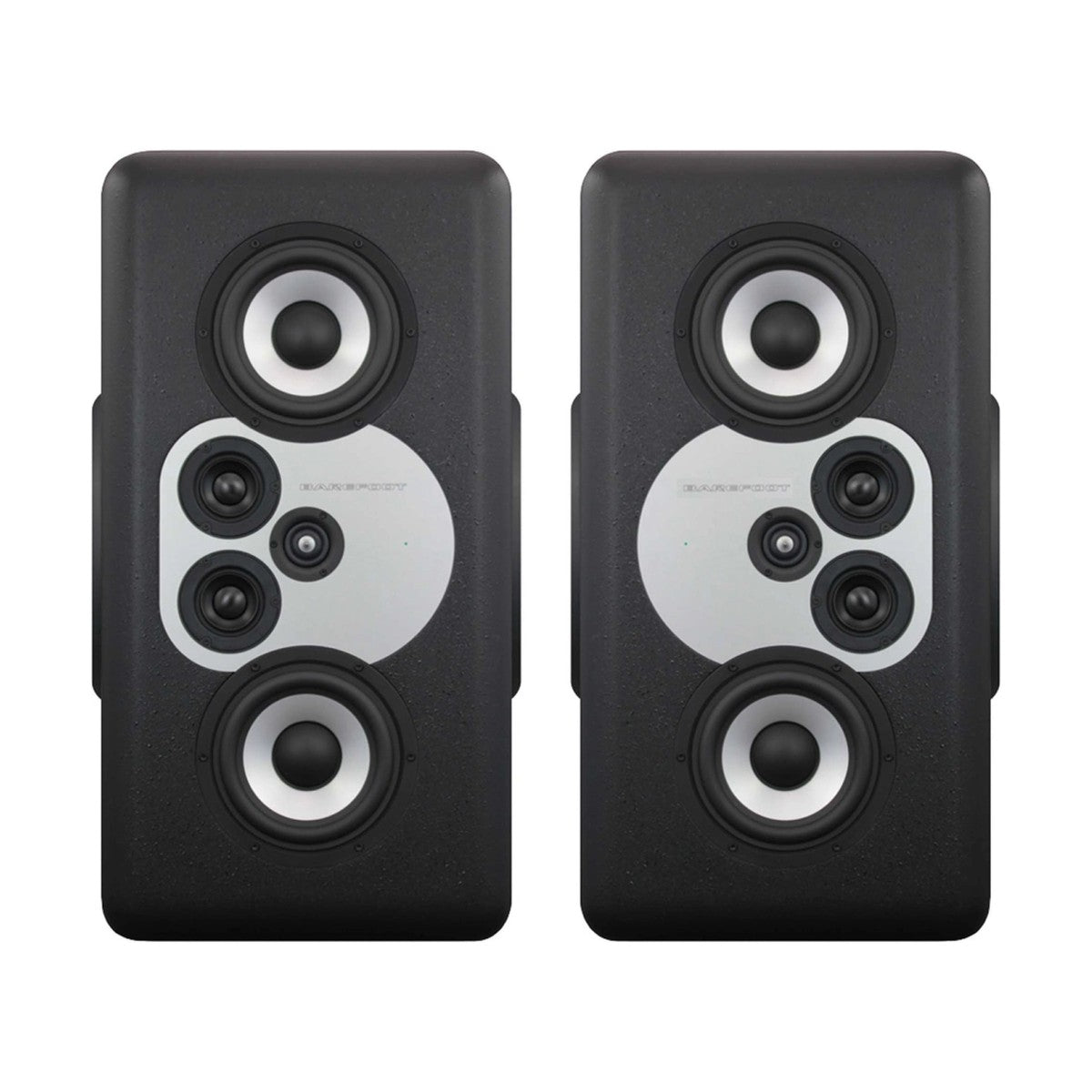
- Footprint — the entry line: three-way, tri-amplified, with onboard A/D conversion. Footprint03 is the way in, Footprint01 Gen2 tops the series.
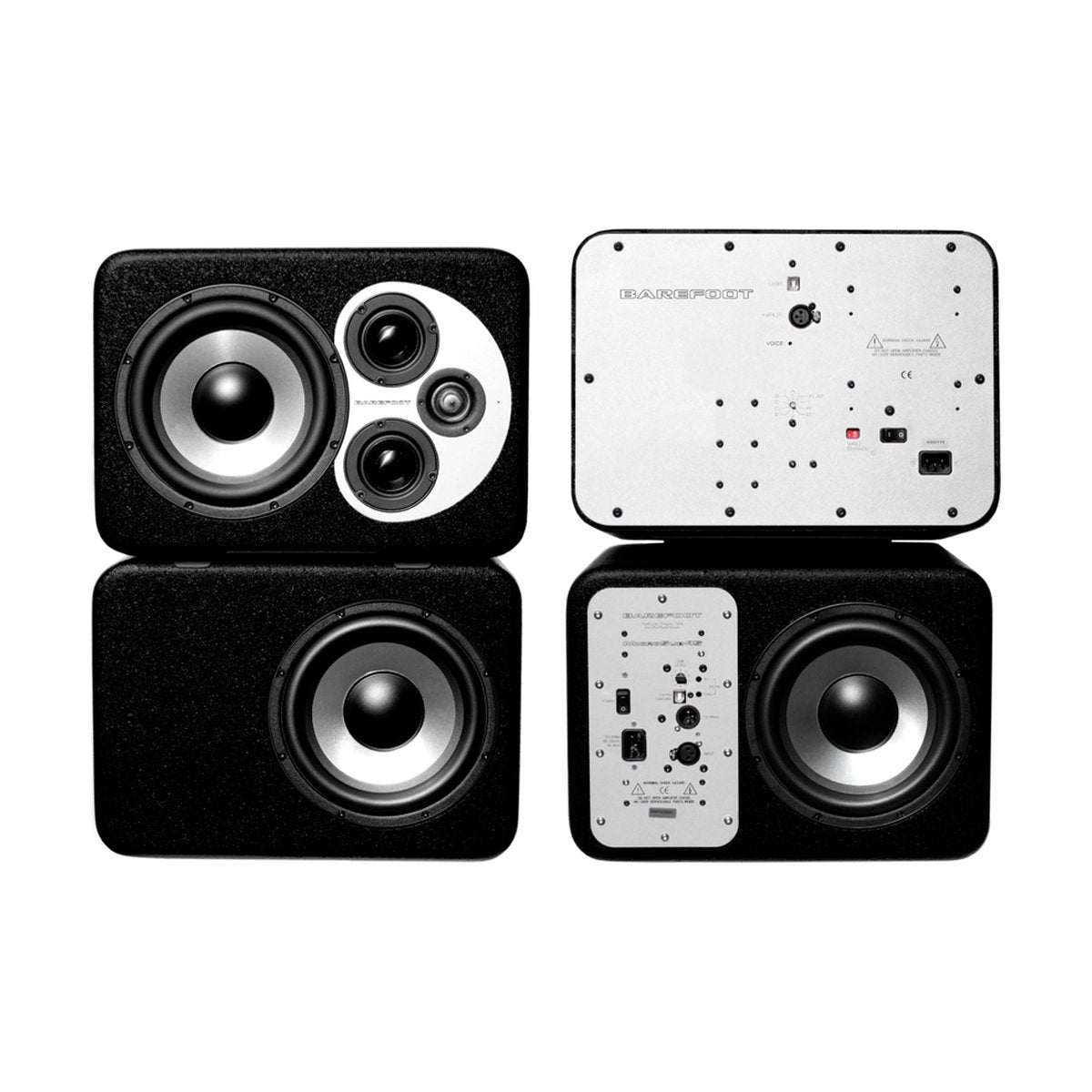
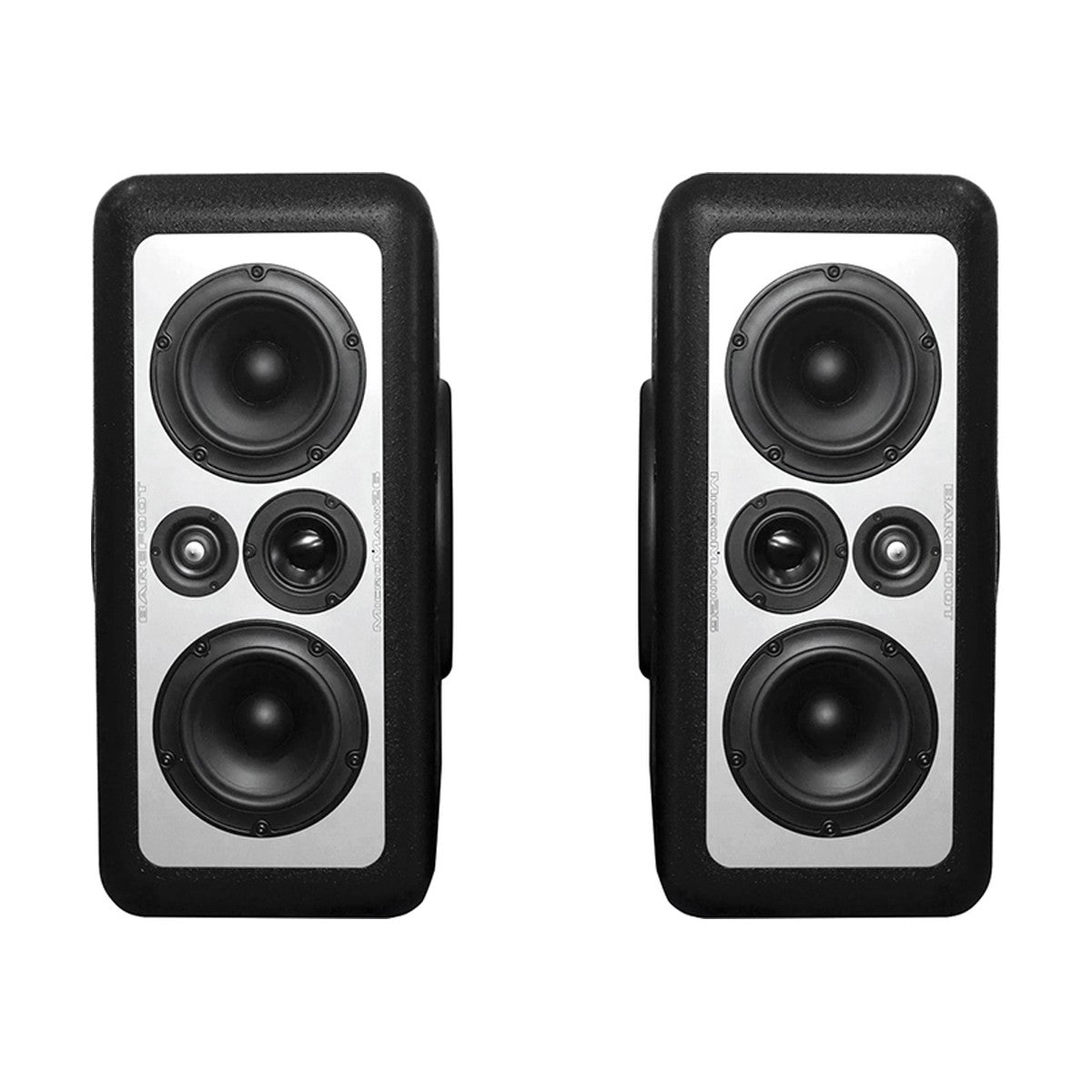
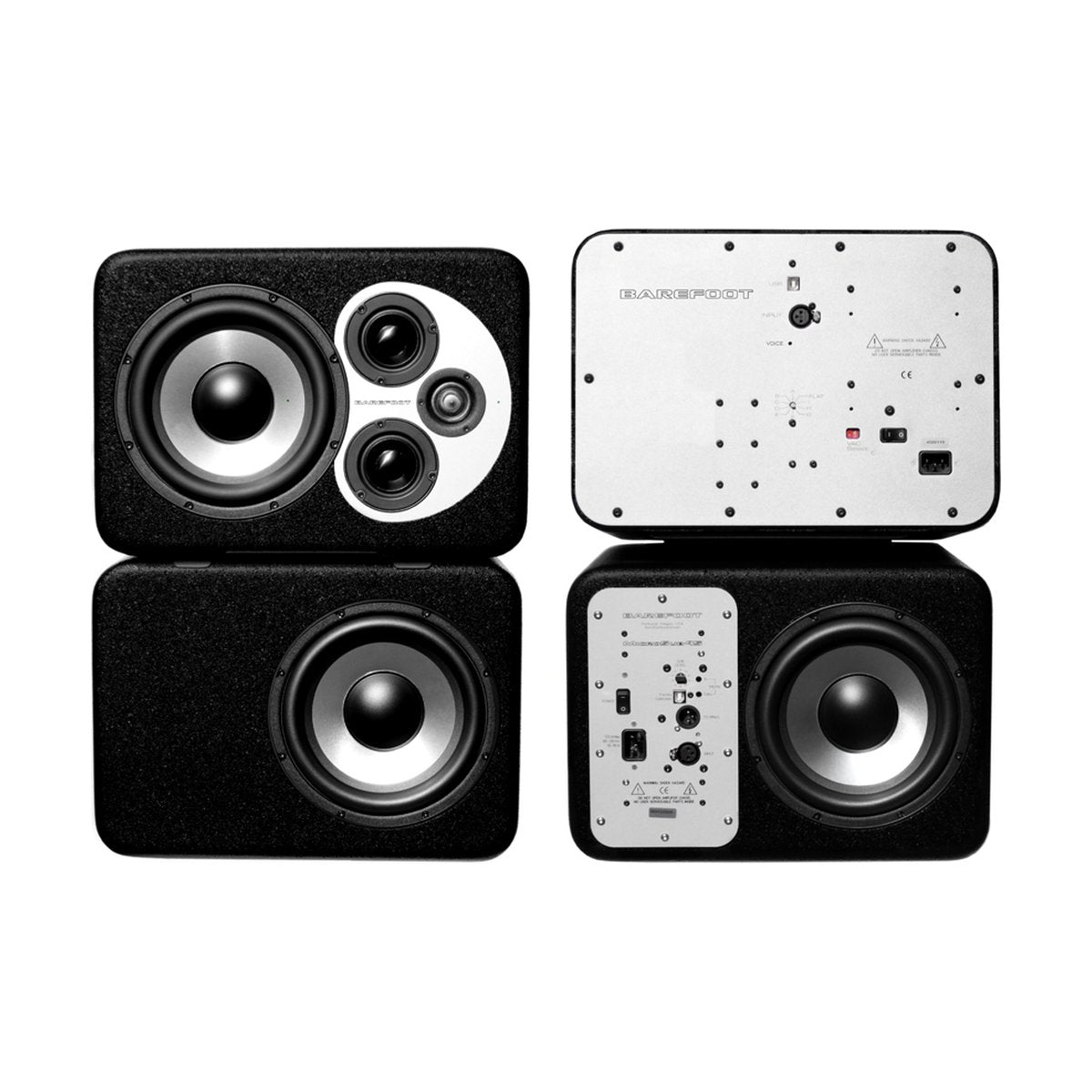
- MicroMain / MicroStack / MicroSub — mid and upper range, three- and 3.5-way designs. This is where Dual-Force™ and larger cabinet volumes appear.
- MiniMain12 — a four-way main monitor with a 90-litre cabinet reaching down to 20 Hz.
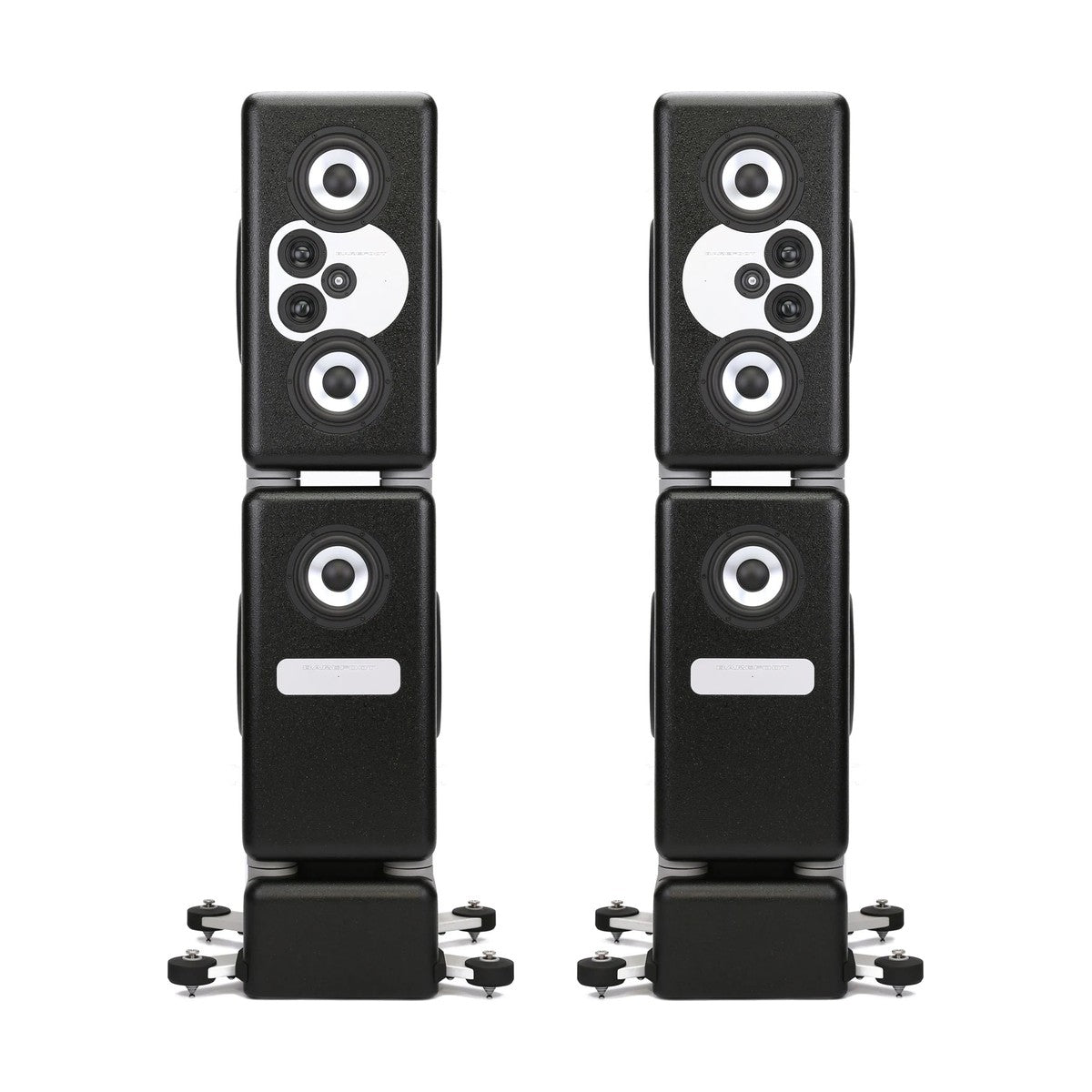
- MasterStack12 — a 4.5-way modular tower, the highest-positioned design in the range.
How the Models We Stock Differ
| Model | Configuration | Response (±3 dB) | Bass −3 dB | Max SPL | Cabinet volume |
|---|---|---|---|---|---|
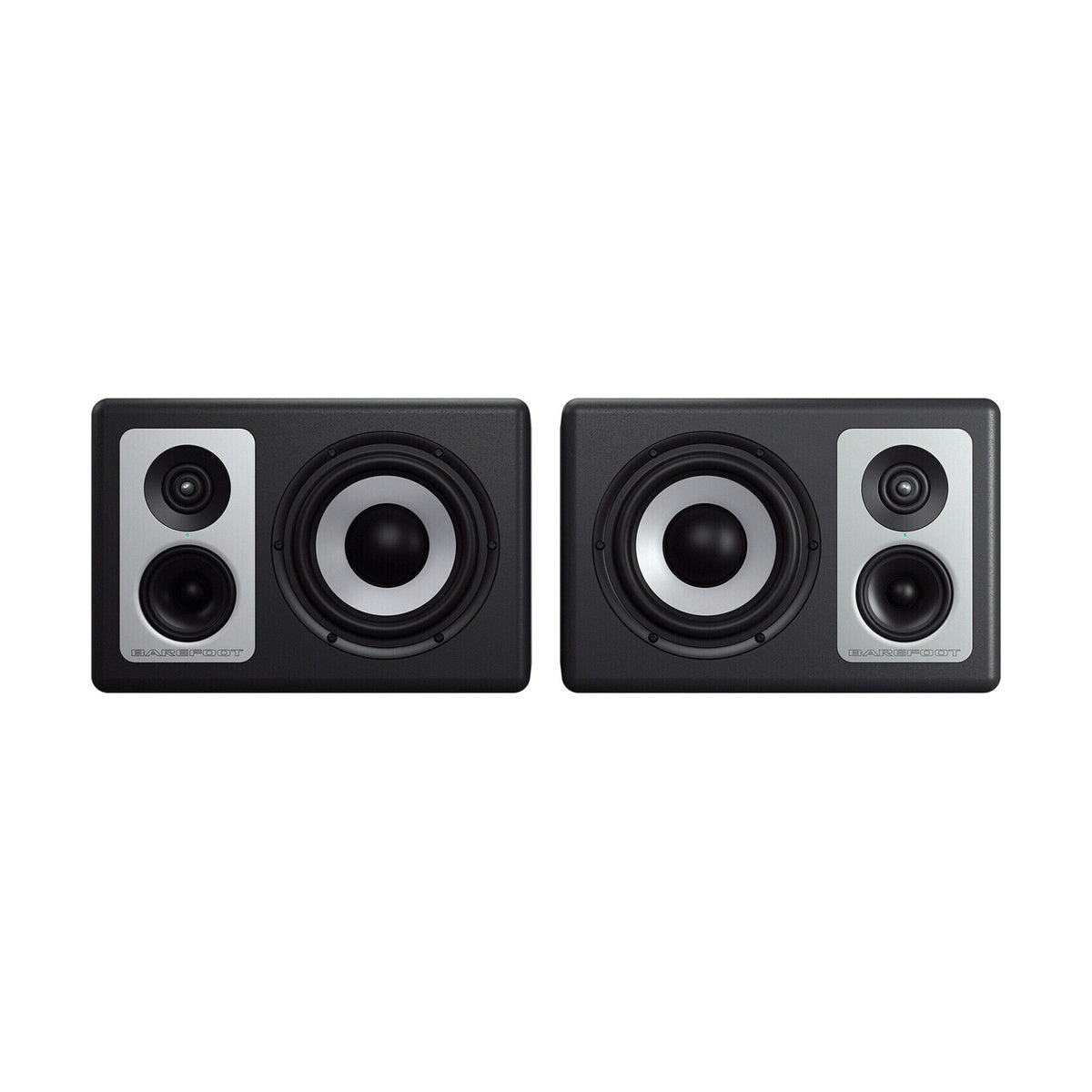
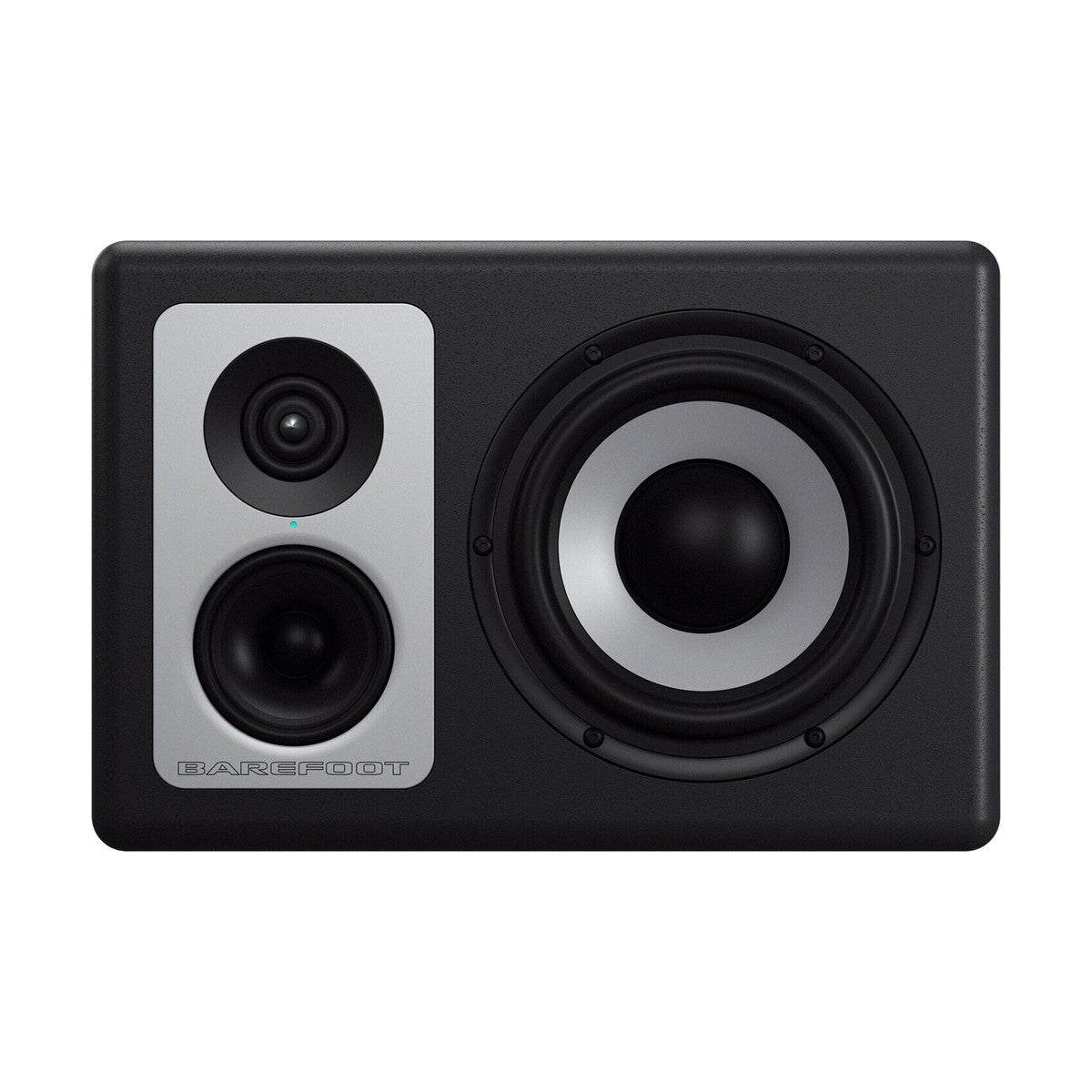
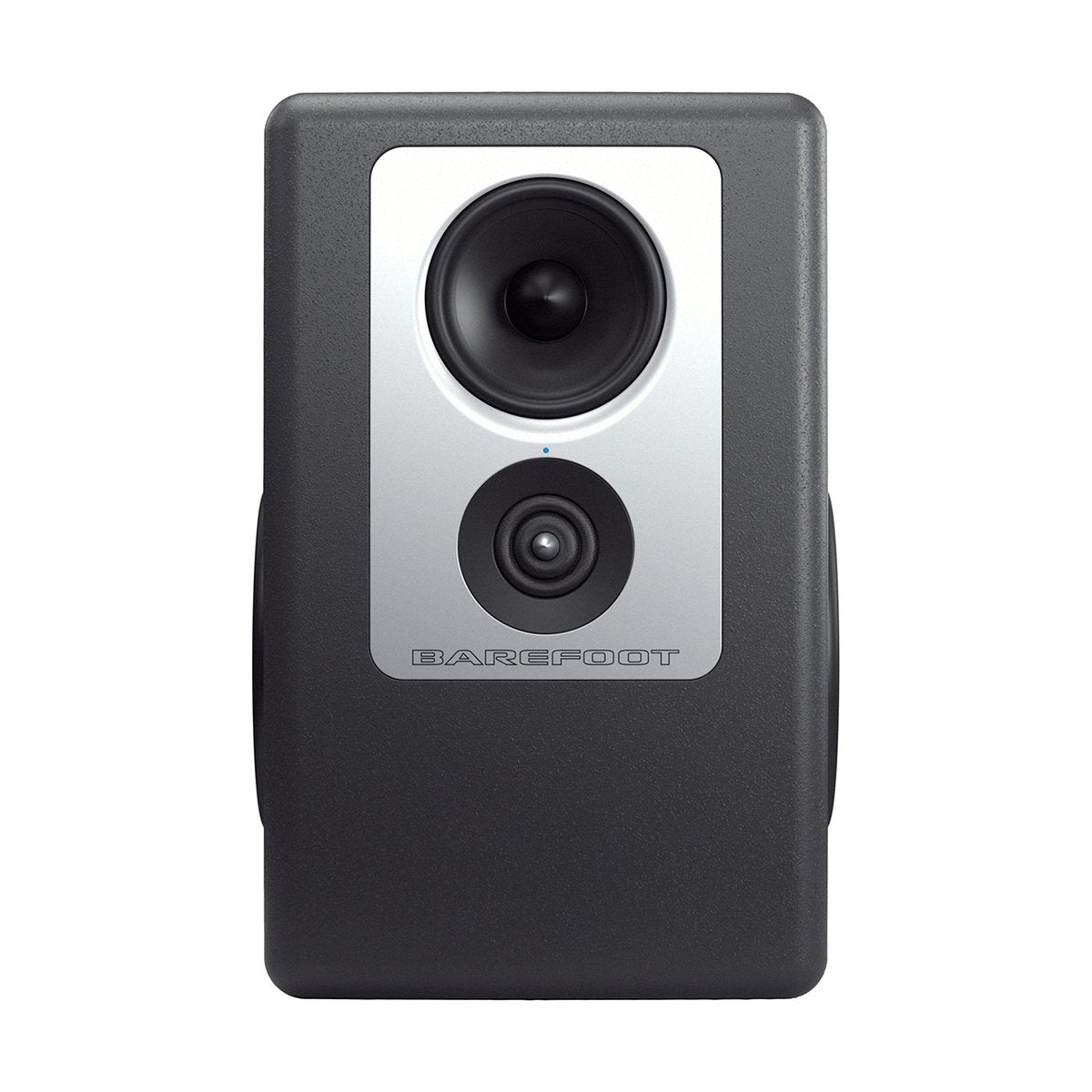
| Footprint03 | 3-way, tri-amplified | 45 Hz – 40 kHz | 46 Hz | 101 dB continuous | 10.5 L |
| Footprint03C | 3-way, centre channel | 42 Hz – 40 kHz | 42 Hz | 104.5 dB continuous | 10.8 L |
| Footprint02 Gen2 | 3-way, tri-amplified | 38 Hz – 40 kHz | 38 Hz | ≥ 111 dB | 9.4 L |
| Footprint01 Gen2 | 3-way, tri-amplified, SPOC™ | 36 Hz – 40 kHz | 36 Hz | ≥ 113 dB | 12.8 L |
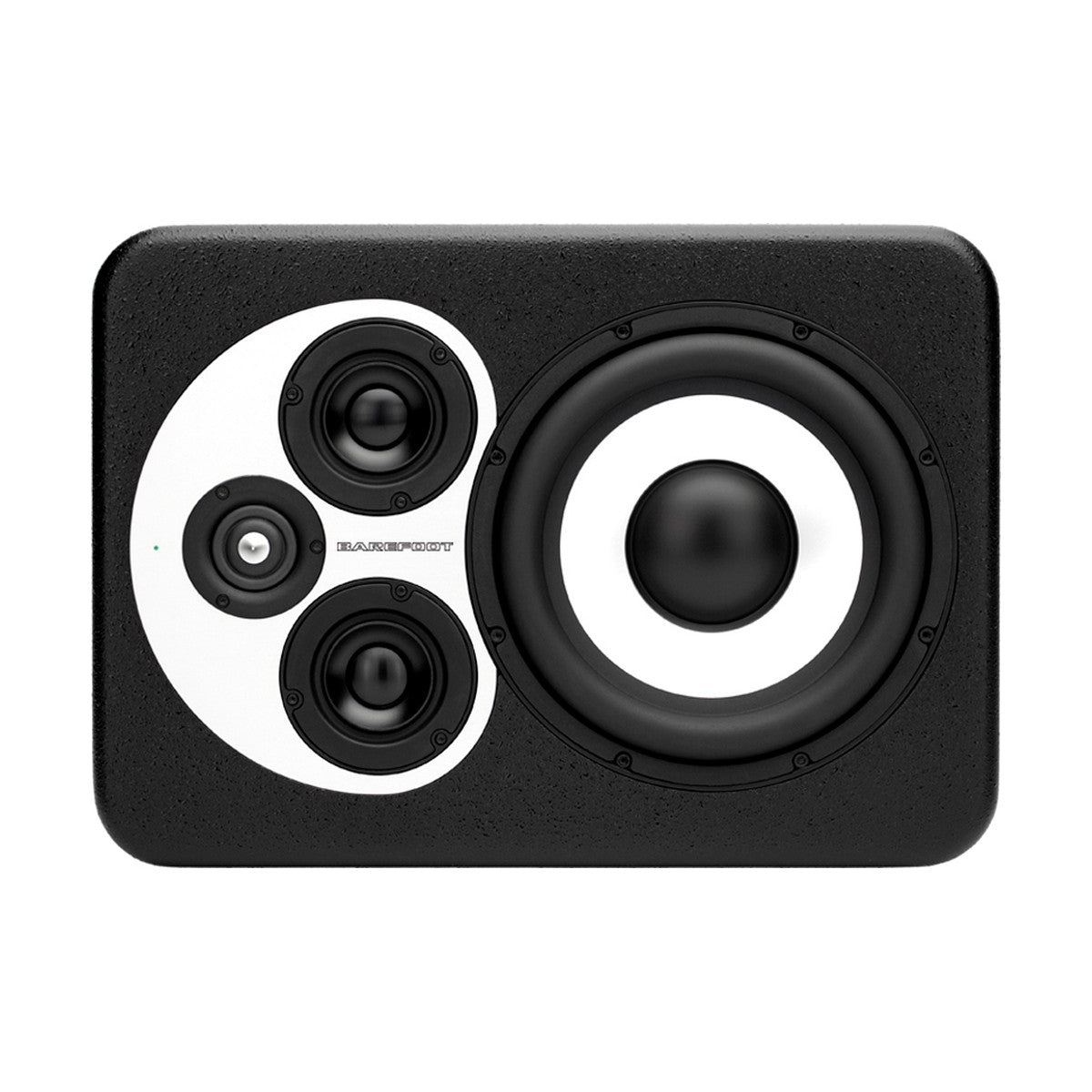
| MicroMain45 | 3-way | 40 Hz – 45 kHz | 35 Hz | 113 dB continuous | 14 L |
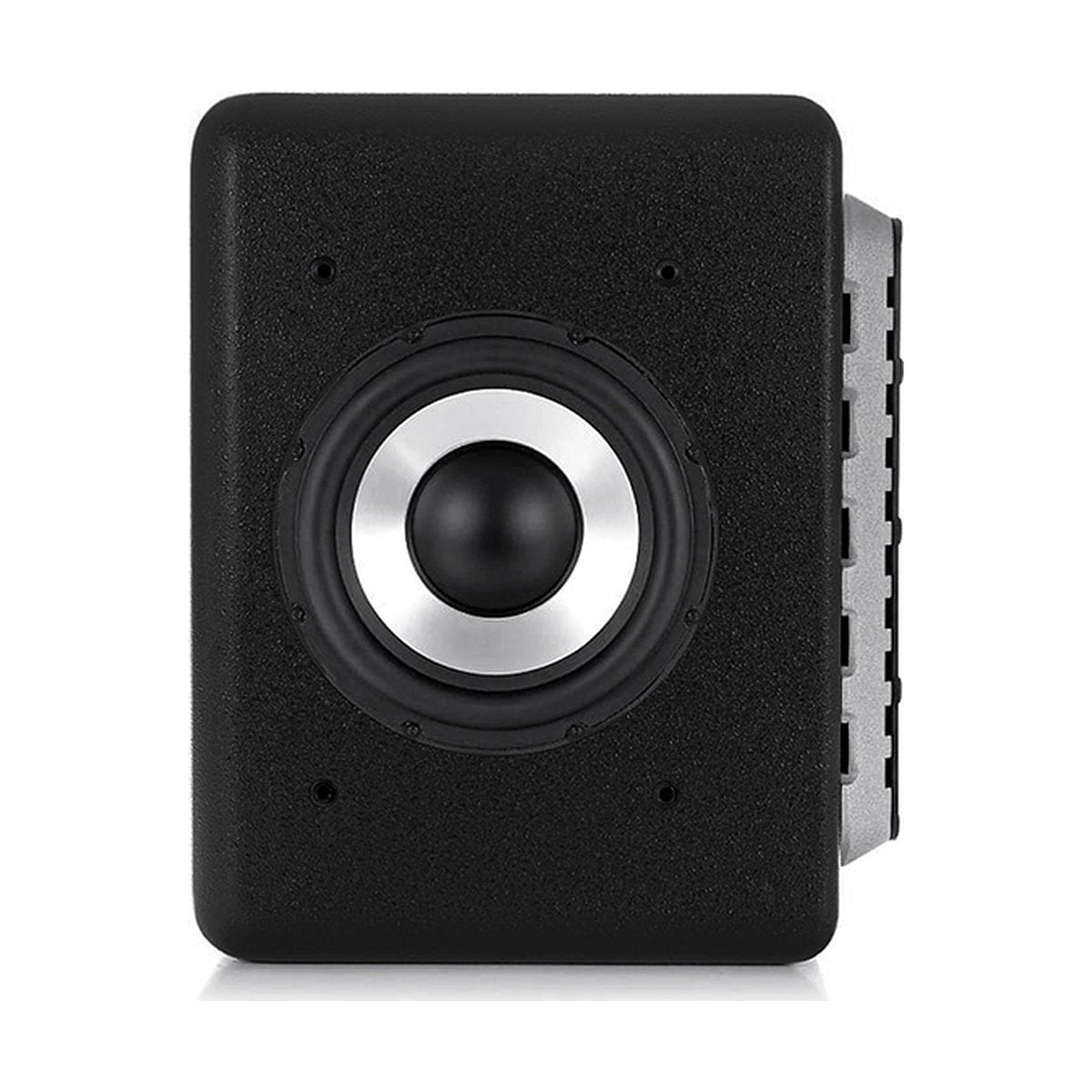
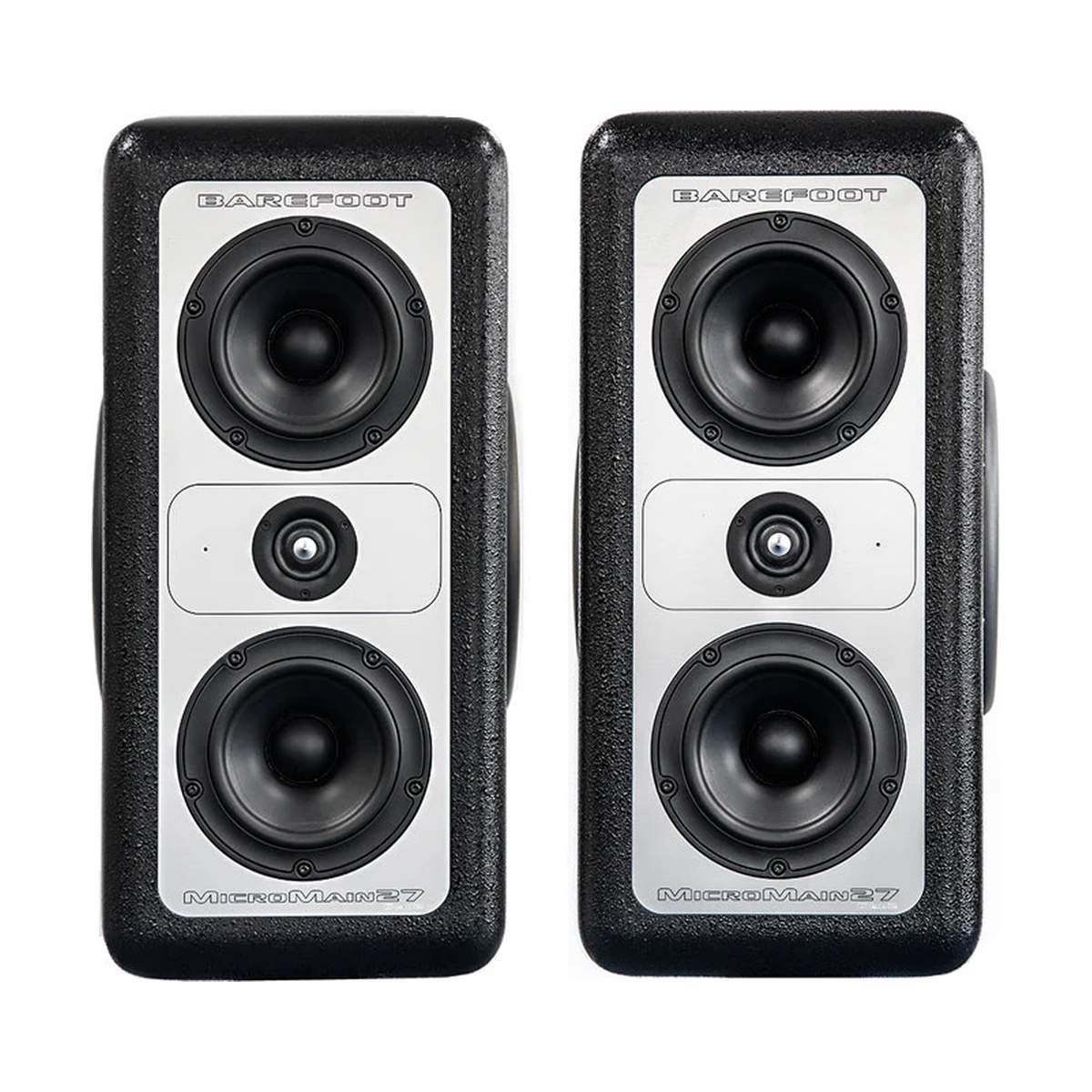
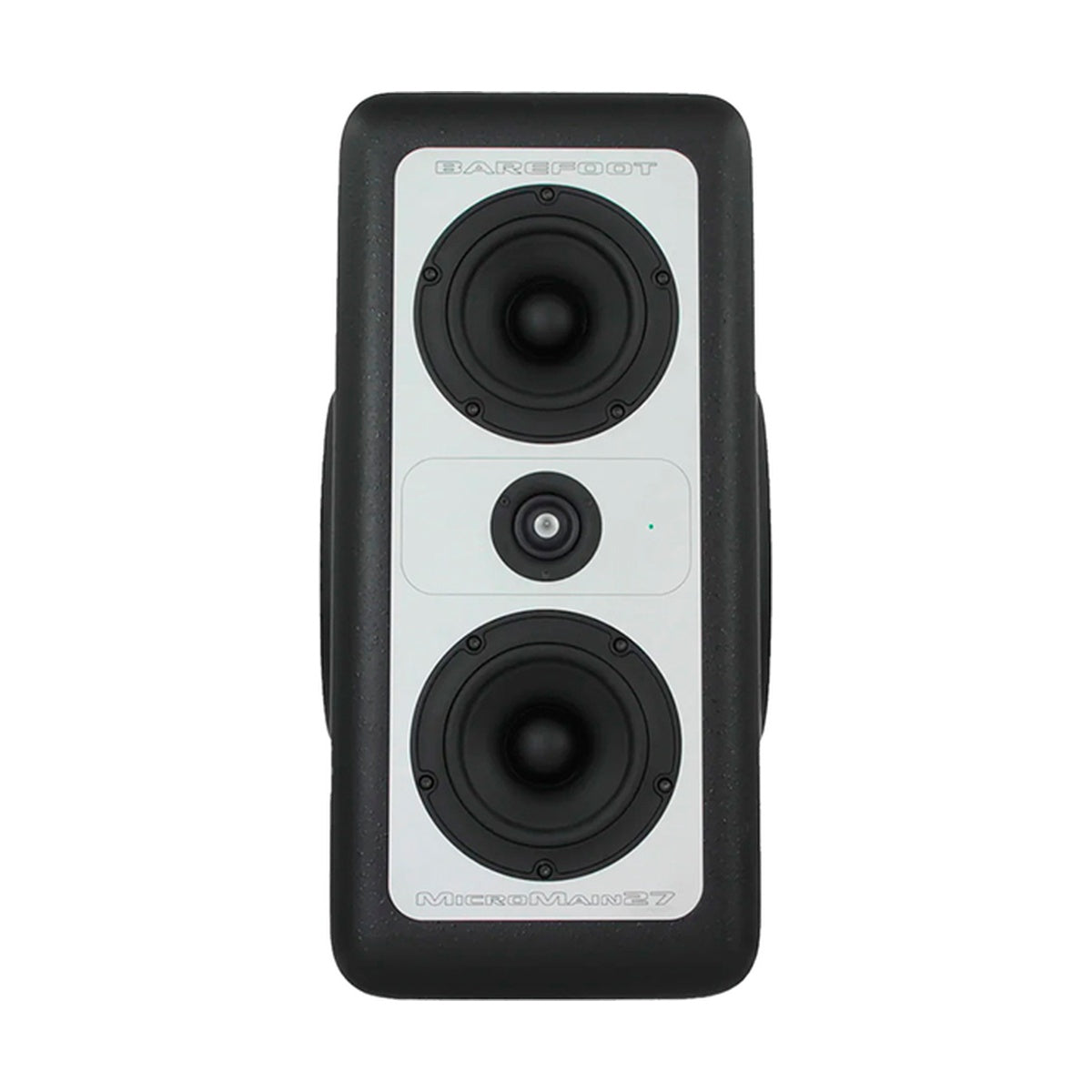
| MicroMain27 Gen2 | 3.5-way, Dual-Force™ | 30 Hz – 45 kHz | 30 Hz | — | 32 L |
| MiniMain12 | 4-way | 20 Hz – 50 kHz | 20 Hz | — | 90 L |
Figures come from the manufacturer's published specifications. Blank cells mean the manufacturer does not publish that value, and we are not going to guess it for them.
Which One Fits Your Situation
- A 10–14 m² room, nearfield work, first monitor at this level → Footprint03. Response to 45 Hz and 101 dB SPL are plenty at that floor area, and a larger model will not show you its bass in a small room anyway.
- Same room, but you mix club music and need control below 40 Hz → Footprint02 Gen2. Bass reaches 38 Hz from a smaller cabinet than the Footprint03.
- A treated 18–25 m² room, paid work, one pair for everything → Footprint01 Gen2. The only model with SPOC™ and the highest SPL in the Footprint line.
- You need headroom for tracking and group playback → MicroMain45, at 113 dB continuous SPL with response to 45 kHz.
- Mastering, with control required from 30 Hz up → MicroMain27 Gen2, with Dual-Force™ and a 32-litre cabinet.
- A large control room, main monitors, response to 20 Hz → MiniMain12. If you need lower and louder than that, the conversation moves to MasterStack12.
- An immersive array built around a Footprint03 pair → Footprint03C as the centre channel, with MicroSub45 if the format calls for it.
What MEME™ Actually Does
MEME™ (Multi-Emphasis Monitor Emulation™) is DSP modelling that changes the voicing of the monitor without changing where you sit. The wired remote has four positions. Flat is the true Barefoot voice. Old School captures the character of the NS10M, rolling off sub-bass and top end and pushing the midrange forward. Cube refers to the small full-range reference cubes of the past, which matters again now that most listeners are on laptops and earbuds. Hi-Fi sweetens the top and warms the mids, behaving like a consumer system, which makes it the setting for artist playback. The practical gain is simple: you check a mix against four voicings from one listening position instead of putting three pairs of speakers on the desk.
Barefoot Sound at Wired Tunes
Every model on this page is in stock, and the full range sits in the Barefoot Sound collection. We run a showroom in central Warsaw at Nowogrodzka 6A/102 with a dedicated studio monitor area — monitors at this level are not bought from a spec sheet, so book a session and listen first. Barefoot products carry a 36-month warranty, and we ship to every country in the European Union, with oversized shipments quoted individually. Returns are open for 30 days, no reason required.
Related Guides
- Active studio monitors — how to choose the right pair
- Studio monitor placement
- SPL of studio monitors — what it is and why it matters
Company History
Thomas Barefoot grew up in Pittsburgh in a family that could not afford an electric guitar, so at thirteen he started building instruments and amplifiers himself — in the school wood shop, from parts salvaged around the neighbourhood. By high school he was running a small business building and modifying guitars for classmates. That money paid for university, where he took a degree in physics.
He went on to graduate school, then concluded after a few years that academia was not his path. He landed at Intel developing semiconductor manufacturing technology and spent his spare time in the online recording community, posting under the handle “Barefoot” — his actual surname. Out of those discussions and his own home-studio experiments came the conclusion the whole brand rests on: the split between nearfield, main and mastering monitors is artificial, because every stage of the work needs the same resolution, dynamic range and bass extension. The first monitor built on that premise appeared in 2004.
The company is run today by Thomas Barefoot as founder and CTO alongside Tedi Sarafian as founder and CEO. Speakers are built in an 8,300 square foot facility in Portland, Oregon, and every unit is tested before it leaves.