The Best Groovebox in 2026: What They Are and Which One to Buy
A groovebox is a self-contained instrument that puts sound sources, a step sequencer and a hands-on control surface in one box, so you can write, arrange and perform a whole track without a computer. Roland coined the word for the MC-303 in 1996 and the idea has outlived every prediction of its death since. The best groovebox is simply the one whose workflow you do not fight, which is why this guide spends more time on how they work than on spec sheets.
The short version. Sampling or synthesis, pads or keys, standalone or tethered to a laptop. Answer those three and the shortlist writes itself. If you want one recommendation: the Elektron Digitakt II at 937 euro is the one that ends up in the most studios and stays there. If you want to find out whether this whole way of working suits you, start with the Teenage Engineering PO-33 at 94 euro and lose an evening to it.
Jump to:
What a groovebox actually is
Three ingredients, one enclosure. Sound sources, either synth engines or samples or both. A sequencer that records what you play and repeats it. And a surface covered in pads and knobs so you can change things while it runs. The textbook definition adds "loop-based" and "for live performance", which is accurate and tells you nothing about what using one feels like.
That last part is the whole point. On a laptop you stop the music, click, drag, listen back. On a groovebox the music never stops. You turn a filter, mute a track, drop in a new pattern, and the loop keeps going underneath you while you decide whether that was a good idea.
The sequencer is where the personality lives. Most are step based: sixteen buttons, one bar, each button a moment in time. Better ones let you record knob movements per step, so the filter opens on the third hit and only the third hit, and they let you chain patterns into an arrangement rather than trapping you in a four-bar loop forever. That single feature, chaining, is the difference between a toy and something you finish tracks on, and it is worth checking before anything else on the spec sheet.
The category is nearly thirty years old. The Roland MC-303 arrived in 1996 with 303 in the name and nothing much of the actual TB-303 inside it, which tells you everything about how the industry names products. It sold anyway, because plugging in one box and having a track running in four minutes was, and still is, a genuinely different feeling to opening a project file.

Groovebox, drum machine, sampler, DAW
These four words get used as if they were interchangeable. They are not, and the difference decides what you can finish.
A drum machine makes drums. Sometimes gloriously, but that is the job. Give it a bassline and it starts making excuses.
A sampler records audio and lets you play it back at different pitches. It is a sound source with storage. Many have sequencers now, which is exactly why the line has blurred.
A groovebox is drums plus melodic parts plus a sequencer that arranges them into something with a beginning and an end. If one box can hold a whole track, it is a groovebox, whatever the marketing says on the front.
A DAW does all of the above and everything else, with unlimited tracks, undo, and a screen full of decisions. That is its strength and its problem in equal measure.
The useful mental model: a DAW gives you every option, a groovebox takes most of them away on purpose. Eight tracks and sixteen steps is a constraint, and constraints are the reason people who own both keep reaching for the small box.
Six worth buying in 2026
Everything below is on our shelves right now, priced in euro, and they are grouped by what they are for rather than by score out of ten. There is no best in the abstract. There is only the one that suits how you work.
1. Find out if you like this at all: Teenage Engineering PO-33 K.O!, 94 euro. Pocket-sized, runs on two AAA batteries, has a built-in microphone, 40 seconds of sampling and a 16-step sequencer. It looks like a calculator that got into music. It is also the cheapest honest answer to the question "would I actually use one of these", and I have watched more than one person buy a 900 euro machine after a fortnight with this.
2. The first serious one: Teenage Engineering EP-133 K.O. II, 328 euro. 128 MB of sample memory, up to 999 samples, nine pressure-sensitive pads with polyphonic aftertouch, a built-in mic and speaker, send effects and a master compressor. Battery powered, so it works on a sofa. This is the one to buy if your plan is beats made from records, films and whatever the kettle sounds like.
3. If the laptop is staying anyway: Native Instruments Maschine MK3, 407 euro. Sixteen large pads, two colour screens, a 96 kHz audio interface built in, and 8 GB of library plus a 25 GB Komplete Select bundle. It needs a computer, which purists will tell you disqualifies it. It also gives you the groovebox workflow and a full plugin ecosystem for the price of a mid-range standalone, and pretending that does not matter would be dishonest.
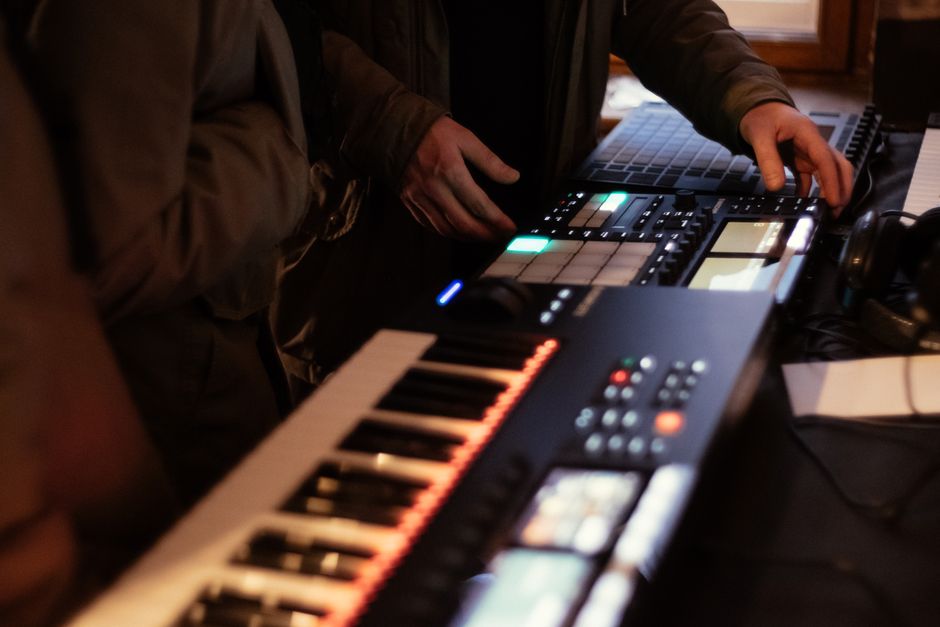
4. When your fingers want keys: Akai Pro MPC Key 37, 749 euro. Standalone MPC with a 37-note keyboard with aftertouch, the classic 4x4 pads, a 7-inch touchscreen, MIDI, four CV/gate outputs and Wi-Fi. If you think in chords rather than in one-shots, the keyboard changes what comes out of you more than any spec on this page.
5. The one that ends up in most studios: Elektron Digitakt II, 937 euro. Sixteen audio or MIDI tracks, stereo sampling, multi-mode filters, per-track overdrive, delay, reverb, chorus, and the Elektron sequencer with parameter locks and song mode. It is also a first-class brain for the rest of your gear, sequencing external synths over MIDI. Steep for a week, permanent afterwards. Our sales lead Andrei has fifteen years in production and specialises in exactly this line, so bring your questions.
6. The flagship: Elektron Tonverk, 1,223 euro. Polyphonic multi-sampler with 8 stereo tracks, 4 buses, 3 sends, a mix track, four machine types per track and a 256-step sequencer. This is the one for people who already know their workflow and have hit the ceiling of the last box. Buying it first is like learning to drive in a van.
Three questions that decide it
Do you build sound from recordings, or from scratch? Sampling first means the PO-33, EP-133 or Digitakt II. Synthesis first pushes you towards the Tonverk or, honestly, towards a synth with a sequencer instead. If you would rather build tones from nothing, our guide to what a synthesizer actually does is the better starting point.
Pads or keys? Pads suit drums, chopped samples and finger drumming. Keys suit chords and basslines played rather than programmed. The MPC Key 37 is the only one here with both, and that is the reason it exists.
Standalone or with a computer? Standalone means you can work on the kitchen table, on a train, or in a room where opening a laptop means answering email. Tethered means bigger libraries and easier editing. Maschine is the tethered pick, everything else on this list runs on its own.

One more thing nobody mentions until you have bought two of them: check what the outputs look like. If everything ends up in a small mixer or an interface, count the jacks first. Two of these have MIDI and CV out, which turns them from an instrument into the conductor of everything else you own.
Taking one on stage
Half the appeal of this category is that a groovebox will happily leave the house, and a laptop rig always leaves it reluctantly.
Three things matter once you are playing to people. Pattern switching without a gap, because a silent bar while you find the next section is the longest silence in music. Mute groups and performance controls, so you can drop parts in and out with one hand. And somewhere to put your hands that is not a trackpad, which sounds obvious until you watch someone try to nudge a filter with two fingers on a moving stage.
The Elektron sequencer earns its reputation here: patterns chain, tracks mute cleanly, and nothing stops when you make a decision. The MPC Key 37 wins if your set involves playing parts rather than triggering them. The little Teenage Engineering boxes are fine for a support slot and battery power means one less cable in a venue where the sockets are behind the drummer.
What to check before you commit to a set: how loud the headphone output goes, whether the thing can be clocked from something else, and whether it survives being unplugged mid-pattern. Ours are on the shop floor precisely so you can try all three before a gig rather than during one.

When not to buy one
Here is the one strong opinion, and it costs us the more expensive sale.
If you already own a laptop and a controller, a groovebox is a workflow purchase, not a capability purchase. Nothing on this list does something your DAW cannot. Maschine MK3 at 407 euro gives you the pads, the screens and an interface while keeping your plugins. The Digitakt II at 937 euro gives you a machine that never crashes, never updates itself mid-session and boots in two seconds. That is 530 euro of difference buying you focus, not features. Focus is worth paying for, plenty of people finish more music because of it, but you should know that is what you are buying.
Also worth saying plainly: a second groovebox rarely fixes the problem the first one exposed. If you have four unfinished loops, the machine is not the reason. Ask me how I know. I own more sequencers than I have finished tracks this year, and I have made my peace with roughly none of that.
And if your actual complaint is that your beats sound thin next to commercial records, that is a monitoring and arrangement problem, not a hardware one. No groovebox on earth fixes a mix you cannot hear properly.
Grooveboxes are the single hardest category to buy from photographs, because what you are really buying is a workflow and workflows are personal. Our Warsaw showroom has these switched on and waiting, so you can spend twenty minutes with each and find out which one annoys you least. Or take one home on a free 30-day Test-Drive: short contract, real work in your own room, then you decide. Everything carries a 36-month warranty and a 30-day return window, and we ship to every EU country. Still weighing up two Elektrons? The Digitakt II versus Digitone II comparison settles that one properly, and five synths under 1,000 euro covers the other side of the fence.
Straight answers
What is the difference between a drum machine and a groovebox?
A drum machine produces percussion and sequences it. A groovebox adds melodic sound sources, more tracks and song arrangement, so one unit can hold a complete piece of music rather than just its rhythm section. Most modern drum machines have crept towards groovebox territory, which is why the labels on the box are no longer a reliable guide.
Are grooveboxes still relevant in music?
Yes, and search interest for them is up roughly 29 percent year on year. A laptop can do everything a groovebox does, but not in the same way: hands on knobs, no screen, no undo, patterns changing while the music runs. That is why they survive alongside DAWs rather than being replaced by them, especially for live performance.
What is the best groovebox for beginners?
The Teenage Engineering PO-33 at 94 euro if you want to test the idea for the price of a night out, and the EP-133 K.O. II at 328 euro if you already know you want to make beats from samples. Both are battery powered with a built-in mic and speaker, so nothing else needs buying before you start.
Why buy a groovebox?
For speed and focus. A limited set of tracks and immediate physical controls push you to finish ideas instead of endlessly refining them, and there is no screen inviting you to check something else. They are also portable and reliable in a way a computer rig is not, which matters on stage.
What is the most powerful groovebox?
Of the six here, the Elektron Tonverk at 1,223 euro: eight stereo tracks, four buses, three sends, four machine types per track and a 256-step sequencer. Power is not the same as suitability, though. The Digitakt II is less deep and finishes more tracks for most people, which is the metric that actually counts.
What is the best groovebox in 2026?
For most producers, the Elektron Digitakt II. It samples in stereo, sequences sixteen tracks of audio or MIDI, doubles as the brain for external gear, and holds its value. Choose the EP-133 K.O. II if the budget is tighter, the MPC Key 37 if you play keys, and Maschine MK3 if the computer is staying in the setup anyway.
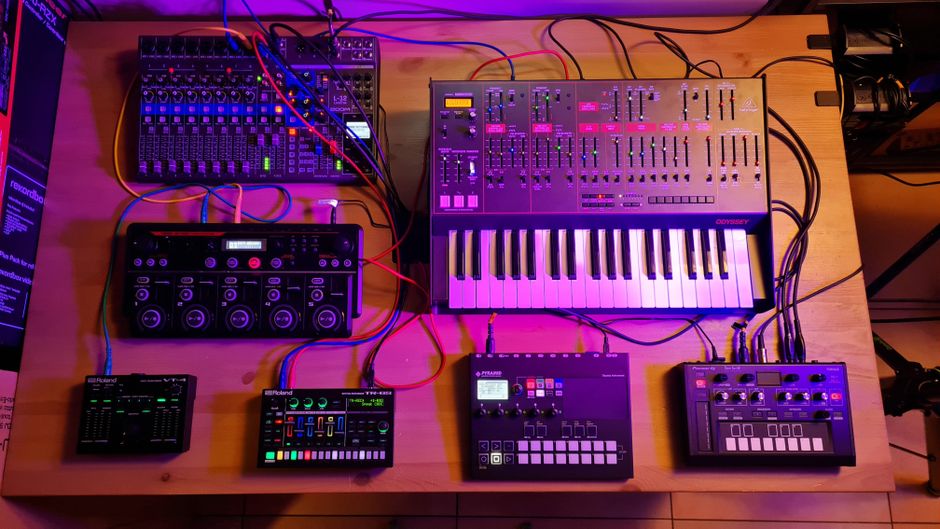
So: pick the workflow, not the spec sheet. Sampler or synth, pads or keys, computer or no computer, and the six above sort themselves into an order that has your name on it. Buy the one you will still be switching on in a year. And if you catch yourself watching a fourth groovebox comparison video tonight instead of opening the box already on your desk, that is not research any more, that is Gear Acquisition Syndrome with a metronome running underneath it.
About the author
Michał Kaniuszkiewicz is a content manager and SEO specialist at Wired Tunes. He creates and optimizes content that helps readers find useful information about music, gear, and sound. Beyond his editorial work, he has been making music for 8 years in hip-hop, pop, and electronic genres — giving him insight into the subject not just from an SEO perspective, but from the inside, as a practicing musician and producer. This experience allows him to create content that's equally useful and clear for both beginners and experienced listeners and music creators.


Read next
- What Is a Sampler in Music? The Box That Ate Pop. Half of every groovebox is a sampler, and this is what that half actually does.
- Subtractive Synthesis, Explained. The synthesis engine sitting in the other half, taken apart knob by knob.
- FM Synthesis, Explained. Where the metallic, bell-like sounds come from, and why they are impossible to reach by filtering.