HLabs designs and assembles analogue studio hardware in France, in a workshop at Saint Vérand in the Beaujolais. The core of the range consists of recreations of circuits from the Studer 169 — a portable Swiss console from 1976 that worked location dates, broadcast and post-production, and earned a reputation for an open, detailed sound. The maker names its reference points outright: API, Neve, Solid State Logic and Studer.
Who it is for
- Studios that track through outboard rather than through interface inputs — the tonal decision happens before the converter and stays in the file.
- Anyone working with a passive ribbon or an old dynamic — over 67 dB of gain at −125 dBu EIN is the range in which those mics reach working level without an inline booster.
- Lunchbox owners building one channel at a time — the same circuits are available as 500-series modules, so the entry point is a single slot.
- Control rooms where silence and rack space both matter — the HLabs power amps are fanless and fit in 1U.
- Not for someone after immediate, aggressive colour — the Studer original is an open, detailed design, closer to a clean path than to a strong character. Density arrives when you drive the transformer hard, not by default.
How the range is built
The thing to understand about this brand: the same circuit is sold in several formats, and the purchase decision is mostly about format rather than about sound. The Studer 169 preamp and EQ sections exist as a 500-series module, as a single 1U unit, as a two-channel version and as a complete recording channel with both sections in one box.
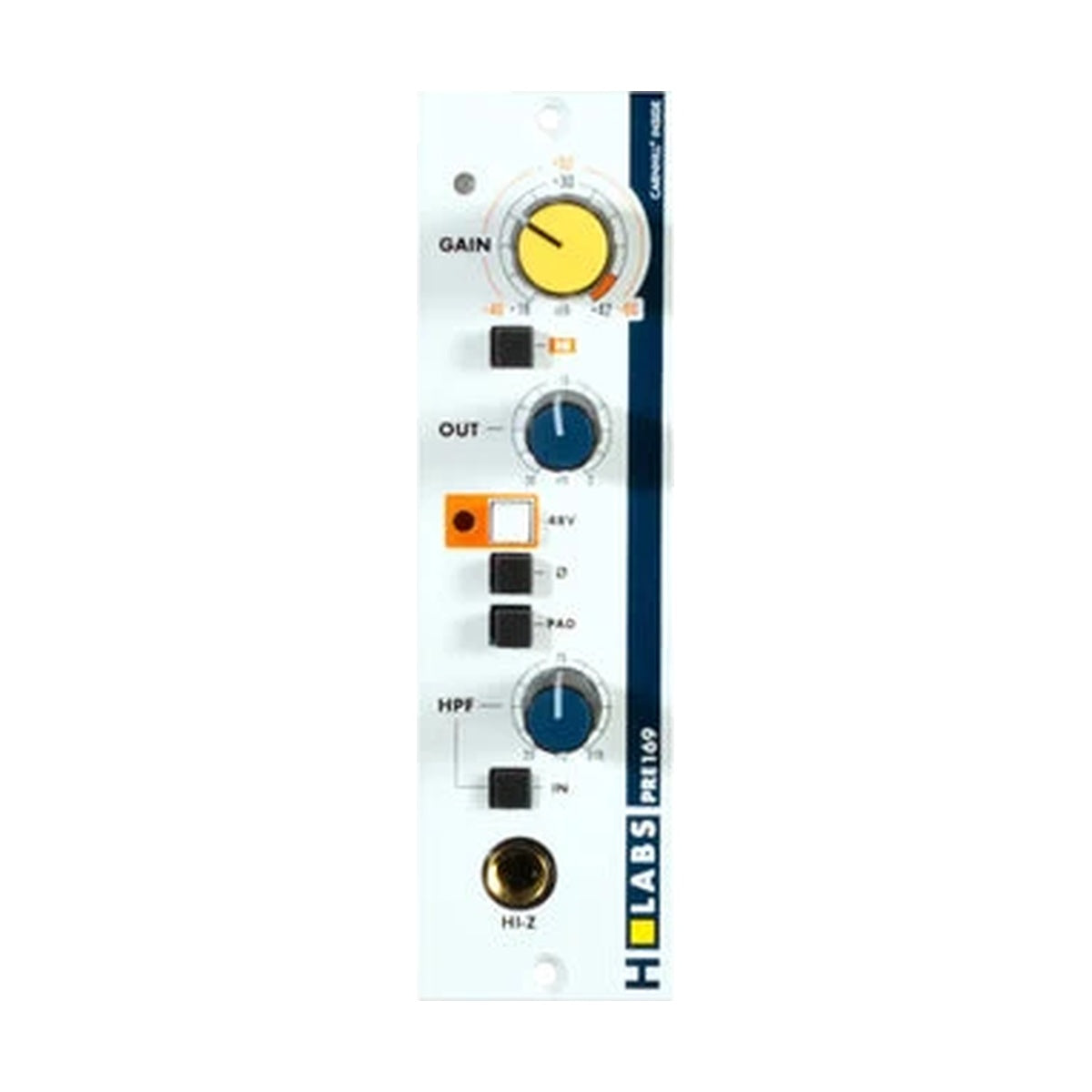
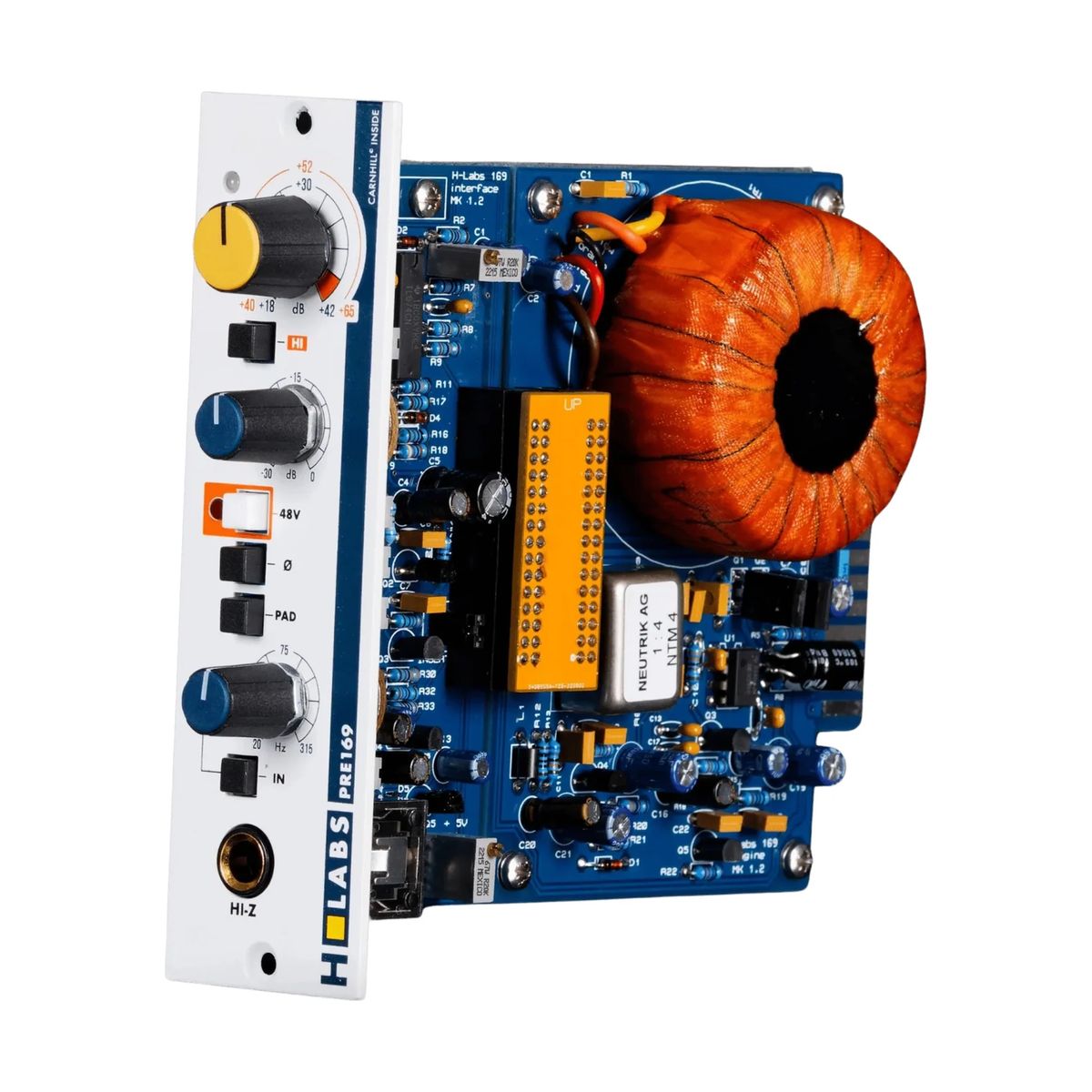
- 500-series modules — PRE169 and EQ169, one slot each, the way into the system.
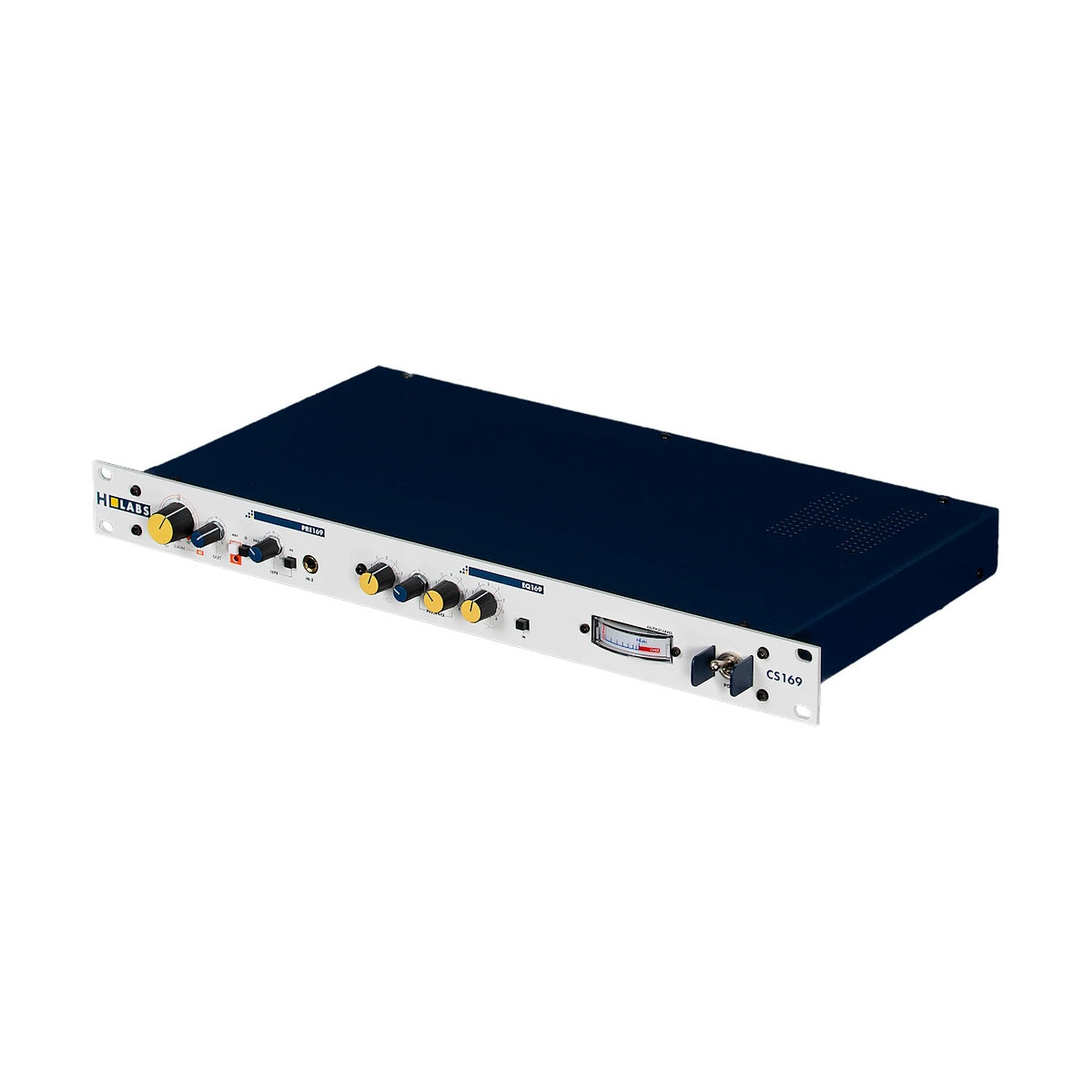
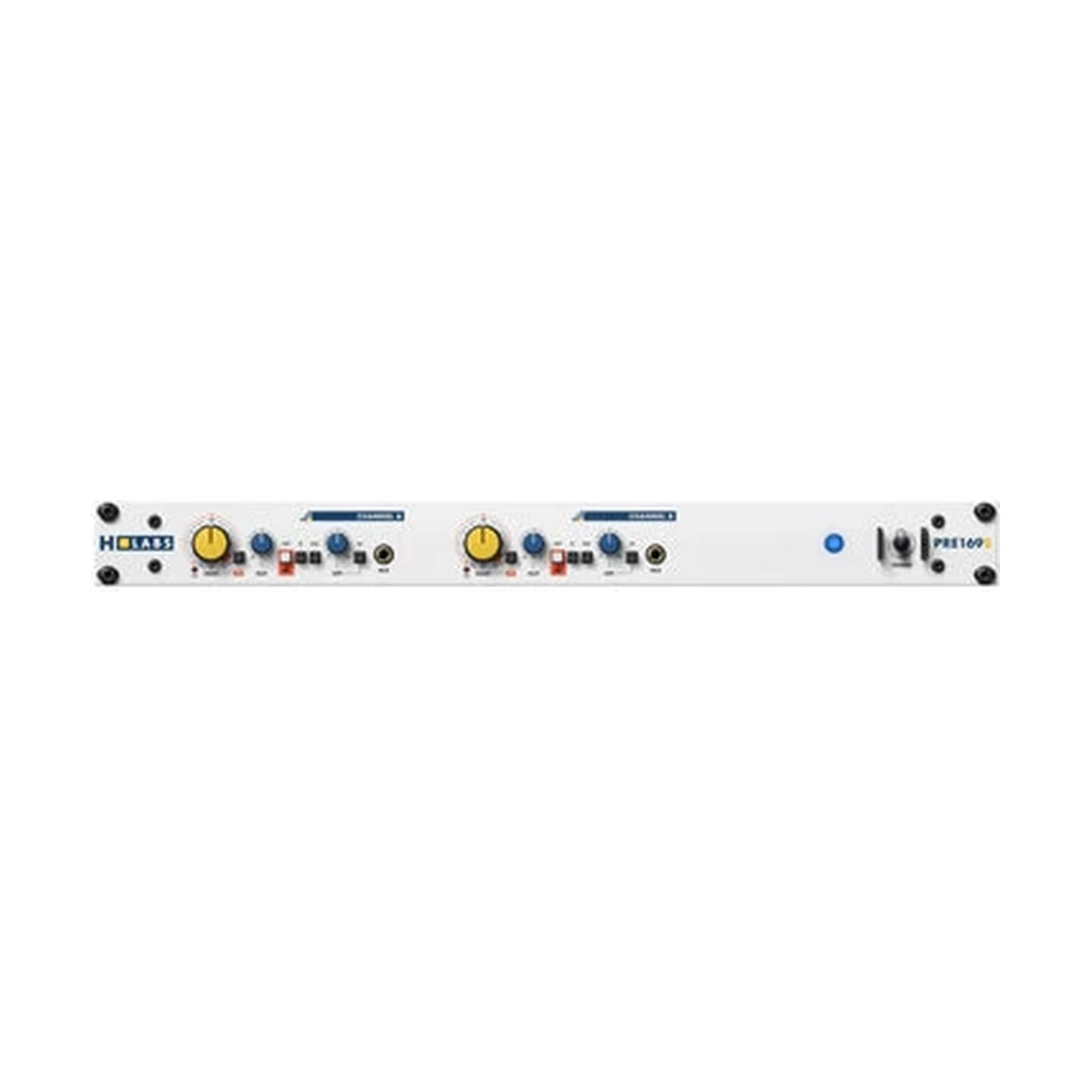
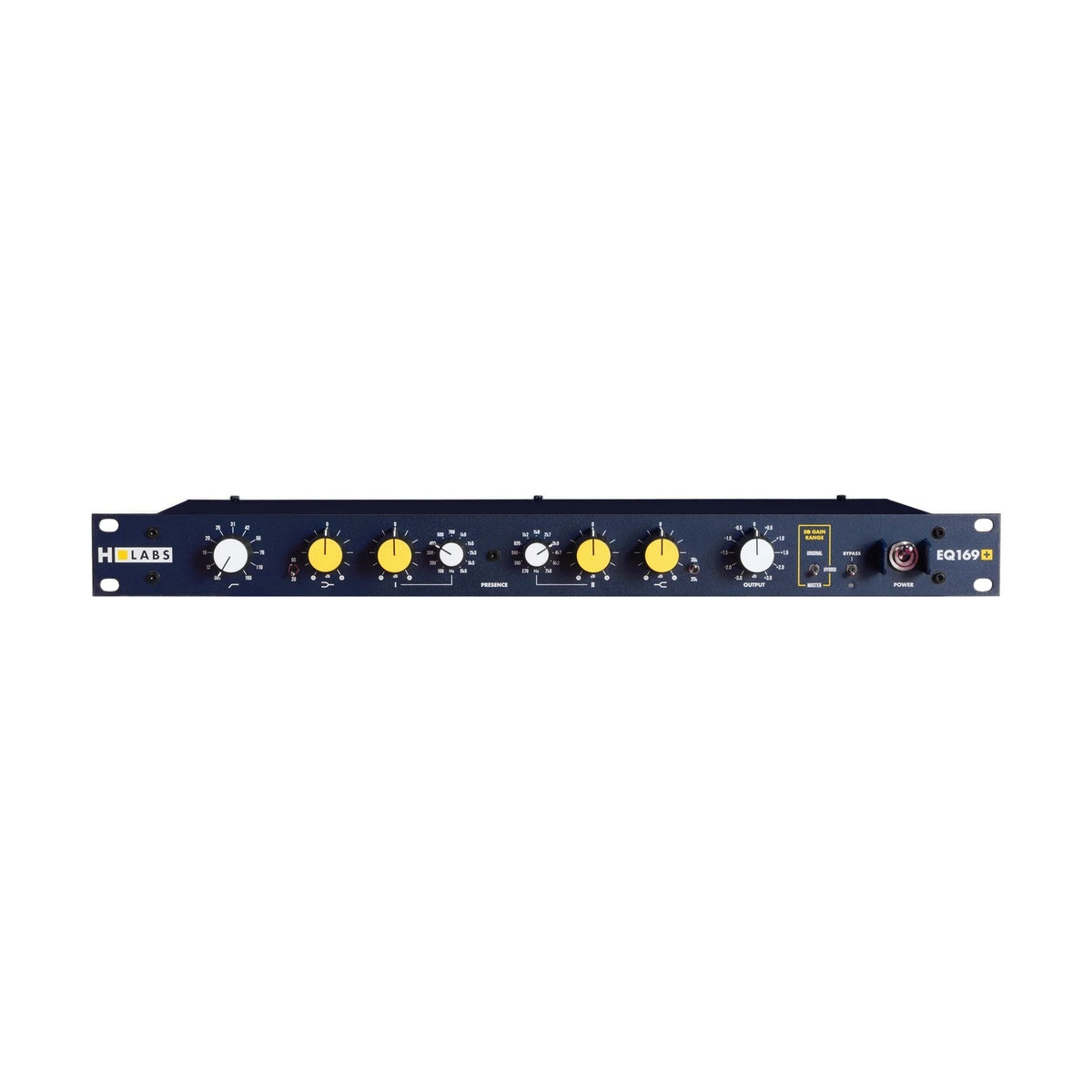
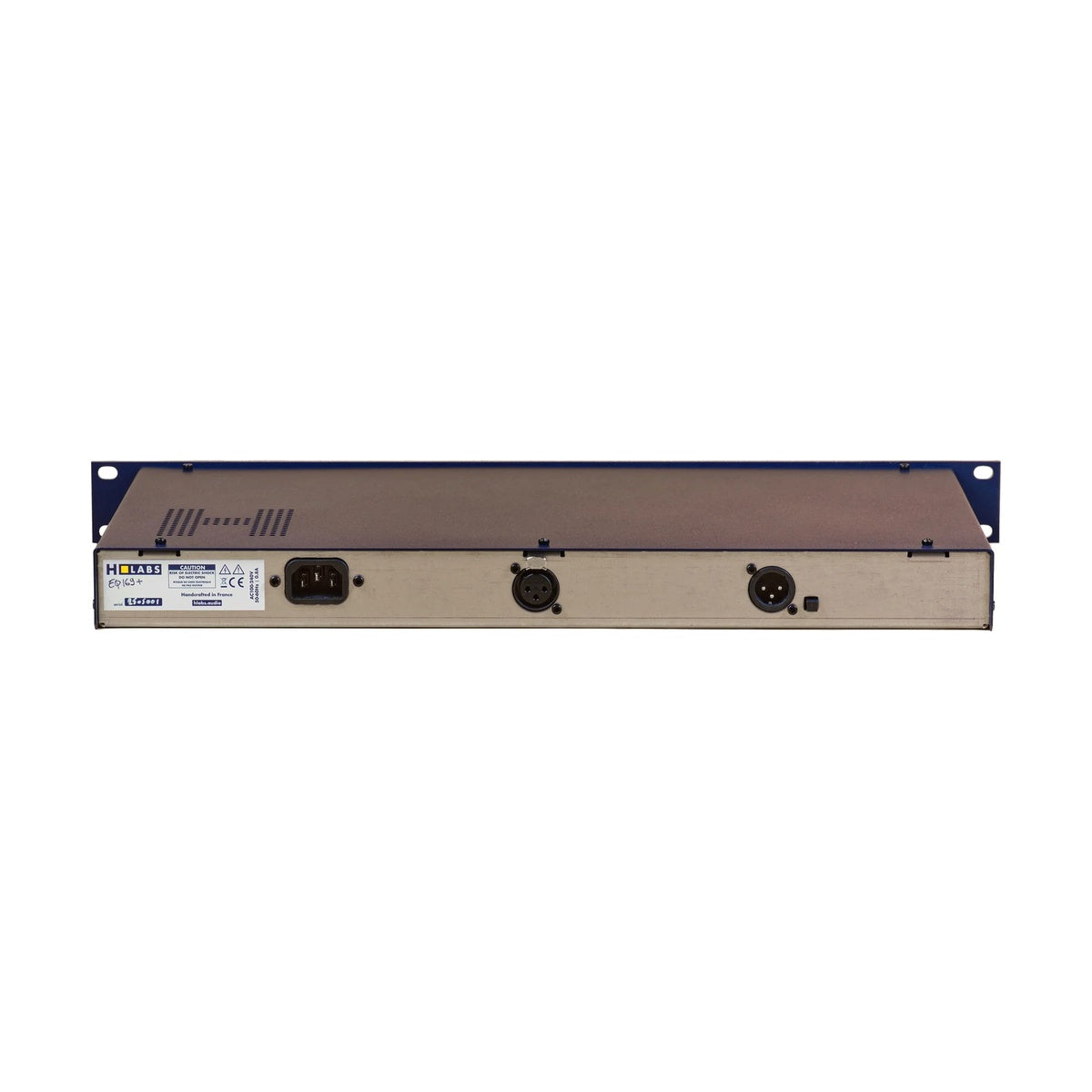
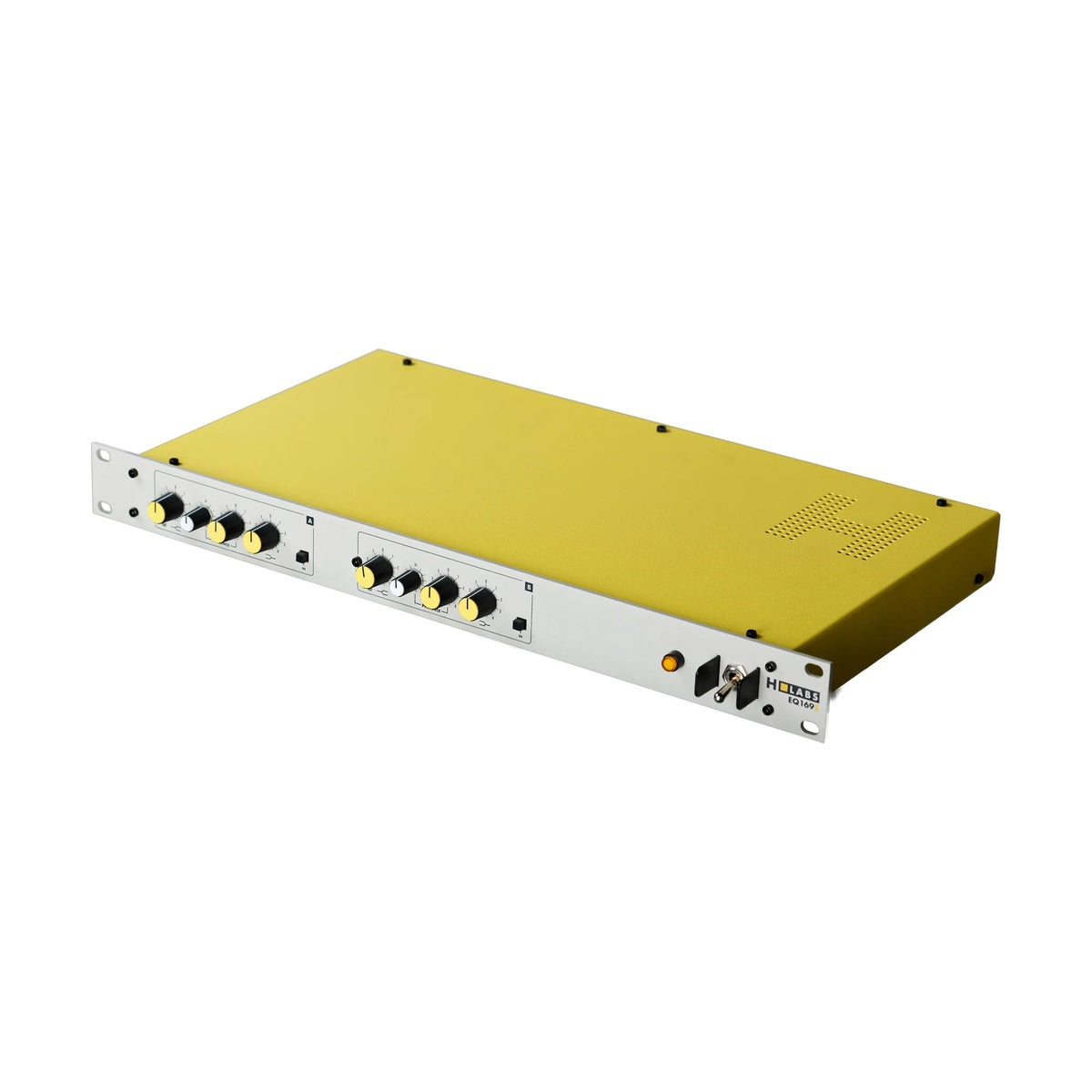
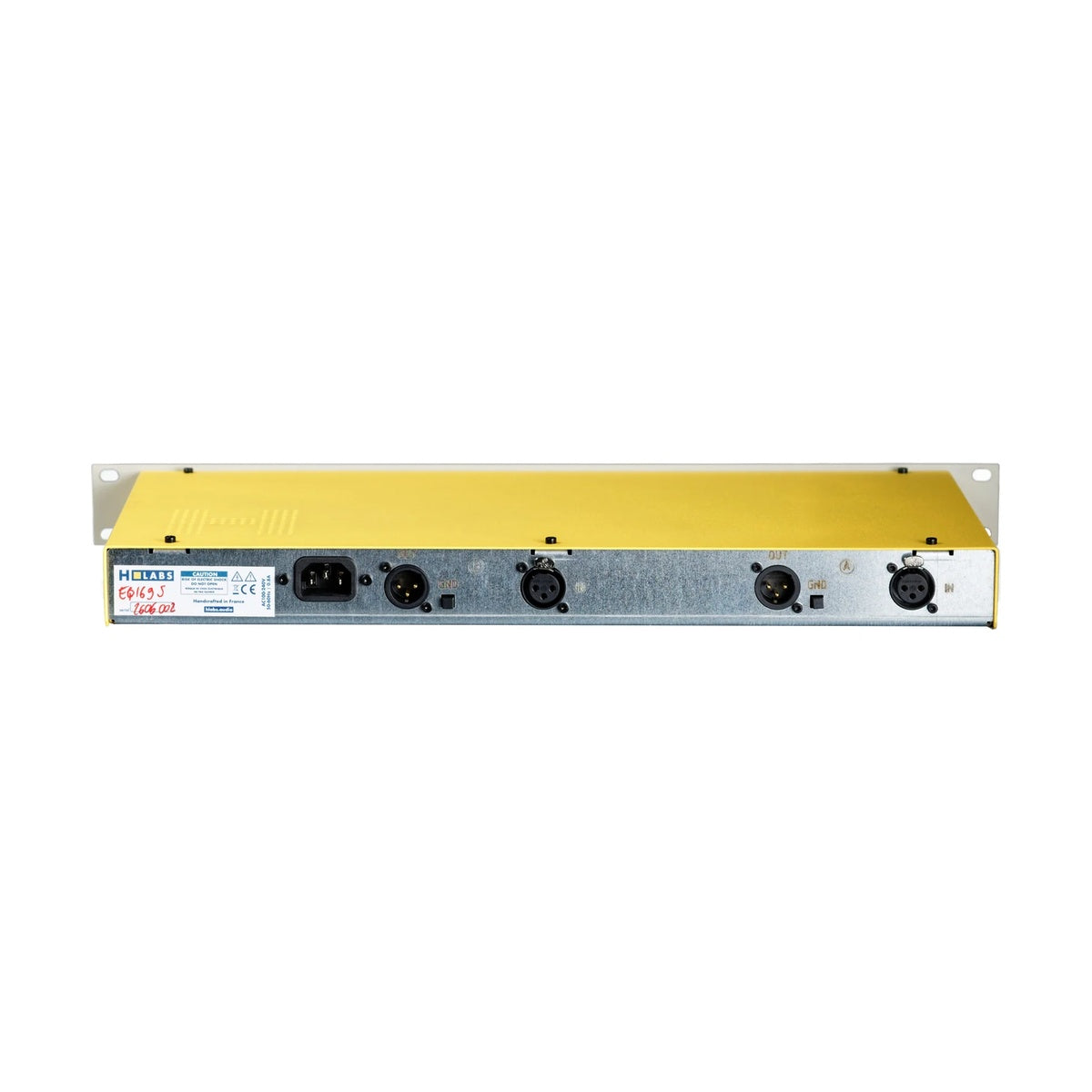
- 1U units — PRE169S and EQ169S (two channels each), EQ169+ (the mastering version) and CS169 (preamp and EQ together).
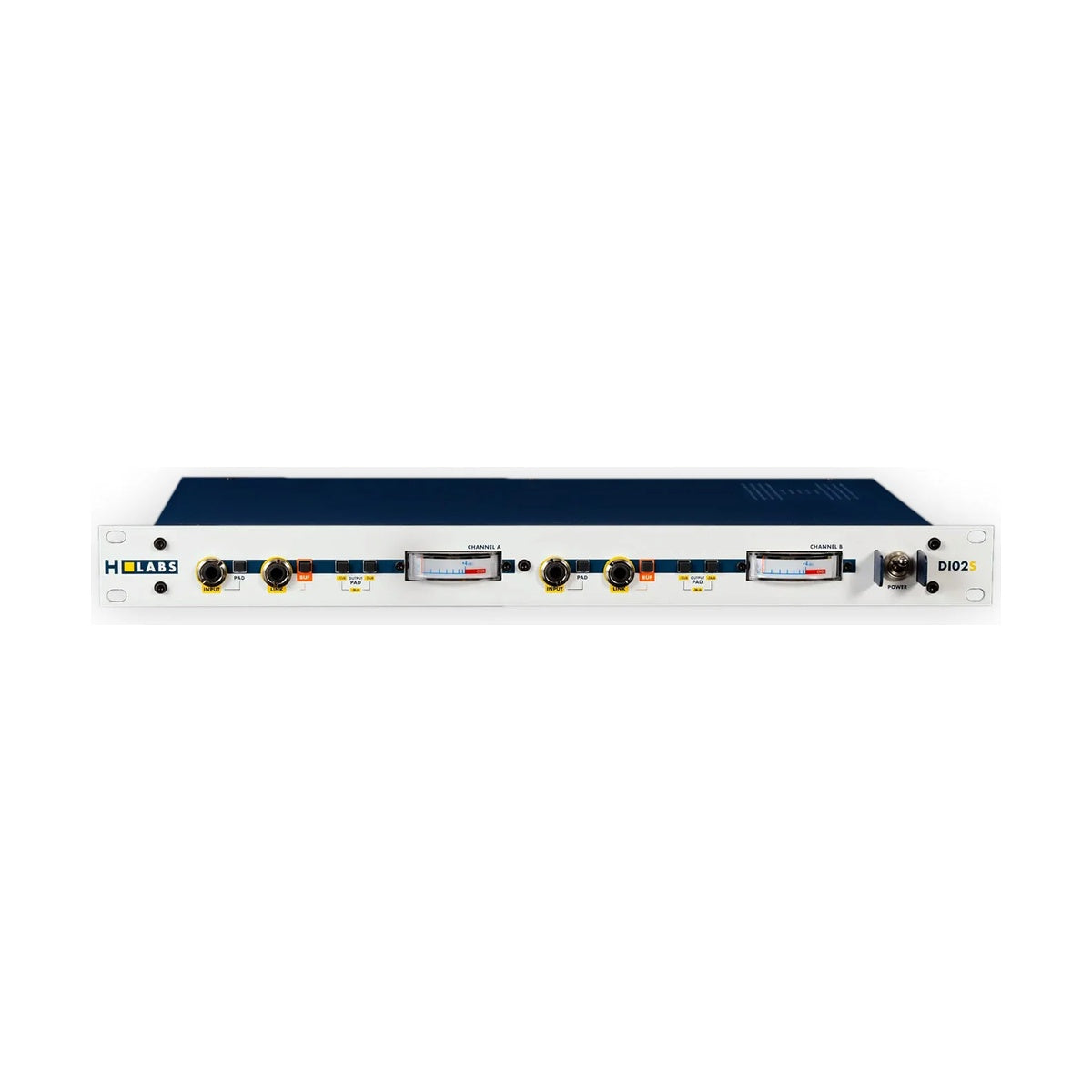
- DI boxes — the touring-configured DI02TBV and the stereo DI02S, both on Carnhill VT24499 transformers.
- Power amplifiers — AMP2200 and AMP4100 on Hypex UcD modules, with no fans.
How the models differ
| Model | Format | What it is | Key feature | What for |
|---|---|---|---|---|
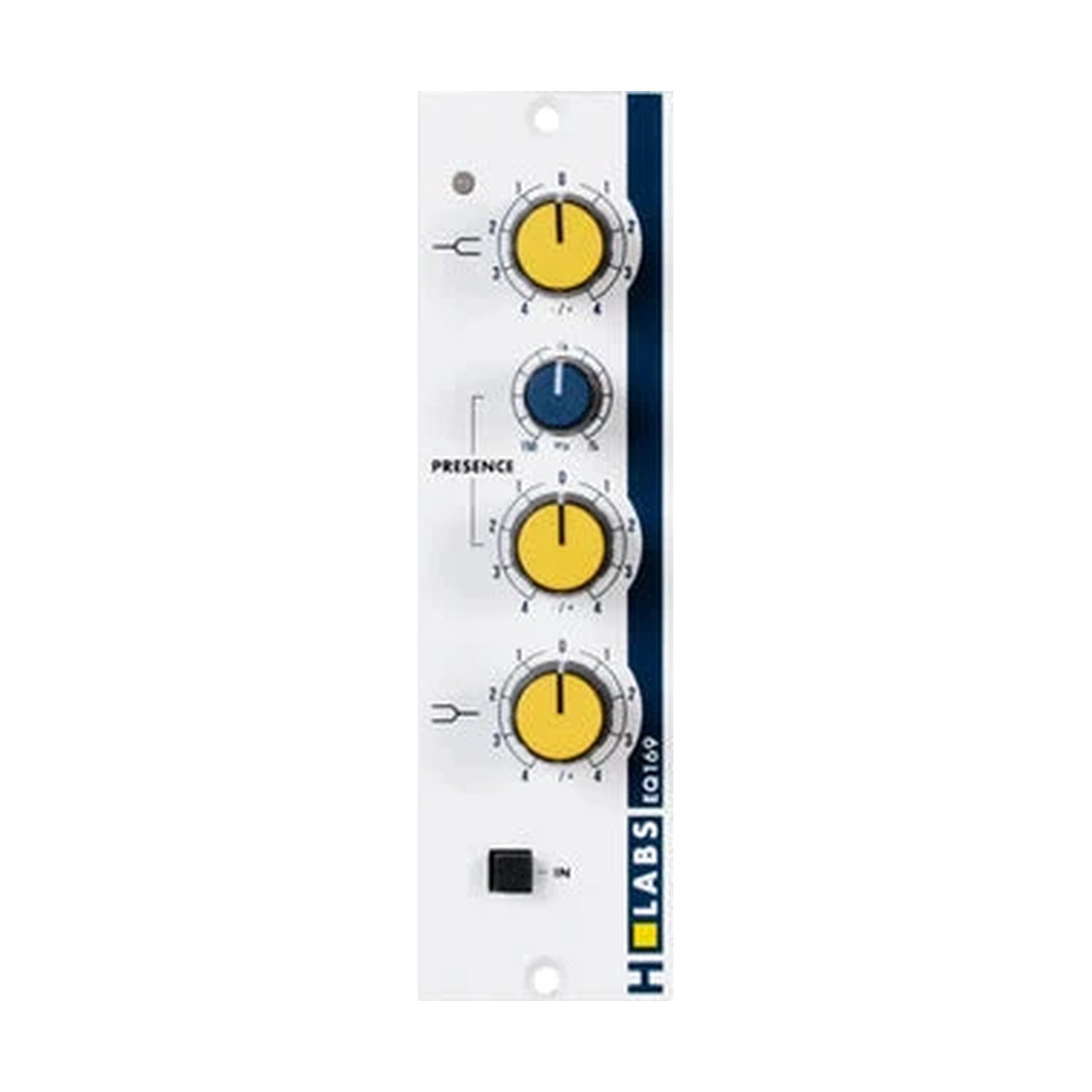
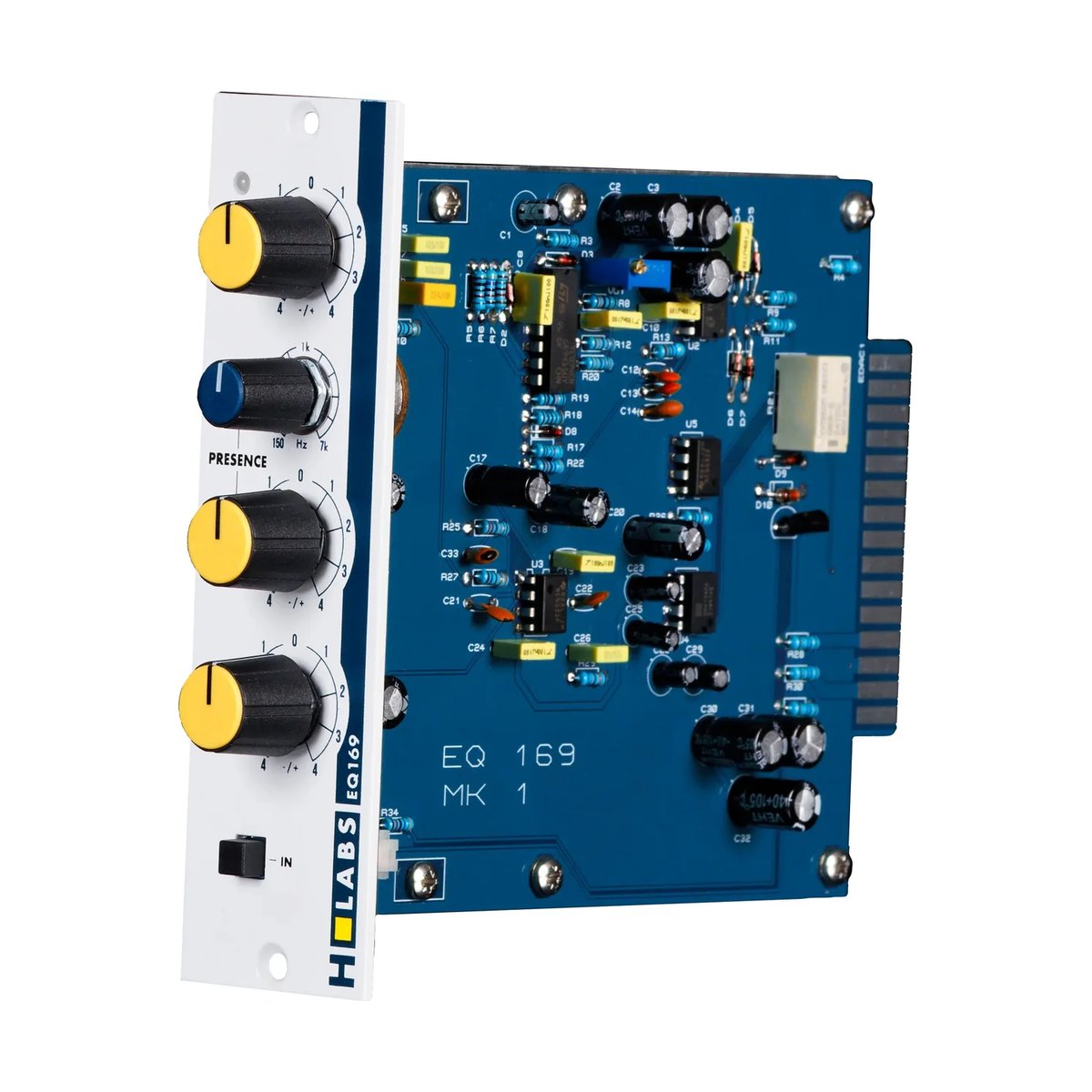
| EQ169 | 500 (API) | Three-band Studer 169 equaliser | ±15 dB shelves, sweepable Presence band, relay bypass | Tone set at the track stage, one channel |
| PRE169 | 500 (API) | Studer 169 microphone preamp | Over 67 dB of gain, −125 dBu EIN, Neutrik NTM-4 and Carnhill VT24499 transformers, front-panel DI | A first recording channel in a lunchbox |
| EQ169S | 1U, 2 channels | Two-channel version of the EQ169 | Transformerless path, independent ground lift per output | Stereo bus, subgroups, stereo tracking |
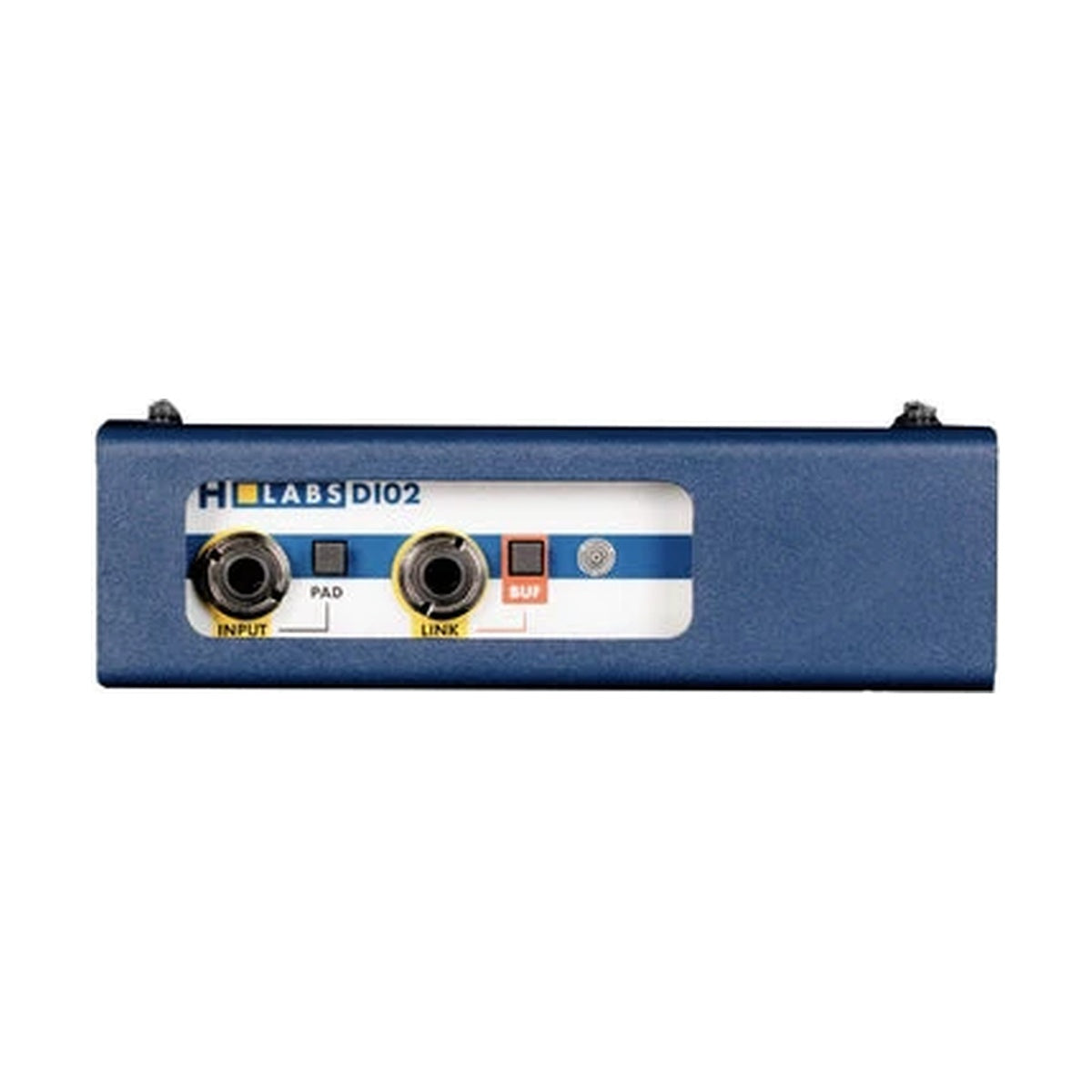
| DI02TBV | 1U | Class A DI box in touring configuration | Input above 4 MΩ regardless of pad position, buffered LINK output, Carnhill VT24499, touring bag and V-Lock cable | Guitar and bass on stage and in the studio |
| AMP2200 | 1U | Power amp, 2 × 200 W into 8 Ω | Hypex UcD modules, 92% efficiency, fanless operation | Passive monitors in the control room |
| AMP4100 | 1U | Power amp, 4 × 100 W into 4 Ω | Two stereo Hypex UcD modules, a single 8-pin Phoenix connector | 5.1 systems and immersive rigs |
| EQ169+ | 1U, mono | Mastering equaliser | Stepped switches behind every control, ±0,1 dB unit-to-unit matching, three range modes, 12–160 Hz high-pass | Mastering, working as a matched pair |
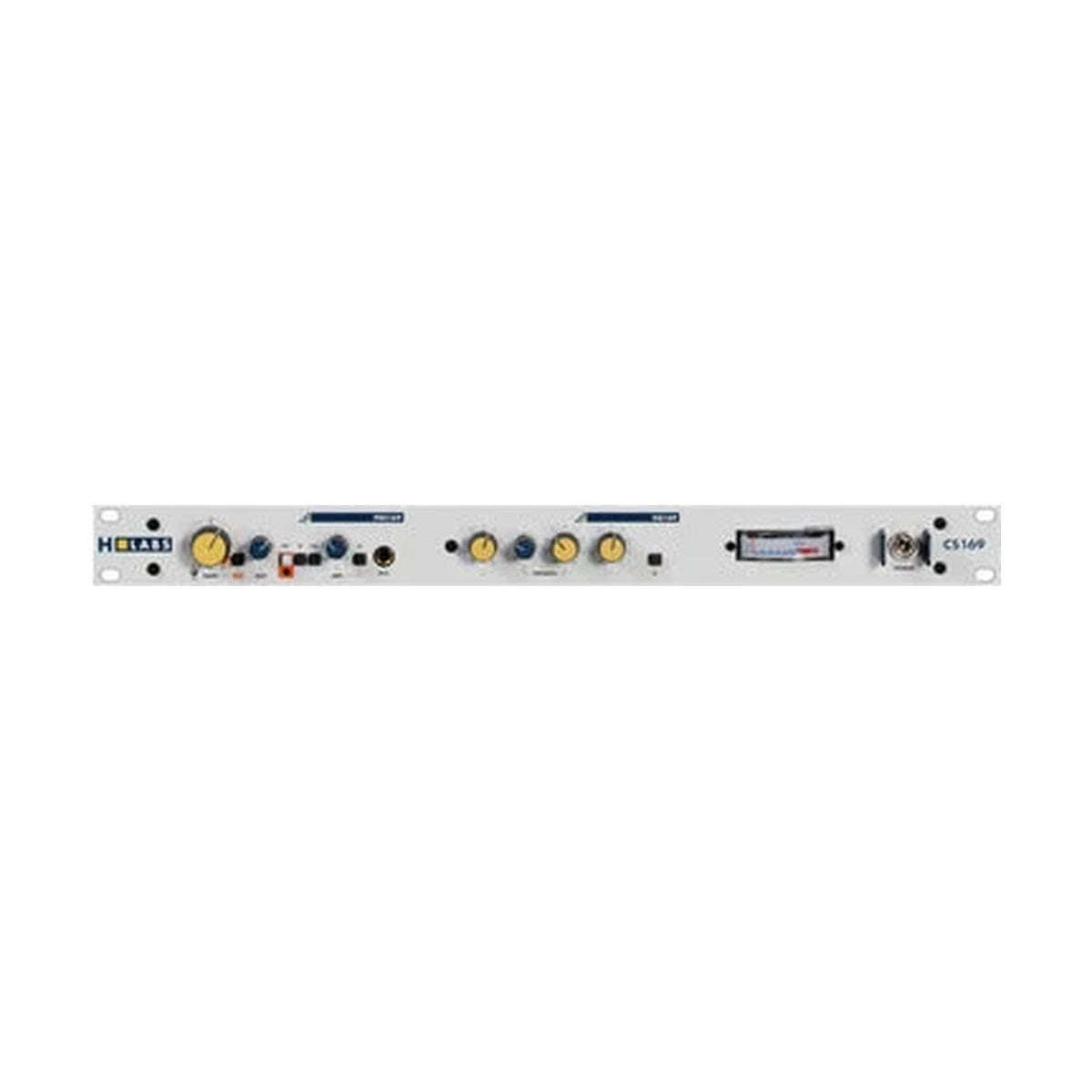
| CS169 | 1U, channel | PRE169 and EQ169 in one box with independent ins and outs | +18 to +42 dB of gain, +40 to +65 dB in Hi mode; 20–315 Hz high-pass at 12 dB/octave; 100 Hz–7 kHz Presence band | A whole recording channel in one unit |
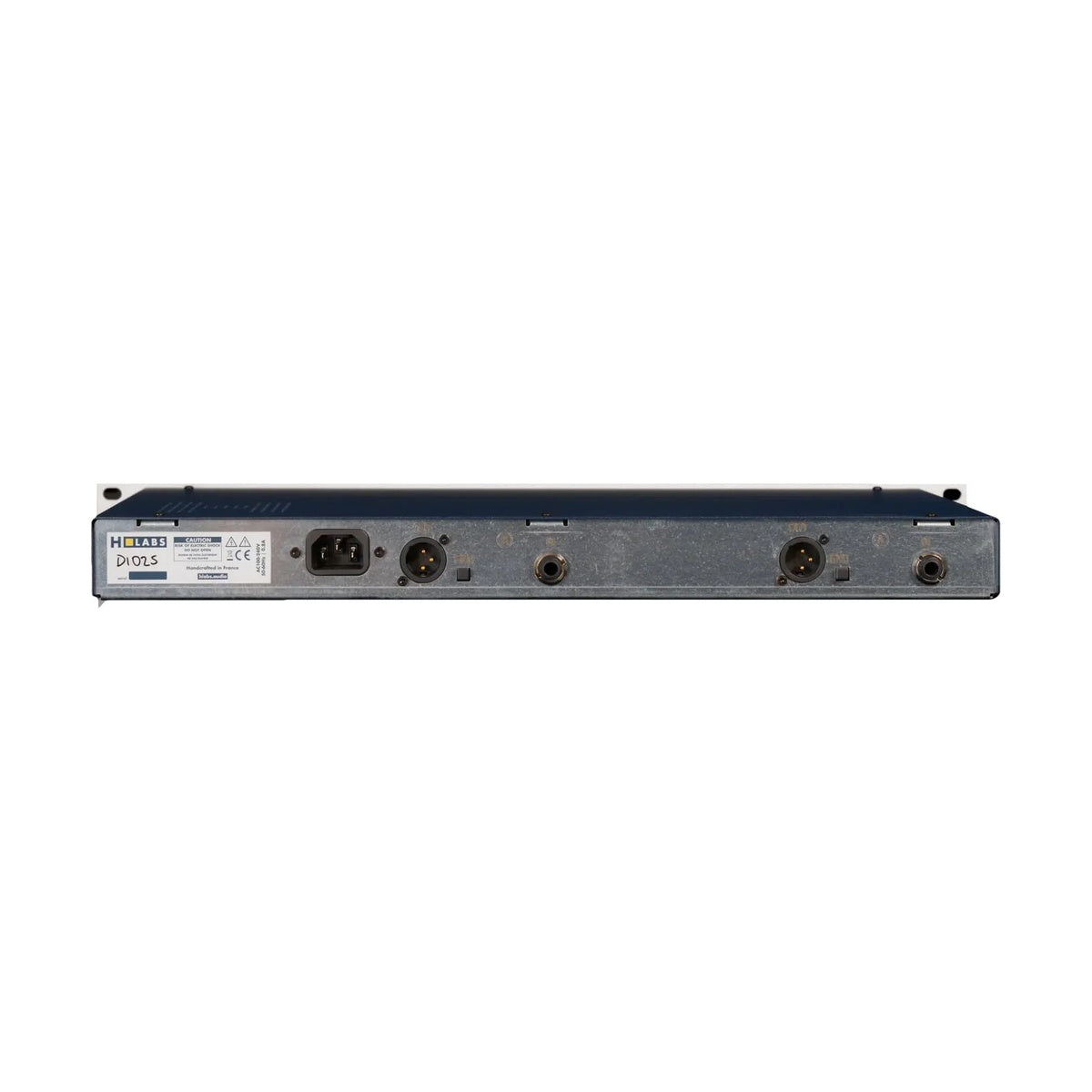
| DI02S | 1U, stereo | Stereo Class A DI box | Matched pair of Carnhill transformers, VU meter, −12 / −24 / −36 dB output attenuator | Keyboards and synths in stereo |
| PRE169S | 1U, 2 channels | Two-channel version of the PRE169 | A pair of channels built together, independent phantom power, 0 to −30 dB output control | Overheads, XY, Blumlein, stereo tracking |
Which one to take
- Building a first recording channel in a lunchbox — the PRE169, and next to it the EQ169 if you want the tone decided while tracking. This is the cheapest way into the brand.
- You want the whole channel in one box, without a lunchbox — the CS169. Both sections have their own inputs and outputs, so they run in series or separately.
- A passive ribbon or an old dynamic will not reach level — the PRE169 or the CS169: over 67 dB at −125 dBu EIN means the gain control does not have to go to the end of its travel, dragging the path noise with it.
- Tracking in stereo and needing two identical paths — the PRE169S. Two 500-series modules from different production runs do not guarantee that; a pair of channels built together does.
- EQ on the stereo bus, or in front of the converter on a stereo take — the EQ169S: both channels set from one place, on a transformerless path.
- Mastering, where a setting has to be recallable a week later — the EQ169+. Stepped switches instead of pots, and ±0,1 dB matching between units, are what makes a pair track symmetrically.
- Bass, Rhodes or a synth in stereo, on stage and in the studio — the DI02TBV for live work, the DI02S where a stable stereo image matters and you want the option of feeding a mic input.
- A silent rack for passive monitors — the AMP2200. For a multichannel system or an immersive base, the AMP4100 puts four channels in one U.
See also: preamps, 500-series modules and equalizers.
Before you choose
- What phantom power is and which mics actually need it — read this before you plug a ribbon into a preamp.
- How to record vocals at home — the order in which to build the chain.
- Condenser vs dynamic microphone — what to put in front of a preamp like this.
Why buy here
All ten HLabs units are in stock with us. In our Warsaw showroom (Nowogrodzka 6A/102) you can compare a 500-series module against the 1U version on your own material and decide whether the one-box channel is worth the difference. Selected gear qualifies for our free 30-day Test-Drive, and everything ships with 36 months of warranty and a 30-day no-reason return window. We ship across Poland and to every EU country.
About the brand
HLabs was founded by Jérôme Champlet, and the workshop sits in the Beaujolais, in the buildings of the Hacienda studios. The maker is open about where the circuits come from: API, Neve, Solid State Logic and Studer are all on its list of references, and the central one is the Studer 169, a portable 1976 console designed for location work, broadcast and post-production. Reviewing the CS169, Sound on Sound noted that this is a different character from the Neve- and API-inspired designs that dominate the market: cleaner and more detailed rather than thicker. The company's stated philosophy shows up in the way the boxes operate — every control has one job, and there is nothing here that takes more than a sentence to explain.