Pultec
Pultec EQM-1A3 Program Equalizer
Configurer
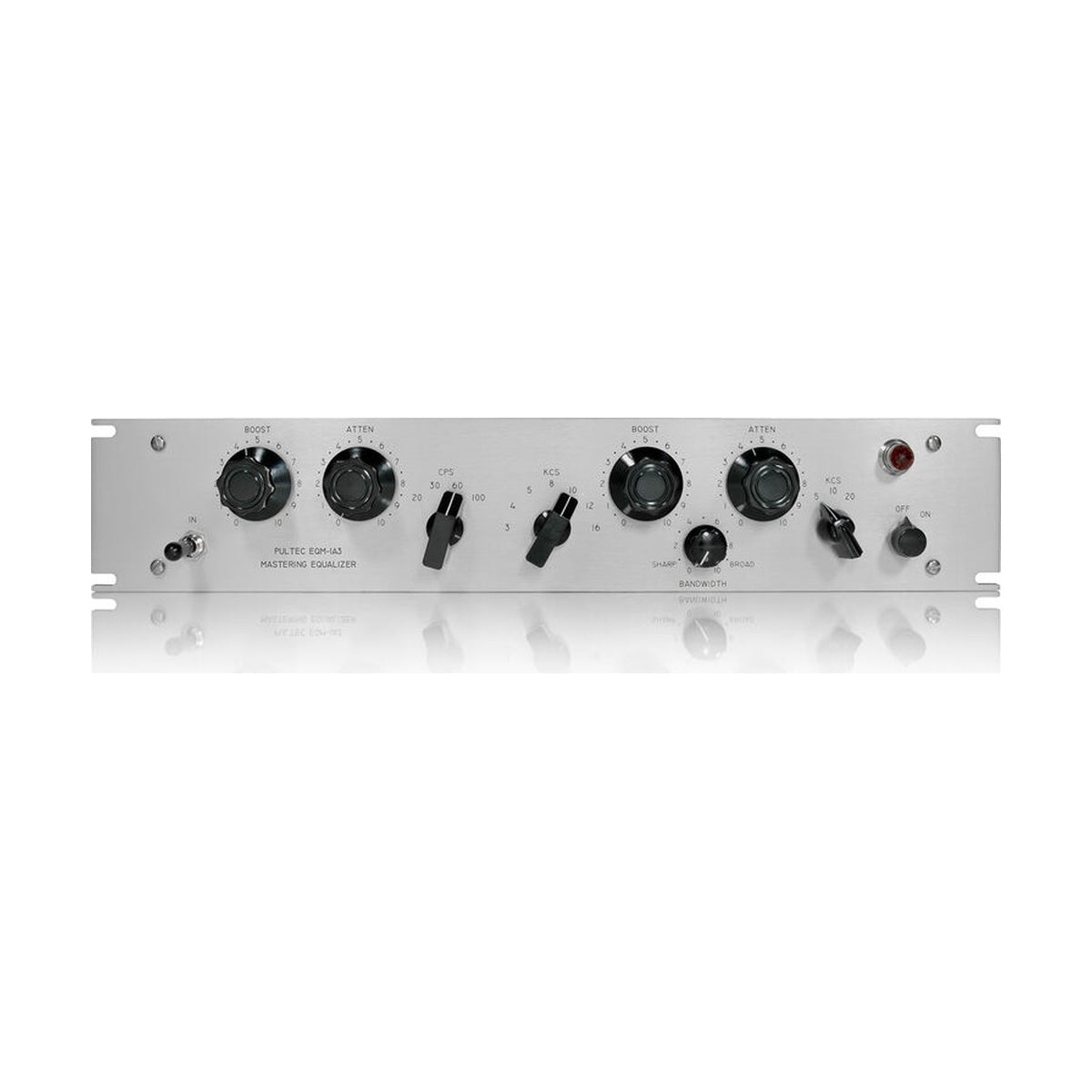
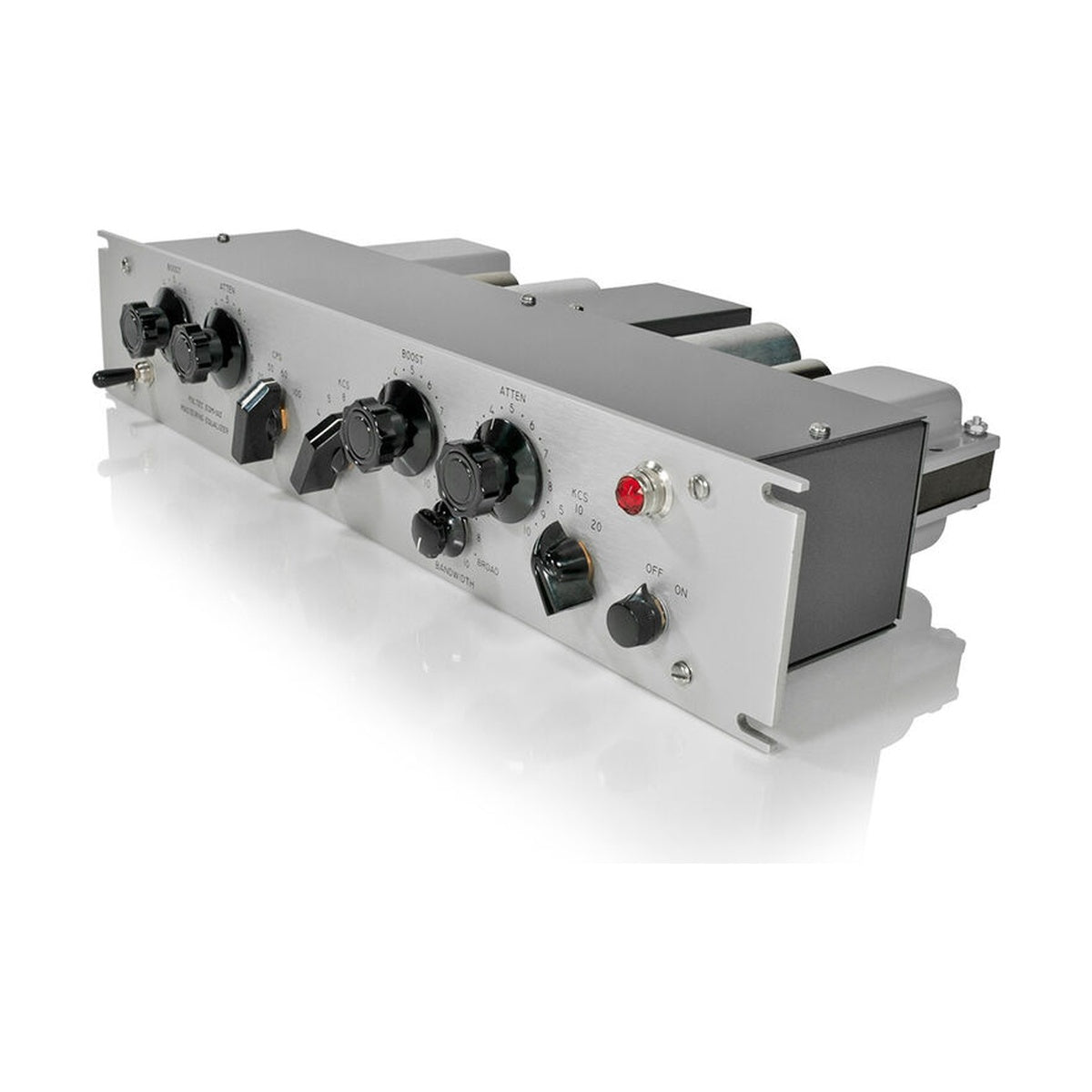
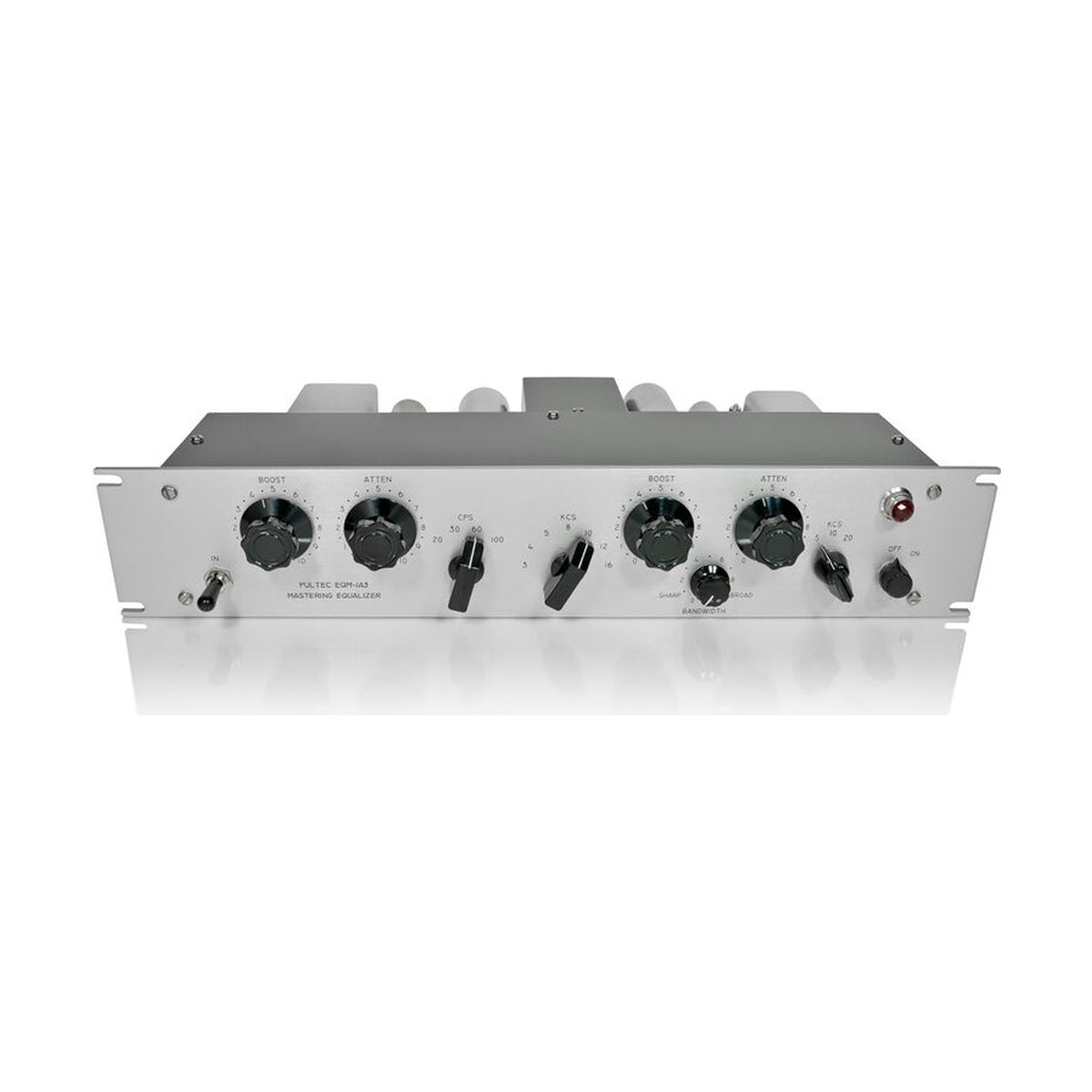
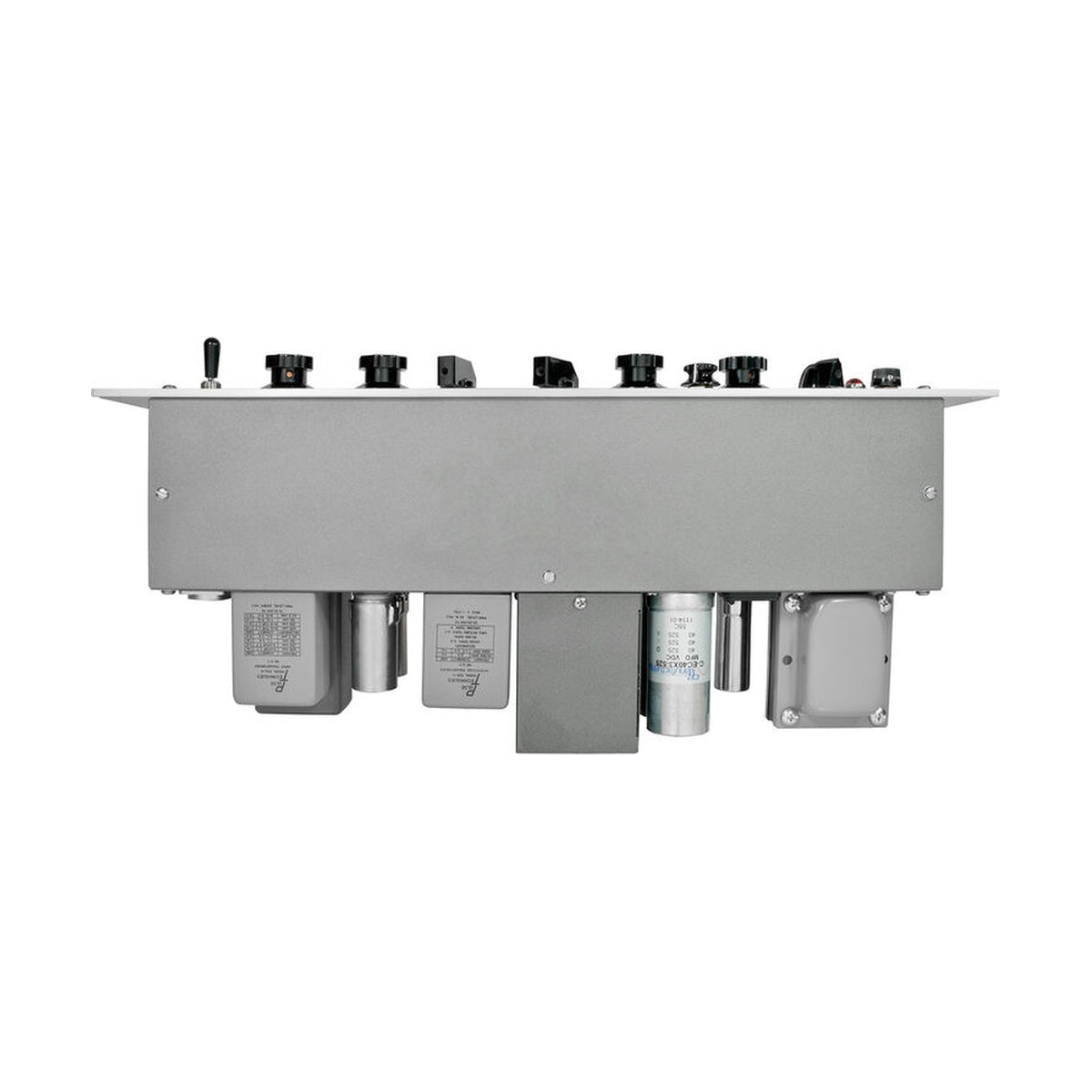
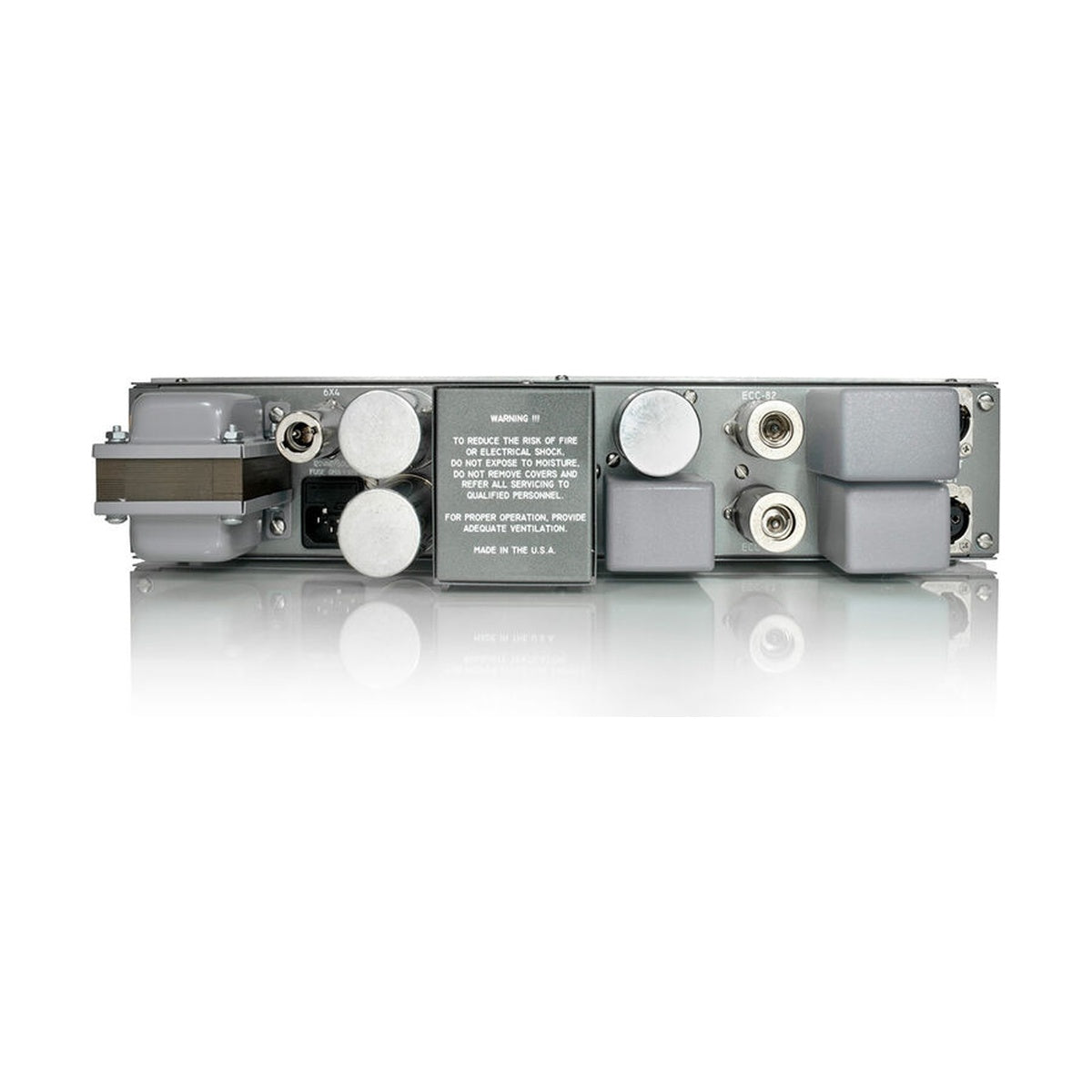
Pultec EQM-1A3 Program Equalizer in its mastering version puts the EQP-1A3 curves and fully stepped controls into a 2U chassis. The boost and attenuation potentiometers give way to 21-position ELMA switches, bandwidth moves to an 11-position switch, and every step is loaded with precision metal film resistors. The signal path stays passive, with a tube line amp on 12AU7, 12AX7 and 6X4 restoring the level.
A stereo bus pair in four rack units
Equalizing a stereo bus takes two units, and with 3U models that means six rack units spent on one band of equalization. The 2U version brings that down to four, which in a built-out mastering position decides whether the pair fits alongside the compressor, converters and monitor controller at all. Curves, components and specifications are identical to the 3U EQM-1A, so the difference shows up only in rack inches and in how the panel looks.
Fine steps early, full range at the end
The full-range progressive taper gives 0.5 dB per step through the first half of rotation, and beyond 50% the steps grow to 1 or 2 dB. That solves a specific conflict: mastering asks for half-decibel moves while work on a single track needs the full 18-20 dB, and one scale has to serve both. Worth remembering is that in a Pultec the low boost and attenuation sections interact, so with simultaneous lift and cut the effective step size shifts away from its nominal value. Which is precisely why a repeatable setting described by a number is worth more here than on an equalizer with independent bands.
KEY FEATURES
- EQP-1A3 curves and signal path in a 2U chassis
- 21-position ELMA switches in place of boost and attenuation potentiometers
- 11-position bandwidth switch
- Precision metal film resistors giving each control its own taper
- Full-range progressive taper: 0.5 dB per step across the 0-5 dB range
- A stereo bus pair occupies 4U instead of the 6U needed by 3U models
- Setting-for-setting matching between units in stereo work
- Simultaneous low-frequency boost and attenuation at the same frequency
TECHNICAL SPECIFICATIONS
- Type: passive program equalizer with tube line amplifier, stepped controls
- Low shelf boost: 20, 30, 60, 100 Hz, 0-13.5 dB
- Low shelf attenuation: 20, 30, 60, 100 Hz, 0-17.5 dB
- High peak boost: 3, 4, 5, 8, 10, 12, 16 kHz, 0-18 dB
- High shelf attenuation: 5, 10, 20 kHz, 0-16 dB
- Controls: 21-position switches, 11-position bandwidth switch
- Input impedance: approx. 600 Ohms
- Output impedance: approx. 50 Ohms
- Noise: 92 dB below +10 dBm
- Distortion: 0.15% max at +10 dBm into 600 Ohms
- Amplifier response: 20 Hz to 20 kHz, +/- 0.5 dB
- Tubes: 12AU7, 12AX7, 6X4 (one each)
- Height: 2U (3.5 inches)