What Is a PA System? The Chain, Box by Box
A PA system is a chain of equipment that takes a quiet sound source and makes it loud enough for a room full of people. PA stands for public address, which tells you what the first ones were for: announcements, not guitar solos. The chain is always the same four links. Something captures the sound, a mixer balances it, an amplifier makes it powerful, and speakers turn it back into air. Everything else is detail, budget, and how many trips it takes to carry it up the stairs.
The short version. Microphone, mixer, amplifier, speakers. In most modern gear the amplifier hides inside the speaker, so you buy three things instead of four. Do not shop by watts, because the number means less than the shops imply. If you want one box that covers a small gig on its own, the Bose S1 Pro+ at 623 euro is the honest answer.
Jump to:

What the words actually mean
A PA system is a transducer chain, which is a fancy way of saying it converts energy twice. A microphone turns moving air into electricity. A speaker turns electricity back into moving air, only much more of it. Everything between those two points is there to decide how loud, how balanced, and how much of it survives the journey.
That is genuinely the whole concept. PA feels complicated not because of the physics, but because the industry sells the same four functions in about nine combinations, each with a name that sounds important.
The chain, box by box
1. The source. A voice into a microphone, or an instrument with its own output. For voices on a stage the default is a dynamic microphone, because it handles high sound pressure and it is not interested in the drummer behind you. Which type suits which job is a whole subject in itself, and we took it apart in our guide to condenser versus dynamic microphones.
2. The mixer. Every source arrives at a different level and a different tone. The mixer's job is to make them agree with each other before anything gets loud. It sets levels, shapes tone, and sends the combined result onwards as one stereo signal. Two singers and a backing track need three channels. A five-piece band needs a lot more, and this is the single most common thing people get wrong when buying their first system.
3. The amplifier. A mixer output is line level, which is nowhere near enough to move a speaker cone. The amplifier bridges that gap. In most gear sold today it lives inside the speaker cabinet, which is why you may never see one as a separate box.
4. The speakers. These push the air at the audience. A full-range cabinet covers most of the spectrum with two drivers, a big one for the low end and a small one for the top, and a subwoofer takes the bottom octave off their hands when the music needs it.
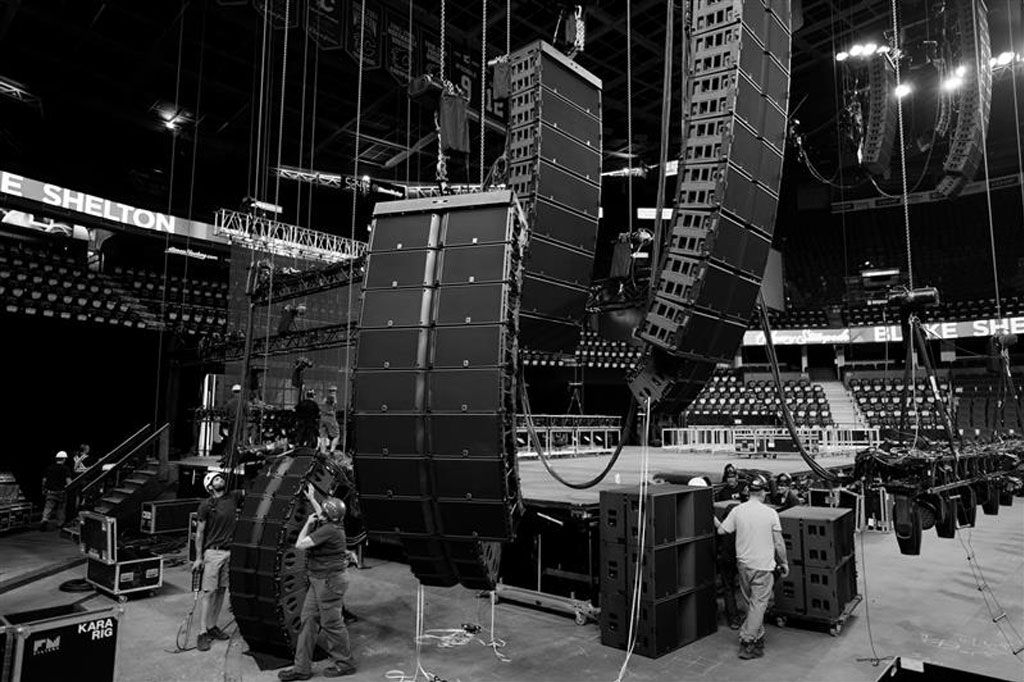
One practical note that saves arguments at load-in: count your channels before your watts. A system loud enough but with four inputs when you needed eight is useless in a way no amount of volume fixes.
Active or passive
The one real fork in the road, and it is not a quality question.
Active speakers have the amplifier built in. You carry one box per side, plug in mains power and a signal, and you are working. The manufacturer has already matched the amplifier to the drivers, so the result is predictable out of the crate.
Passive speakers have no amplifier. You supply one, which means choosing it and carrying it. They are lighter to lift and easier to fly from a ceiling, which is why installed venues still use them.
The difference is in how predictable the result is, not in how good it can ultimately be. A well-matched passive rig can beat an active one, and a badly matched one will sound worse than either. If you are carrying your own gear to gigs, active is fewer decisions and fewer things to forget in the van. The same argument plays out in the studio, and we go deeper into it in our guide to choosing active studio monitors.
Why watts are the wrong thing to shop for
Here is the one strong opinion in this article, and it argues against the easiest sale in the shop.
Watts are the number everyone shops by and almost nobody can use. Three reasons.
First, there are two kinds of watt on the box and they are not comparable. Peak is the maximum the amplifier can hit for a few seconds before something objects. RMS is an averaged figure and much closer to what you actually get. A speaker advertised at 1,000 W peak and one advertised at 300 W RMS may be the same speaker wearing different marketing.
Second, watts describe the amplifier, not the loudness. How much sound comes out depends on how efficiently the drivers convert power into air. That is sensitivity, usually printed as dB SPL, and a speaker with 3 dB more sensitivity gets the same volume from half the power. Two boxes with identical wattage can differ audibly in how loud they go.
Third, and least romantic: the room decides. Fifty people in a bar absorb a startling amount of high end, and a field has no walls to help you at all. No wattage figure on the box predicts either.
The question worth asking instead is: how many people, indoors or out, and how many inputs. Answer those three and the wattage sorts itself out. If it helps, I have watched people buy twice the power they needed and still run out of channels, which is the audio equivalent of buying a bigger van and forgetting the seats.

If you came here about a school or an office
Then you want a different kind of system with the same name, and here is the difference in one paragraph so you can get on with your day.
Installed public address, the kind that carries announcements through a school, an office or a station, distributes speech across many zones at moderate volume through ceiling or wall speakers. It is engineered for intelligibility and coverage, and it is often tied into fire and emergency systems, which brings regulations with it. Live sound PA, the kind this article is about, makes music loud and good in one space, then gets packed away.
We sell the second kind. If your project is the first kind, you want an installation contractor rather than a music shop, and saying so is cheaper for you than us pretending otherwise.
Seven boxes that make a working PA
All in stock, prices as of today, arranged by their place in the chain rather than by price.
1. The input: Shure SM58, 132 euro. The dynamic vocal microphone that every engineer in the world can already work with. It survives being dropped, it rejects what is behind it, and it is the reason nobody argues at soundcheck.
2. The smallest real mixer: Allen & Heath ZED-6, 122 euro. Two mic inputs and two stereo channels in a box you can carry under one arm. Enough for a singer with a guitar and a backing track, and the preamps are better than the price suggests.
3. When two inputs run out: Allen & Heath ZEDi-10FX, 350 euro. Four mic inputs, onboard effects and a USB interface, so the same desk that runs the gig also records it. This is the one most small bands should start with.
4. The workhorse speaker: Mackie Thump 215, 423 euro. A 15-inch active cabinet, which is the size that stops you wishing you had gone bigger. Two of these cover most pubs and small halls without complaint.
5. The one that needs no mains: Bose S1 PRO+, 623 euro. Battery powered, with a mixer built in and enough output for a busking pitch, a garden party or a corner of a bar. If your gigs are small and your power sockets are theoretical, start here and stop.
6. The bottom octave: Mackie THUMPSUB GO, 670 euro. Add this when the kick drum turns up. A sub is also the cheaper way to get low end than buying larger tops you then have to lift.
7. The whole thing in one purchase: Solton TWA 15 Classic System, 1,316 euro. A complete matched system for when you would rather not assemble the puzzle yourself. Everything is voiced to work together, which removes the most common way a first PA disappoints.
A PA is the one purchase where the specification sheet tells you least, because what you are really buying is whether it covers your room with your inputs. Our Warsaw showroom on Nowogrodzka has this gear set up, so you can put your own microphone through it and hear what it does before you commit to carrying it. Selected items come with our free 30-day Test-Drive: a short contract, real gigs, then you decide. Everything carries a 36-month warranty, there is a 30-day return window with no reason required, and we ship to every EU country.
Straight answers
What does a PA system do?
It takes sound that is too quiet for a room and makes it loud enough for everyone in that room to hear clearly. In practice that means capturing a source with a microphone or a direct output, balancing the sources against each other on a mixer, amplifying the result, and pushing it out through speakers. The chain is the same whether it is one singer in a bar or a festival stage.
Is a PA system the same as an amp?
No. An amplifier is one component inside a PA system, the part that makes a line level signal powerful enough to drive a speaker. A PA system is the whole chain: sources, mixer, amplifier and speakers. The confusion is fair, because in most modern active speakers the amplifier is built into the cabinet, so you buy the two as one object.
What is the PA system in school?
That is installed public address: a fixed system that distributes announcements across many zones through ceiling or wall speakers, engineered for speech intelligibility rather than music, and often tied into fire and emergency alerting. It shares a name and the basic signal chain with live sound PA, but it is designed, installed and regulated differently, and it is normally the job of an installation contractor rather than a music shop.
What is the main difference between a PA system and a sound system?
Mostly usage rather than hardware. PA implies addressing an audience with speech or live music, usually with microphones and a mixer in the chain, and often as a portable rig. Sound system is a looser term that covers any setup reproducing audio, including fixed installations and playback-only systems with no microphone anywhere. Plenty of gear is honestly described by both words.
How many watts do I need for a PA system?
Watts are a poor way to answer this, because peak and RMS ratings are not comparable and neither one tells you how loud the speaker actually goes. Sensitivity, measured in dB SPL, decides that: a speaker 3 dB more sensitive reaches the same level on half the power. Size your system by audience count, indoors or outdoors, and the number of inputs you need, then compare sensitivity between the candidates that fit.

Learn the four links in the chain and buying a PA stops being a guessing game, because you stop comparing numbers and start asking what each box is for. Get that right and nobody at the gig will mention the sound at all, which is the highest praise this job offers. Get it wrong and everyone becomes an engineer, usually between songs, usually loudly.


About the author
Michał Kaniuszkiewicz is a content manager and SEO specialist at Wired Tunes. He creates and optimizes content that helps readers find useful information about music, gear, and sound. Beyond his editorial work, he has been making music for 8 years in hip-hop, pop, and electronic genres — giving him insight into the subject not just from an SEO perspective, but from the inside, as a practicing musician and producer. This experience allows him to create content that's equally useful and clear for both beginners and experienced listeners and music creators.
Read next
- XLR vs USB Microphone. Only one of the two plugs into a PA, and it matters the day you play live.
- What Is a Preamp?. The gain stage hiding inside every mixer channel you just read about.
- How to Read a Frequency Response. What a speaker specification promises, and what it quietly leaves out.