What Is a Preamp, and Do You Need One?
A preamp, short for preamplifier, raises a very quiet signal to a level the rest of your equipment can work with. A microphone puts out a signal thousands of times weaker than the line level your recorder, mixer or interface expects, and the preamp closes that gap while adding as little noise of its own as possible. That is the whole job. Everything else people argue about, and my partner will confirm they argue about it at length in our kitchen, is a question of how gracefully a particular preamp does it.
The short version. You already own preamps. There is one behind every microphone input on your audio interface, and for most home recording it is genuinely enough. An external unit earns its place for three specific reasons: quiet gain for very low-output microphones, more channels than your interface has, or a deliberate sound you cannot get from a clean circuit. If you want one recommendation to start with, the Warm Audio WA73 at 562 euro is the one people keep.
Jump to:
What a preamp actually does
Three jobs, and only the first one is the famous one.
It provides gain. A microphone output sits somewhere around mic level, which is tiny. Line level is what everything downstream expects. Bridging that means somewhere between 40 and 70 dB of amplification, and the trick is doing it without amplifying the circuit's own hiss along with your singer.
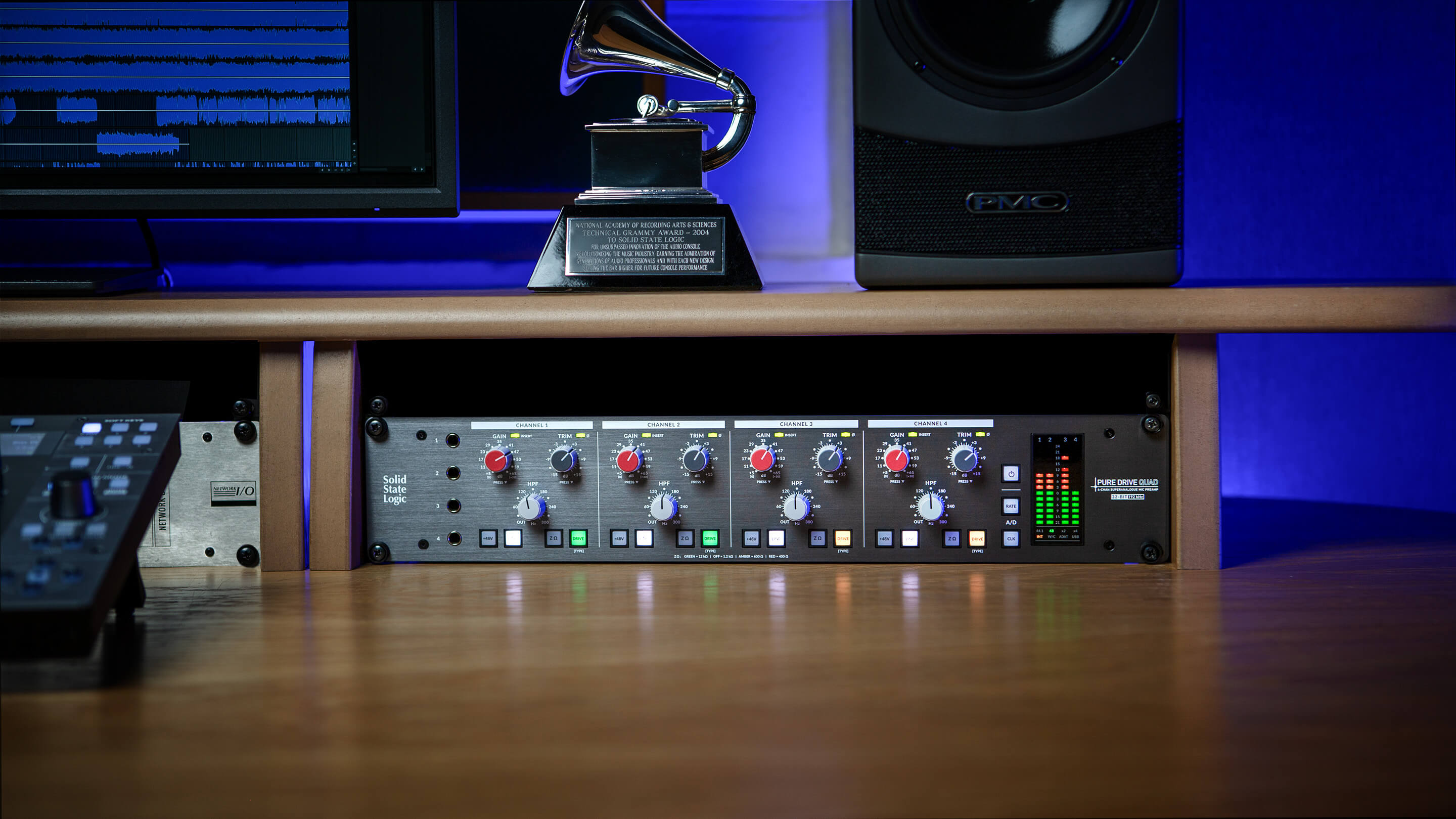
It presents an impedance to the microphone. The input the microphone sees changes how the microphone behaves, particularly with ribbons and older dynamics. This is why some preamps, the SSL PureDrive Quad among them, give you a variable impedance control. It is a tone control that works before the signal is even a signal.
It supplies the +48 V. Phantom power for condenser microphones comes from the preamp stage, not from some separate box. If you have ever wondered where that switch actually sends its voltage, we took that apart in our guide to what phantom power does and which mics need it.
You already own several
This is the part most articles on this subject skip, presumably because it does not sell anything.
Every microphone input on your audio interface has a preamp behind it. Not a token one either. The Audient iD14 MkII at 206 euro measures 121 dB of dynamic range on the way in, using the same Console circuit Audient puts in equipment costing several times as much. That is not a compromise you are tolerating until you can afford better. For a vocal, an acoustic guitar and a podcast, it is the finished article.
So the honest question is never "do I need a preamp". You have one. The question is whether you need a different one, and that has a much smaller set of correct answers than the internet suggests.
What an external one actually buys
Three reasons, and if none of them describes your situation, keep your money.
Quiet gain for quiet microphones. Passive ribbon microphones and some low-output dynamics put out very little signal, and they want a preamp that can deliver a lot of gain without the hiss arriving alongside it. Run one of those into a modest preamp at maximum gain and you will hear the circuit working. Note the distinction while we are here: passive ribbons need that quiet gain and do not want phantom power, while active ribbons require phantom and put out a signal comparable to a condenser. Different animals wearing the same coat.
Channel count. Two inputs is fine until the day you record drums. Then you need eight, and a dedicated unit is the cheapest way to get there without replacing the interface you are happy with.
A deliberate sound. This is the real reason most external preamps get bought, and it is a legitimate one as long as you are honest that you are buying colour rather than correctness. A transformer-coupled Class-A circuit driven reasonably hard adds harmonic content. That is distortion, technically. It is also why records made through certain consoles sound the way they do.
Six worth knowing
All on our shelves, prices as of today, arranged by what they are for rather than by price.
1. The character one: Warm Audio WA73, 562 euro. A faithful take on the Neve 1073 design, with the warm, harmonically rich behaviour that made the original famous. This is the preamp people buy when the recording is technically fine and emotionally flat.
2. The transparent one: Grace Design m101, 930 euro. Single channel, with the same trans-impedance architecture as Grace's larger m801 and m201, plus an optimised instrument DI input. Its entire design goal is to add nothing. Put it next to the WA73 and you have the whole philosophical argument of this industry in two half-rack boxes, and the more expensive one is the one doing less.
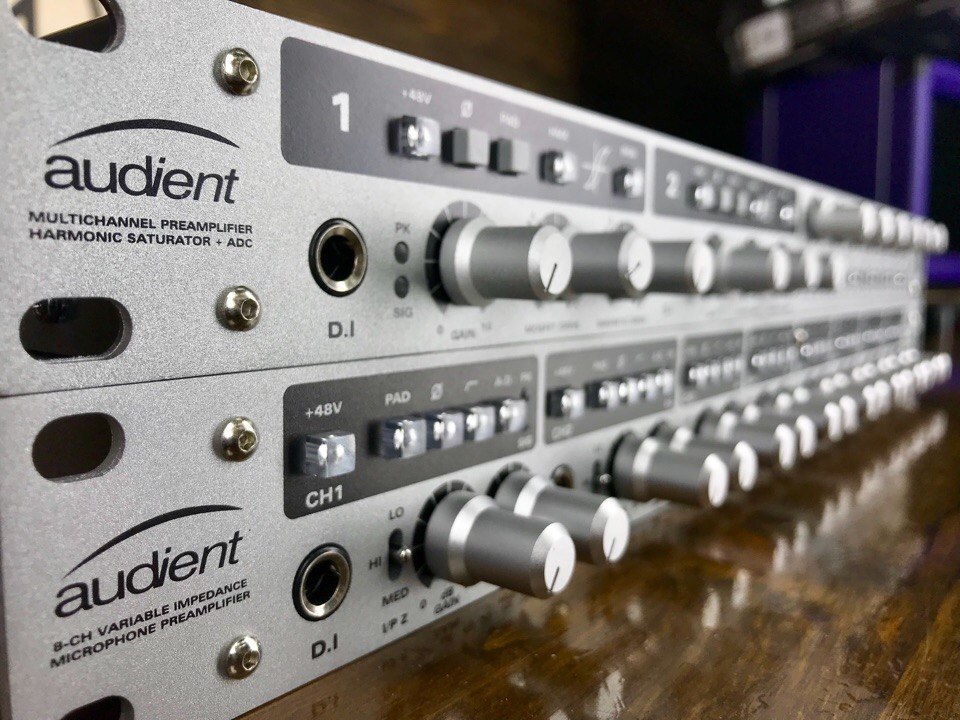
3. The one that solves channel count: Audient ASP880, 887 euro. Eight channels of Class-A Audient Console preamp with Burr-Brown conversion, built to expand an interface you already own rather than replace it. This is the drum-kit answer.
4. The modern one: SSL PureDrive Quad, 924 euro. Four Class-A channels with 75 dB of gain, variable impedance, +48 V, two instrument inputs and three switchable drive circuits: clean, a classic V-series warmth, and a modern JFET punch. One box that can be either of the first two on this list depending on a switch, which is a genuinely useful thing to own when you are still working out what you like.
5. The boutique one: Phoenix Audio Ascent One, 1,594 euro. Class-A mic pre and DI in a half-rack 1U, with a transformerless microphone input feeding a DSOP-2 output stage and a custom-wound transformer. Small box, very specific opinion about how a signal should be treated.
6. The far end: Vertigo Sound VSP-2, 3,529 euro. Two channels in dual mono, built around a fully discrete Twin Op Amp Vertigo calls the OPA 1976, with the input isolated by a low-ratio 1:2 transformer. This is a mastering-room and commercial-studio purchase, and pretending otherwise would be a sales pitch rather than an answer.


If you got here about a record player
Then you want a different device with a confusingly similar name, and here is your answer in one paragraph so you can get on with your evening.
A phono preamp, also called a phono stage, does two things a microphone preamp does not: it applies the RIAA equalisation curve that vinyl is cut with, and it handles the extremely low output of a cartridge. Many turntables and amplifiers have one built in, which is why the usual question is not "which one" but "do I already have one". Check the back of both units for a socket marked phono before you buy anything.
We do not sell those. Everything else on this page is studio equipment for recording microphones and instruments, so if vinyl is your project, the honest advice is to go and read a hi-fi specialist rather than a pro audio shop being polite.
When not to buy one
Here is the single strong opinion in this article, and it argues us out of a 562 euro sale at minimum.
An external preamp is one of the last upgrades that makes sense, not one of the first. Your interface already gives you 121 dB of dynamic range on the input. Nothing in a room with an untreated wall behind the microphone is being held back by that number. If your recordings sound thin, boxy or distant, the cause is almost always the room, the microphone choice or the distance between the singer and the capsule, in roughly that order. A better preamp will reproduce all three problems more faithfully.
Spend on the room first, then the microphone, then the preamp. I have watched people do it in the opposite order for twenty years, and I have done it myself, which is how I ended up owning outboard gear that spent its first year amplifying a room with a wardrobe in it.
And if your specific complaint is that you cannot get the level high enough with a quiet dynamic microphone, that is the one case where the preamp genuinely is the answer, and you can skip straight to the list above.

A preamp is the hardest thing in a studio to buy from a description, because what you are choosing is a flavour and nobody has ever successfully written one down. Our Warsaw showroom on Nowogrodzka has these connected, so you can put the same microphone and the same voice through a WA73 and a Grace m101 back to back and find out which side of that argument you are actually on. Or take one home on a free 30-day Test-Drive: a short contract, real sessions in your own room, then you decide. Everything carries a 36-month warranty, 60 months on PMC and ADAM Audio, there is a 30-day return window, and we ship to every EU country. If the interface itself is still the open question, our guide to choosing an audio interface covers the preamps already inside them.
Straight answers
Why would you need a preamp?
Because a microphone signal is far too quiet for anything downstream to use, so it has to be amplified by roughly 40 to 70 dB first. Every microphone input you have ever used had a preamp behind it doing this. You would buy a separate one for three reasons: quiet gain for very low-output microphones such as passive ribbons, more channels than your interface offers, or a specific harmonic character that a clean circuit will not give you.
Do I need a preamp if I have an amp?
Usually not, because most integrated amplifiers already contain a preamp stage. The two do different jobs: the preamp raises a weak signal and handles switching and level, while the power amp drives loudspeakers. A separate preamp only makes sense when you want a specific circuit, more inputs, or the flexibility of choosing each stage independently.
What is the difference between a preamp and an amplifier?
Scale and purpose. A preamp takes a very small signal and brings it up to line level while preserving detail. A power amplifier takes a line level signal and delivers enough current to move loudspeaker cones. An integrated amplifier contains both in one chassis. In a recording studio the preamp is where the sound is shaped, and the power amplifier is only ever asked to be invisible.
Do I need a preamp if my audio interface already has one?
For most home recording, no. A modern interface such as the Audient iD14 MkII offers 121 dB of dynamic range on its inputs, which is more than an untreated room will ever let you use. Add an external unit when a very quiet microphone needs more clean gain than your interface can deliver, when you have run out of inputs, or when you specifically want the colour of a particular circuit. Fixing a dull recording is not on that list.

So: you own a preamp already, it is probably fine, and the day it stops being fine you will know exactly why, because you will be holding a ribbon microphone and squinting at a gain knob that has run out of numbers. Until then, put the money into the room and the microphone in front of it. And if you catch yourself explaining transformer coupling to somebody who asked a simple question about their podcast, welcome to the club. My partner has heard that speech four times and rated it generously as twice too many.
Read next
- Condenser vs Dynamic Microphone. Which capsule you choose decides how much gain you will be asking for.
- How to Record Vocals at Home. Where the gain knob meets an actual session.
- How to Connect a Microphone to a Computer. The cabling side of the same signal chain, start to finish.