The Best Microphone for Vocals, Picked Honestly
The best microphone for vocals is a large-diaphragm condenser if your room is quiet, and a cardioid dynamic if it isn't. That is the honest whole answer, and everything after this sentence is detail. The internet will confidently tell you what your voice sounds like having never heard it, which is a bit like a barber recommending a haircut over the phone. Your voice and your four walls decide this, not a ranking.
The short version. Quiet, treated room and you want detail: a large-diaphragm condenser like the RODE NT1 5th Gen. Noisy flat, loud singer, neighbours with opinions: a dynamic, and the Shure SM7B is the safest single answer anyone can give a stranger. Budget from 84 euro. Nobody can tell you which one flatters your voice, so we let you keep one for 30 days and find out.

What actually makes a microphone good for vocals
Four things, and only four. Everything else on a spec sheet is a tiebreaker.
The capsule size. Large-diaphragm capsules, roughly an inch across, capture more low-mid weight and that flattering "expensive" thickness people associate with studio vocals. Small capsules are more accurate and less forgiving. For voice, forgiving usually wins.
The polar pattern. Cardioid hears the front and rejects the back. That is what you want at home, because the back of your mic is pointing at your radiator, your laptop fan, and the tram outside. Omnidirectional sounds gorgeous and natural in a treated room, and like a documentary about your neighbours in an untreated one.
Sensitivity. Condensers are sensitive and need phantom power to work at all. Dynamics are far less sensitive, which sounds like a downside until you realise it also means they barely hear your room.
How it handles you being close. Get near a cardioid mic and the bass rises. That is the proximity effect, and it is either a free warmth knob or the reason your verses sound like a late-night radio host, depending on how disciplined you are about staying still.
Notice what is not on that list. Brand heritage, the colour of the grille, and whether a famous album used one. Those are lovely. They are not why the record sounds good.
Condenser or dynamic, the only fork that matters
This is the actual decision, and most people get talked out of the right one by a spec sheet.
Pick a condenser if your room is reasonably quiet and reasonably dead, you want detail and air on top, and you are recording anything delicate — soft singing, harmonies, acoustic-led material. A condenser hears everything, which is the whole point and also the whole risk.
Pick a dynamic if you are in a normal flat with normal walls, you sing loudly, you record close, or there is a computer fan within a metre of your face. A dynamic ignores most of the room. It gives you a smaller, tighter, more controlled sound that sits in a mix with almost no fighting.
Nine times out of ten, someone recording vocals in an untreated bedroom is better served by a good dynamic than by a condenser twice the price. The condenser will faithfully capture the bedroom. You did not want the bedroom. We wrote a longer piece on this exact fork if you want the deeper version: condenser vs dynamic microphone.
Ribbon mics exist too, and they are wonderful, dark and silky on the right voice. They are also fragile, quiet, and a genuinely bad first vocal mic. Buy one when you already own two others and have started using the word "timbre" unironically.
USB or XLR, and when USB is genuinely fine
A USB microphone has the interface built into it and plugs straight into your computer. An XLR microphone needs a separate audio interface. That is the entire difference, and it decides more about your next three years than the capsule does.
USB is genuinely fine if you are recording one voice at a time, you want to be running in ten minutes, and you have no plans to record a guitar amp, a second singer, or anything with strings. Modern USB vocal mics are not toys. Plenty of released music has gone through one, and anybody who tells you otherwise is enjoying the sound of their own gear collection.
XLR is the one to buy if you think you will still be recording in two years. You can change the mic without changing the interface, and change the interface without changing the mic. Every mic in the ladder below is XLR for exactly that reason — it is the connection that does not trap you.
The honest failure mode of USB is not sound quality, it is the ceiling. People outgrow a USB mic in about a year, then buy an interface anyway, and end up owning a microphone they cannot use with it. If your budget stretches to a modest interface plus a modest XLR mic, that beats a fancy USB mic at the same total price nearly every time. If it doesn't stretch, buy the USB mic and start recording. A song made on the wrong microphone still beats a perfect signal chain and no song.
The vocal mic ladder, honest prices
Here is what we actually stock, plug in, and sing into on the shop floor, cheapest first. Prices are today's shelf, and shelf prices move. Every one of these is a real answer for someone — none of them are here to make the next one up look better.
- The one that survives everything. The sE Electronics V7 at around 84 euro is a cardioid dynamic with a surprisingly open top end for the money. Rehearsal rooms, first recordings, and being dropped. Start here if you are not sure you will stick with singing.
- The standard. The Shure SM58 at around 132 euro has been the default vocal mic since before most of us were mixing. It is not the most detailed mic here. It is the one that has never once let anybody down, on any stage, in any weather.
- The first serious condenser. The RODE NT1 5th Generation at around 184 euro is the sensible jump into large-diaphragm territory. Famously quiet, detailed without being harsh, and it will not punish a decent home setup. If your room is halfway sorted, this is the best value on the list.
- The character pick. The Warm Audio WA-47jr at around 329 euro chases the classic FET '47 sound at a price that classic never came close to. Thicker and more coloured than the NT1. Brilliant on thin voices that need help sounding bigger.
- The stage step-up. The Telefunken M80 at around 422 euro is a dynamic with condenser-like detail, which sounds like marketing until you hear one next to an SM58. Live singers who want to be heard clearly buy this and stop looking.
- The icon. The Shure SM7B at around 488 euro is the mic behind more famous vocals and podcasts than anything else in this list. It rejects rooms beautifully, flatters most voices, and needs a lot of clean gain. That last part matters — see below.
- The icon that solved its own problem. The Shure SM7dB at around 642 euro is an SM7B with an active preamp built in, so it stops demanding a heroic interface. If your interface is modest and you want the SM7B sound, this is the cheaper route once you have priced the alternative.
That SM7B gain issue is the single most common disappointment we deal with. It is a quiet mic. Paired with a budget interface, it sounds thin and hissy, and people blame the mic. Either budget for a strong audio interface, add an inline preamp, or buy the SM7dB and skip the arithmetic entirely.

The uncomfortable bit: your room is louder than your microphone
Here is the opinion I will happily defend, and it costs us money to say out loud.
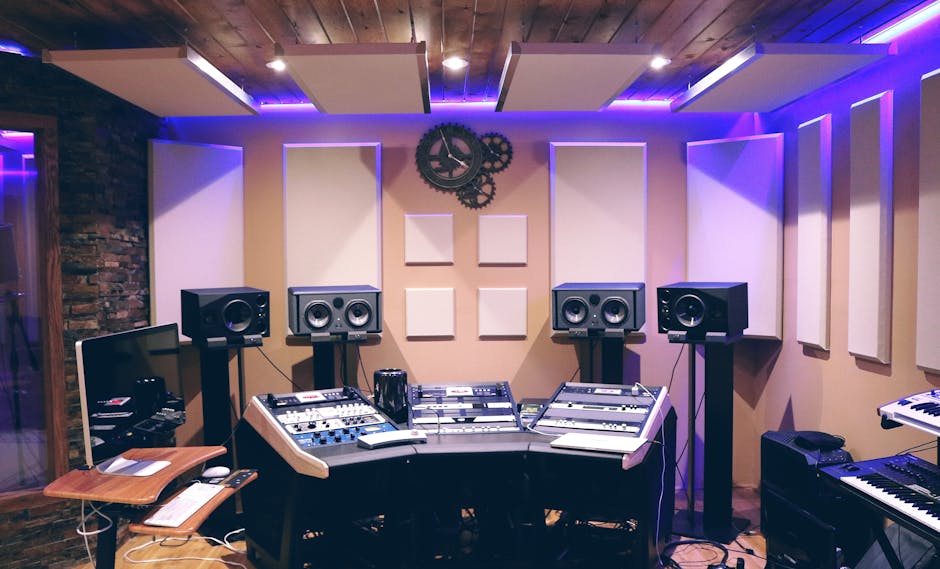
Room treatment beats a gear upgrade almost every time, financially. We had a customer with 8,000 zł monitors in an untreated room who still could not trust his low end. Three hundred złoty of corner bass traps did more for his mixes than the speaker upgrade had. The same physics applies to microphones, only worse, because a microphone is sitting in the middle of the room rather than pinned to a wall.
A 500 euro condenser in a bare room with parallel walls will sound worse than a 130 euro dynamic in the same room. Not slightly worse. Audibly, obviously worse, with a boxy ring behind every word that no plugin removes cleanly. You are not buying a microphone at that point. You are buying a very accurate recording of a bad room.
The cheap fixes, in order of how much they actually do: sing into the room's longest dimension rather than at a flat wall, put something soft behind you as well as in front, hang a duvet, and get corner absorption in before anything else. Then buy the better mic. It will sound like the upgrade you paid for, which is the entire idea.
What you need around the microphone
The mic is roughly two thirds of the purchase. The rest is unglamorous and non-negotiable.
An interface with enough gain. Condensers need 48V phantom power. Dynamics need lots of clean gain, especially the SM7B. Check the preamp gain figure before you buy, not after.
A proper stand, not a desk tripod. A desk stand transmits every keyboard tap straight up the pole and into the recording. A boom stand costs less than the plugin you would buy trying to fix that.
A pop filter. Six euro of mesh removes the plosive thumps that otherwise eat hours in editing. There is no clever alternative. There is just the mesh.
A shock mount if you are on a suspended floor or above a road. Yes, it is a rubber-band hammock for a microphone. Yes, it works.
A cable you did not find in a drawer. Nine times out of ten a crackle is a tired XLR, not a dying mic. Reseat it before you panic. It costs nothing to check and saves an embarrassing number of support emails.
When not to buy a new microphone
Genuinely, don't, if any of these are true.
Your recordings sound thin and distant. That is mic technique and distance, not the mic. Get closer, roughly a hand's width, slightly off-axis. Free.
You hear hum or buzz. That is grounding or a cable. If your building predates the 1990s, assume the sockets aren't properly grounded — it is the single most common cause of the hum calls we get, and buying a new microphone will reproduce it perfectly.
Everything sounds boxy and small. Room. See above. A new mic will make the boxiness clearer, not smaller.
You already own a decent dynamic and your room is untreated. Spend the money on absorption first, then come back. We will still be here, and your upgrade will actually be audible when you make it.
We would rather talk you out of a 500 euro mic today and sell you the right one next year than take the money now and watch you conclude that recording is just like this.
Why "best" is a word only your own voice can settle
Every ranking you read, including the ones above us in Google, has the same blind spot. They cannot hear you.
Vocal microphones are the one category where the right answer is genuinely personal. The same condenser that makes one singer sound expensive makes the next one sound sibilant and brittle. A mic that flatters a smoky low voice can hollow out a bright one. There is no spec that predicts this. Frequency response graphs do not know what your larynx is doing.
So we do two things about it. You can come to the showroom in central Warsaw and sing into five of these in an afternoon, back to back, through the same chain — it is genuinely the fastest way to end the question, and it costs nothing. Or take one home on a free 30-day Test-Drive. We sign a short contract covering the duration and the gear, you record real material in your real room, and then you decide. Not a demo. Your songs.
Everything comes with a 36-month warranty, a 30-day return window, and delivery to every EU country. Within Poland, shipping is free over 900 zł and 15 zł below it.
Straight answers
What microphone is best for vocals?
For most home and studio recording, a large-diaphragm cardioid condenser such as the RODE NT1 5th Generation. If your room is untreated or noisy, a cardioid dynamic like the Shure SM7B or SM58 will give you a better result for less money, because it ignores most of the room. There is no single best vocal mic, only the best one for your voice and your four walls.
Which type of mic is best for singing?
Condenser for detail in a quiet, treated space. Dynamic for control in a normal room, on a loud singer, or on stage. Ribbon mics suit dark, smooth tones but are fragile and quiet, so they make a poor first vocal mic. If you are choosing your first one and your room is untreated, pick a dynamic.
What mic do most artists use?
On stage, overwhelmingly the Shure SM58, which has been the live vocal default for decades. In the studio, the Shure SM7B appears on an enormous number of modern vocal and podcast recordings, while Neumann large-diaphragm condensers dominate high-end studios. Those three cover most of what you hear on record.
What is the holy grail of microphones?
Traditionally the Neumann U47 and U67 tube condensers from the 1950s and 60s, which now sell for the price of a car. The practical answer is that modern mics such as the Warm Audio WA-47jr chase those same circuits for a tiny fraction of the money, and on a mix nobody will identify which you used.
What is the best microphone for recording vocals at home?
In an untreated home room, a cardioid dynamic — the SM7B if your interface has plenty of clean gain, the SM7dB if it does not. If you have treated your space even modestly, a RODE NT1 5th Generation will give you more detail for less money. Treat the room before you spend more than about 500 euro on the mic itself.
So: dynamic if your room talks back, condenser if it has learned some manners, and a pop filter either way. Get the room roughly right, get close to the mic, and stop reading rankings written by people who have never heard you sing. Come to Warsaw and sing into a few instead. Bring the song you are sick of — that is the one that tells the truth about a microphone, and we have heard worse. We have heard much worse, and we sold that person a mic too.
Read next


- How to Record Vocals at Home? A Complete Step-by-Step Guide. You have the mic, now the room, the distance and the order in which to fix things.
- How to Connect a Microphone to a Computer. The whole path from XLR to your DAW, including what to do when the input never shows up.
- Best Microphones Under 1000 PLN, Guide 2026. If the budget is fixed first, here are the models that actually fit it.