Spectra 1964
Spectra 1964 STX 100
Optionen wählen
Spectra 1964 STX 100 is a 500 series module carrying the Spectra Sonics 101 amplifier circuit that ran in the company's consoles from 1965 onward. The discrete design delivers 64 dB of gain, noise better than -120 dB and a response reaching from 10 Hz to 50 kHz.
Bandwidth wider than the source
The preamp runs flat out to 50 kHz, so nothing in the circuit rounds off snare or cymbal transients on the way in. It shows up most clearly on overheads and acoustic guitars, where a cheaper front end loses the air above 15 kHz and forces you to rebuild it later with EQ.
One module for microphones and line sources
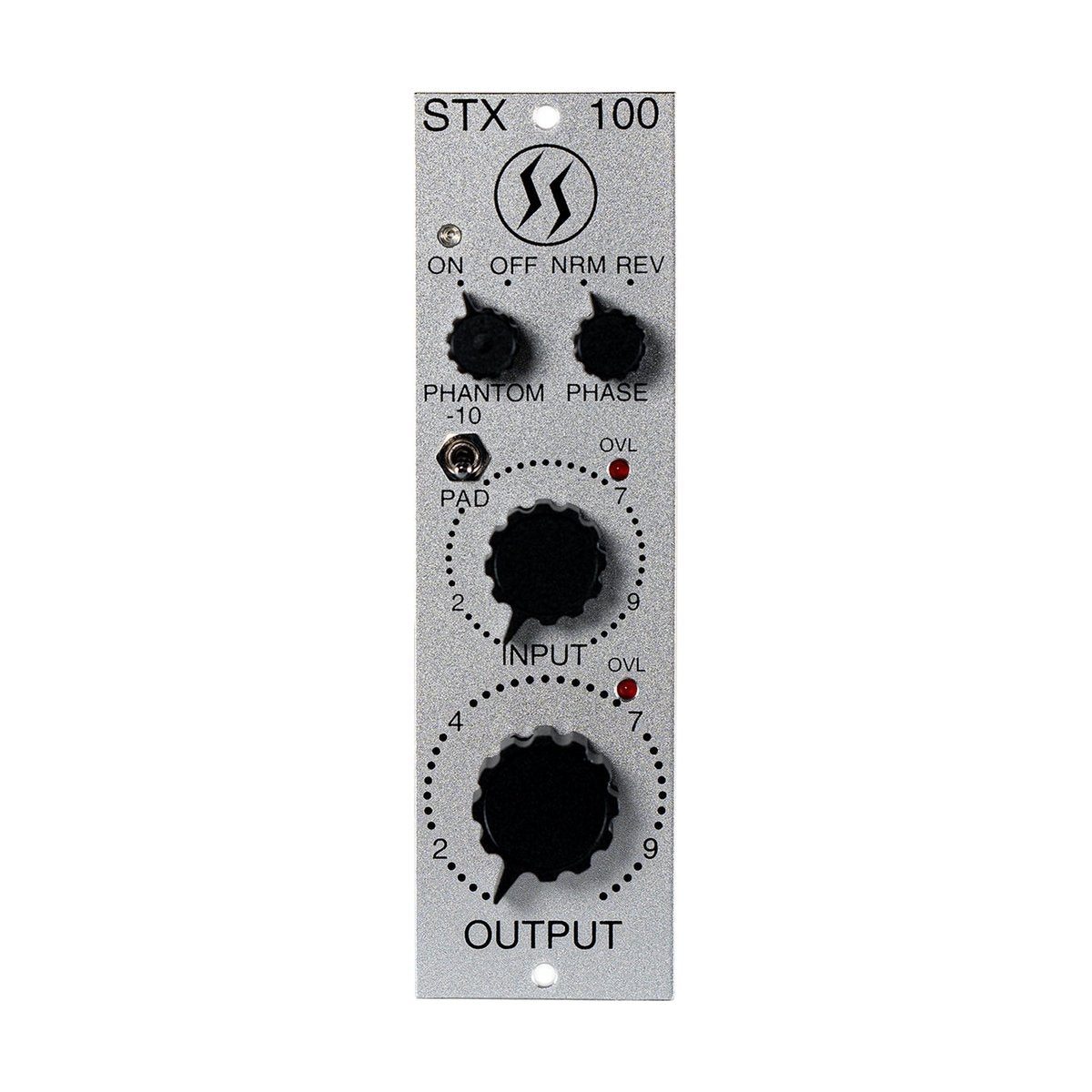
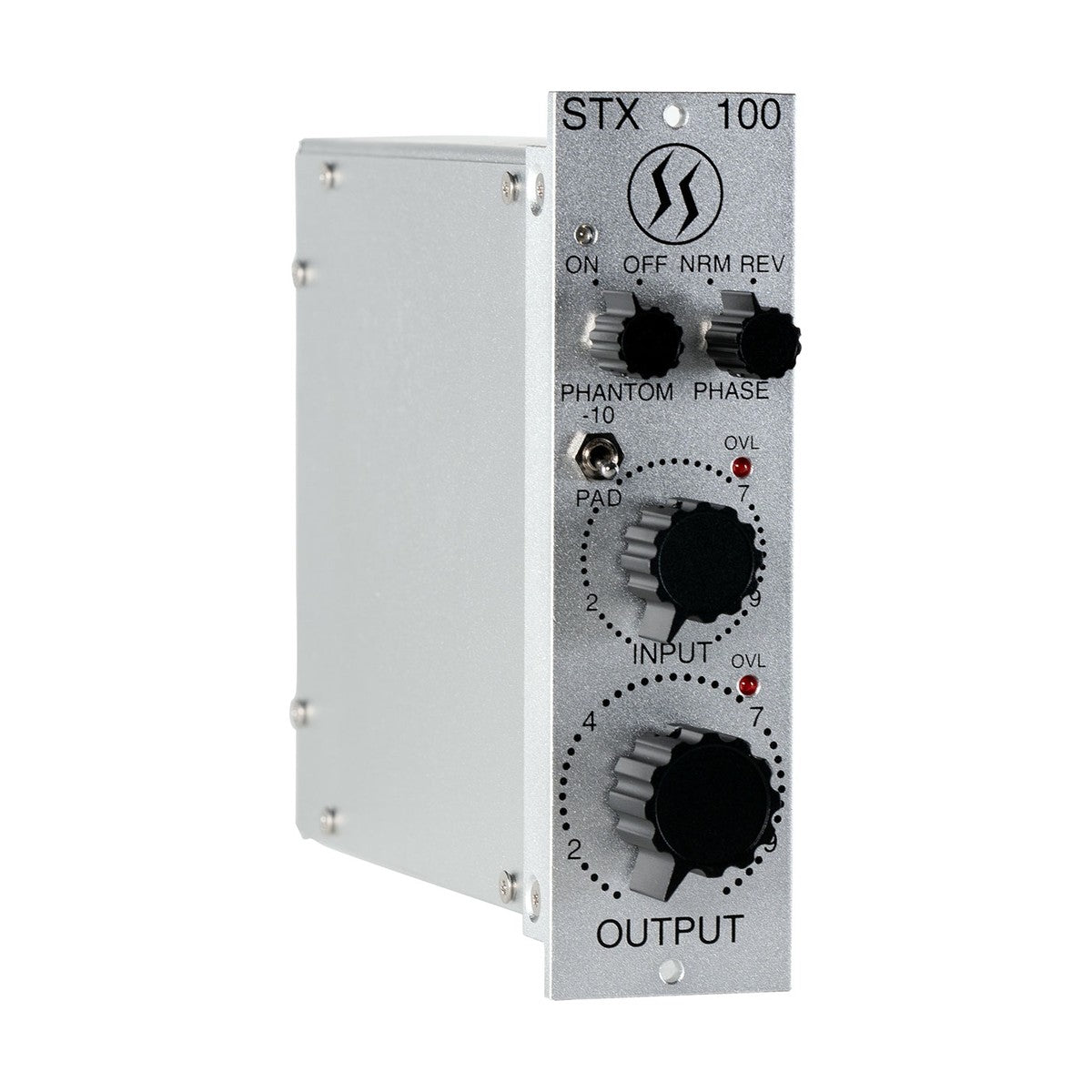
Continuously variable input and output controls plus a 10 dB pad let you feed the STX 100 a quiet ribbon microphone or a finished DAW stem for re-amping through the circuit. Maximum output of +18 dBm and distortion under 0.01% across the band mean the module stays clean to the top of its range, with character coming from the transformer rather than from clipping. Phantom power and polarity reverse sit on the front panel.
KEY FEATURES
- Spectra Sonics 101 amplifier circuit in 500 series format
- 64 dB of gain, usable with microphone and line sources
- 10 Hz - 50 kHz response with no high-end roll-off
- Continuously variable input and output controls plus 10 dB pad
- 48 V phantom power and polarity reverse
- Over 95% of components sourced in the USA and Europe
TECHNICAL SPECIFICATIONS
- Gain: 64 dB
- THD: less than 0.01% at 20 Hz - 20 kHz
- Signal to noise: better than 120 dB, unweighted
- Maximum output: +18 dBm, 20 Hz - 20 kHz
- Power requirement: less than 50 mA at +18 dBm
- Input impedance: 600 Ohm nominal
- Output impedance: less than 50 Ohm
- Frequency response: 10 Hz - 50 kHz
- Phantom power: 48 V
- Polarity: 180 degree reverse, mic or line input
- Input/output control: continuously variable, 10 dB pad