New Strandberg Boden Bass Standard 4 and 5: 2026 Launch
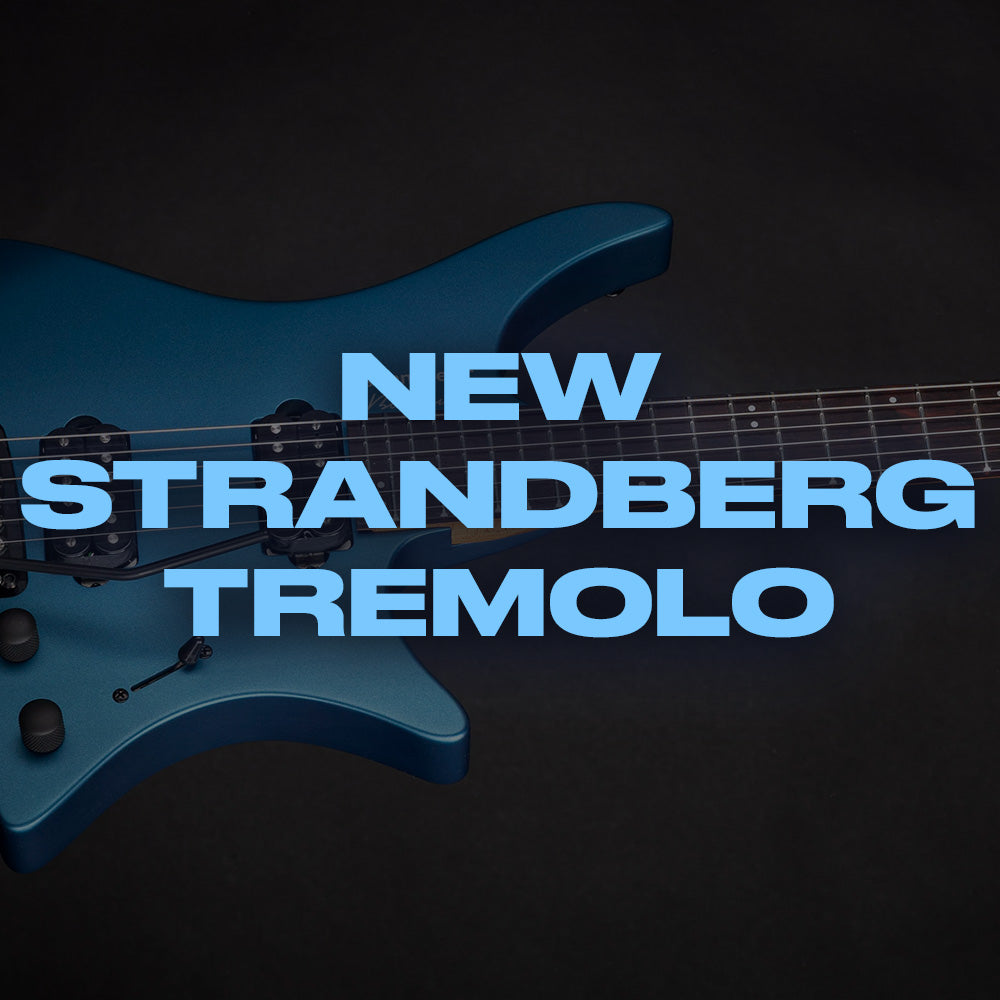
The Strandberg Boden Bass Standard arrives in four new versions: four or five strings, each finished in Black Metallic or Blue Aura Metallic. Every model shares a lightweight headless body, multiscale layout, EndurNeck profile and active Fishman Fluence electronics. The choice that changes how the instrument works is not the colour. It is the extra string and the longer low-side scale that comes with it.


Four new Strandberg Boden Bass Standard models
| Model | Strings | Scale | Listed weight | Finish |
|---|---|---|---|---|
| Boden Bass Standard 4 Black Metallic | 4 | 33–34.5″ | 2.70 kg ±10% | Black Metallic Satin |
| Boden Bass Standard 4 Blue Aura Metallic | 4 | 33–34.5″ | 2.70 kg ±10% | Blue Aura Metallic Satin |
| Boden Bass Standard 5 Black Metallic | 5 | 33–35″ | 3.00 kg ±10% | Black Metallic Satin |
| Boden Bass Standard 5 Blue Aura Metallic | 5 | 33–35″ | 3.00 kg ±10% | Blue Aura Metallic Satin |
One lightweight platform, two ranges
A solid basswood body, headless construction and individual EGS Rev2 bridges keep the mass close to the player. The four-string model is listed at 2.70 kg and the five at 3.00 kg, both with a ±10% production tolerance. Those numbers matter after an hour on stage, not merely in a comparison table.
Both versions use a bolt-on roasted maple neck reinforced with walnut and carbon fibre. The roasted maple fretboard has a 20-inch radius, 24 stainless-steel frets and green Luminlay markers. Strandberg's EndurNeck profile provides defined supporting surfaces for the fretting hand instead of the conventional uniformly rounded neck shape.
For the background to that design, our earlier feature introduces the first Boden Bass Standard 4. You can also see how the same ergonomic thinking evolved across the brand in the Strandberg Boden N2 series.
What does multiscale change on the four- and five-string?
On Boden Bass Standard 4, the shortest string uses a 33-inch scale and the longest reaches 34.5 inches. Standard 5 keeps the short side at 33 inches but gives the lowest string a full 35-inch scale. That extra length is particularly useful on a five-string bass, where the low B needs stable tension and clear articulation.
The four will feel like the direct choice for players whose music already lives comfortably on four strings and who want the lowest possible weight. The five adds genuine low-register range without changing the underlying design philosophy. Fanned frets look dramatic for the first few minutes; whether your arrangements need the low B is the more important question.

Fishman Fluence: three voices and coil split
Each instrument carries two active Fishman Fluence Bass Soapbar pickups sized for its string count and a Fishman two-band preamp. The controls are master volume with push/pull coil split, pickup balance, a stacked bass/treble control and a three-way Voice selector.
That is a useful kind of flexibility rather than a panel crowded with tiny switches. Balance establishes the neck-to-bridge relationship, the EQ adapts the output to the room or signal chain, and Voice plus coil split changes the starting character of the pickups. One bass can move from the full body of the paired coils towards a more open, precise attack without asking you to change instruments between songs.

Standard 4 or Standard 5?
- Choose Standard 4 if most of your playing is written for four strings, minimum weight matters and an unused low B would only add width.
- Choose Standard 5 if you regularly work below E, play modern metal, gospel or fusion, or need full session range without retuning.
- Black Metallic is understated and stage-ready. With black hardware, the instrument reads almost as one continuous shape.
- Blue Aura Metallic reveals the body contours and creates a stronger contrast with the hardware. Its construction and electronics are identical to the black version.
Both versions ship in a Strandberg Standard Bass Gig-Bag with the bass tool kit. Standard 4 is factory-strung with D’Addario NYXL 45–100 Super Long Scale strings; Standard 5 uses a 45–130 set.
Try the new range in Warsaw
With a bass this light, the differences are easier to judge on a strap than in a browser tab. Visit the Wired Tunes showroom at Nowogrodzka 6A/102 in Warsaw to compare the four- and five-string scale layouts, feel the EndurNeck profile and hear all three Fishman voices through the same signal chain.
Frequently asked questions
What is the difference between Strandberg Boden Bass Standard 4 and 5?
Standard 4 has four strings, a 33–34.5-inch multiscale, a 38 mm nut and a listed weight of approximately 2.70 kg. Standard 5 adds a low B, extends the longest scale to 35 inches, uses a 45 mm nut and weighs approximately 3.00 kg.
Are Strandberg basses active?
These new Boden Bass Standard models are active. They use two Fishman Fluence Bass Soapbar pickups with a Fishman two-band preamp, plus coil split and a three-way Voice selector.
Do Black Metallic and Blue Aura Metallic sound different?
Not according to the supplied specifications. Both finishes use the same solid basswood body, roasted maple neck and fretboard, EGS Rev2 hardware and Fishman electronics. The difference is visual.
Is a multiscale bass difficult to play?
It takes a short visual adjustment, but the fret angles follow the different string lengths. If this is your first multiscale instrument, trying both the four- and five-string versions in person is more useful than judging the layout from a photograph.
The new Boden Bass Standard does not try to disguise itself as a traditional bass in a smaller package. It is a coherent modern design: light, multiscale and electronically flexible enough for rehearsal, stage and session work. The difficult decision is whether you want the extra string or the lower weight. At least the colour does not change the scale length.
Read next
- Meet the Boden Metal Black Granite 6, 7 and 8. See the guitar side of Strandberg ergonomics in heavier music.
- Strandberg Boden JR Sorcerer. Explore a very different limited-edition interpretation of the Boden platform.
- The biggest launches from NAMM 2026. Catch up on the instruments and studio technology shown in Anaheim.