Dolby Atmos Mixing: What a 7.1.4 Room Actually Costs
Every few months someone walks onto the shop floor and asks what it takes to mix in Dolby Atmos. I used to answer with speaker layouts. Now I answer with a number, because the layout is the easy part and the number is the part that makes people sit down.
Atmos is the only format I know where the marketing talks about creative freedom and the invoice talks about eleven speakers. (Twelve, if you count the sub, and you should, because it costs more than your first car did.) So let us do the thing nobody in the search results is doing: add it up honestly.
Short version. A certified 7.1.4 room needs eleven matched speakers, a subwoofer, and an interface with at least twelve outputs. Built from gear we actually stock, that lands at roughly 12 100 EUR for a Neumann-based entry room, 19 500 EUR for a Genelec coaxial room, and 36 300 EUR for a PMC front end. None of those numbers include acoustic treatment or the room itself.
What Atmos actually asks of you
Stereo asks for two speakers and a wall you can put them against. Atmos asks for a geometry.
The format is object based. Instead of assigning a sound to a fixed channel, you give it coordinates in three dimensions and let a renderer work out which speakers produce it. That renderer needs to know exactly where your speakers are, which means the speakers have to be somewhere specific, which means the room stops being negotiable.
The working layout for music is 7.1.4: seven speakers at ear level, one subwoofer, four overhead. Seven plus one plus four. You will also see 5.1.4 and 9.1.6, and Dolby's own documentation accepts a range, but 7.1.4 is where most music rooms land and it is what the numbers below assume.
Two terms you will meet on day one. Beds are channel based, tied to actual speaker positions, and they behave like surround sound with a roof. Objects are the discrete streams with coordinate metadata that move independently. Most music mixes use both: reverb returns and static elements sit in the bed, the things you want to fly go out as objects. That is the entire conceptual leap, and it takes about an afternoon.
The gear takes considerably longer.


The part nobody prices: what eleven speakers cost
Here is the thing that surprised me when I first specced one of these for a customer. The jump from stereo to Atmos is not a 5.5x cost increase, even though it is 5.5x the speakers. It is worse, because the speakers you would happily use as a stereo pair are often too small to work as a bed, and the sub stops being optional.
Three builds, priced off our shelf today. All eleven speakers matched within a family, because timbre matching across the bed is not an audiophile indulgence in Atmos, it is the difference between an object moving across the room and an object changing character as it travels.
Build one: the honest entry, about 12 100 EUR
Eleven Neumann KH 120 II at 705,72 EUR each, one Neumann KH 750 DSP subwoofer at 1 630,10 EUR, and an Audient ORIA at 2 701,81 EUR doing interface, monitor control and bass management in one box.
The KH 120 II is the smallest speaker I would put in a bed without apologising. It has the DSP alignment you need when four of your eleven speakers are bolted to a ceiling at an angle nobody designed them for. ORIA is the quiet hero of this build: it is purpose built for immersive monitoring, handles the routing and the bass management, and saves you from assembling a monitor controller out of three boxes and a prayer.


Build two: the room that survives a client session, about 19 500 EUR
Seven Genelec 8331A at 1 820,60 EUR for the bed, four Genelec 8030C at 543,37 EUR overhead, a Genelec 7360A at 1 875,98 EUR, and ORIA again.
The 8331A is coaxial, which matters more here than it does in stereo. A coaxial driver has a single acoustic origin, so it images the same whether you are dead centre or a metre off axis. In a room where you are constantly turning your head to check whether that object really is behind you, that consistency is worth the money.
Build three: PMC at the front, about 36 300 EUR
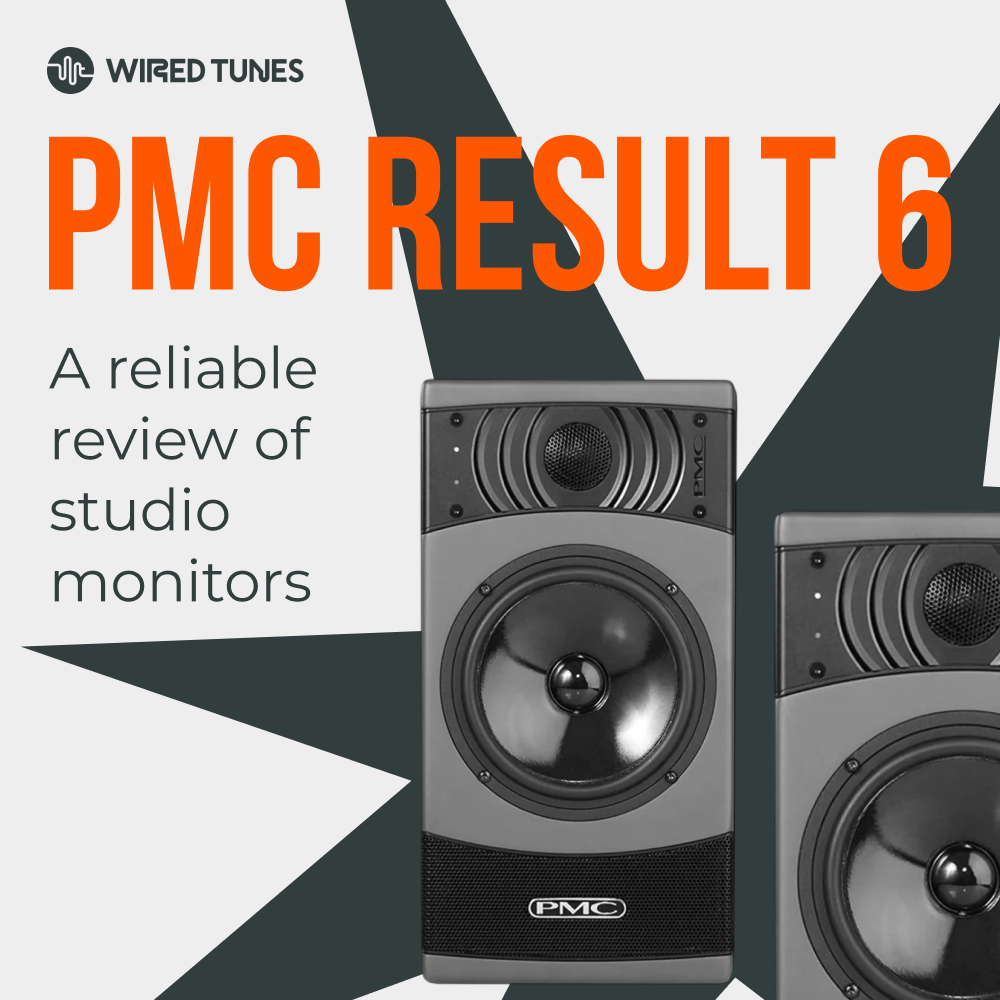
A pair of PMC 6-2 at 10 839,16 EUR for left and right, three pairs of PMC 6 at 5 943,24 EUR covering centre and surrounds, four 8030C overhead, a PMC 8 SUB at 3 262,08 EUR, and an RME Fireface UFX III at 2 192,23 EUR.
Yes, three pairs gives you six speakers for five positions. PMC ships in pairs and the maths does not care about your feelings. Treat the spare as insurance, or talk to us about the layout before you order, because a 9.1.6 room uses it properly.
| Build | Bed, 7 speakers | Overhead, 4 | Sub | I/O | Total |
|---|---|---|---|---|---|
| Entry | Neumann KH 120 II | Neumann KH 120 II | KH 750 DSP | Audient ORIA | 12 095 EUR |
| Working | Genelec 8331A | Genelec 8030C | Genelec 7360A | Audient ORIA | 19 495 EUR |
| Front end | PMC 6-2 and PMC 6 | Genelec 8030C | PMC 8 SUB | RME UFX III | 36 297 EUR |
Prices are what is on the shelf today, in euro, shipping to any EU country. They move. Check the product page before you plan a budget around them.
Twelve outputs, and why your current interface is not one of them
This is where most home setups quietly fail. A 7.1.4 room needs twelve discrete analogue outputs, and the two-in two-out box that has served you beautifully for eight years has, generously, two.
You have two routes. ORIA is the integrated one: immersive monitor control, bass management and speaker calibration in a single unit, built for exactly this job. The UFX III is the other: more raw I/O, more routing flexibility, and the RME driver stability that has quietly kept half the studios in Europe running. Neither is wrong. ORIA is the shorter path to a working room; RME is the one you pick if the room has to do other things too.
The renderer itself runs on your computer alongside the DAW, and it wants a machine with headroom. Pro Tools, Logic, Cubase and Nuendo all route to it natively. Your deliverable at the end is an ADM BWF file, which carries every bed, object and coordinate in one wrapper, and which streaming platforms accept directly.
The room eats more of your budget than the speakers do
Here is my one strong opinion, and it will cost me sales rather than make them.
I have watched a customer put 8 000 EUR of monitors into an untreated room and still not trust the low end. Three hundred euro of corner bass traps did more for their mixes than the speaker upgrade had. That was a stereo room. Atmos multiplies the problem, because you have now added four speakers pointing down at you from a ceiling that is almost certainly a flat reflective plane, and a rear pair firing into whatever is behind you.
Ceiling reflections are the specific killer. In stereo you can get away with an untreated ceiling because nothing is up there. In Atmos the ceiling is a source, and the first reflection off the floor arrives fast enough to smear exactly the height cues you spent all that money to hear.
Speaker placement stops being taste and becomes specification, too. Dolby publishes angle tolerances for every position, and the renderer assumes you honoured them. If you are working out where things go, our guide to studio monitor placement covers the geometry that carries over, and the piece on choosing active studio monitors is worth reading before you commit to a family, because you are about to buy eleven of them rather than two.
When to skip Atmos entirely
The second highest ranking page for "dolby atmos mixing" right now is a Reddit thread called "the myth of atmos mixing" with over a hundred and sixty comments. That is not an accident, and pretending otherwise would be the kind of thing the big chain does.
Skip it, for now, if any of these is true.
- Your room is not treated. Every euro is better spent on treatment first. This is not close.
- Nobody is paying you for Atmos deliverables. The format pays when a label or a platform asks for it. Building the room speculatively is an expensive way to find out whether anyone will.
- Your ceiling is under about 2,4 metres. Overheads need vertical separation to produce a height cue rather than a slightly odd tonal shift.
- You mix mostly on headphones. Binaural rendering is genuinely useful for checking, and it is not a substitute for the speaker layout the renderer is calibrated against.
And the honest middle path, which is what I actually recommend to most people who ask: mix your stereo version properly, deliver the Atmos version through a studio that already owns the room, and revisit the build when the work is consistent enough to justify it. Nobody has ever regretted renting the eleven speakers first.
Our showroom on Nowogrodzka 6A/102 in Warsaw has the monitors above set up for listening, and a coffee that is better than it has any right to be. Everything eligible comes with a free 30-day Test-Drive, so you can put a pair in your own room before you commit to nine more. Warranty is 36 months across the board, 60 on PMC and ADAM Audio. We ship to every EU country.
Straight answers
Is Dolby Atmos good for mixing?
For music that has somewhere to go in three dimensions, yes. For a dense four-piece rock mix, the honest answer is that it changes less than the format's marketing suggests. It is a delivery format with real creative range, not an upgrade that improves an existing mix by being switched on.
How do you actually mix in Dolby Atmos?
You route your DAW into the Dolby Atmos Renderer, assign each element as either a bed channel or an object, position the objects with coordinate automation, monitor on a calibrated speaker layout, and export an ADM BWF. The workflow is learnable in a week. The monitoring is the part that takes months and money.
How much does Dolby Atmos mixing cost?
Two different questions. Paying a studio to mix a track in Atmos runs from about 250 GBP per track in the UK market. Building the room yourself starts at roughly 12 100 EUR for speakers, sub and interface, before treatment. The table above breaks down three builds.
What is the disadvantage of Dolby Atmos?
Cost and reach. Eleven speakers and a certified room is a serious outlay, and a good portion of your audience will hear the binaural fold-down through earbuds, where a lot of what you placed carefully gets approximated. You are mixing something most listeners will hear a translation of.
Is Dolby Atmos mixing or mastering?
Mixing, mostly. Object placement and level decisions happen at the mix stage, and the ADM BWF you deliver is a mix output. There is a mastering step, but it looks different from stereo mastering because loudness normalisation is handled by the format rather than by a limiter.
Atmos is the most interesting thing to happen to music delivery in twenty years, and it is also eleven speakers, a treated ceiling and an invoice with a comma in an unfamiliar place. Both things are true. Come listen to a proper layout before you decide which one matters more to you, and bring the track you already know every millisecond of, because that is the only reference that tells you anything.
Read next
- SPL of studio monitors, what it is and why it matters. Eleven speakers in one room changes the SPL maths, and this explains how.
- How to read a frequency response graph. Useful when you are matching eleven speakers instead of comparing two.
- Best pro-class studio monitors 2026. The next step if the bed is where you want to spend the budget.