

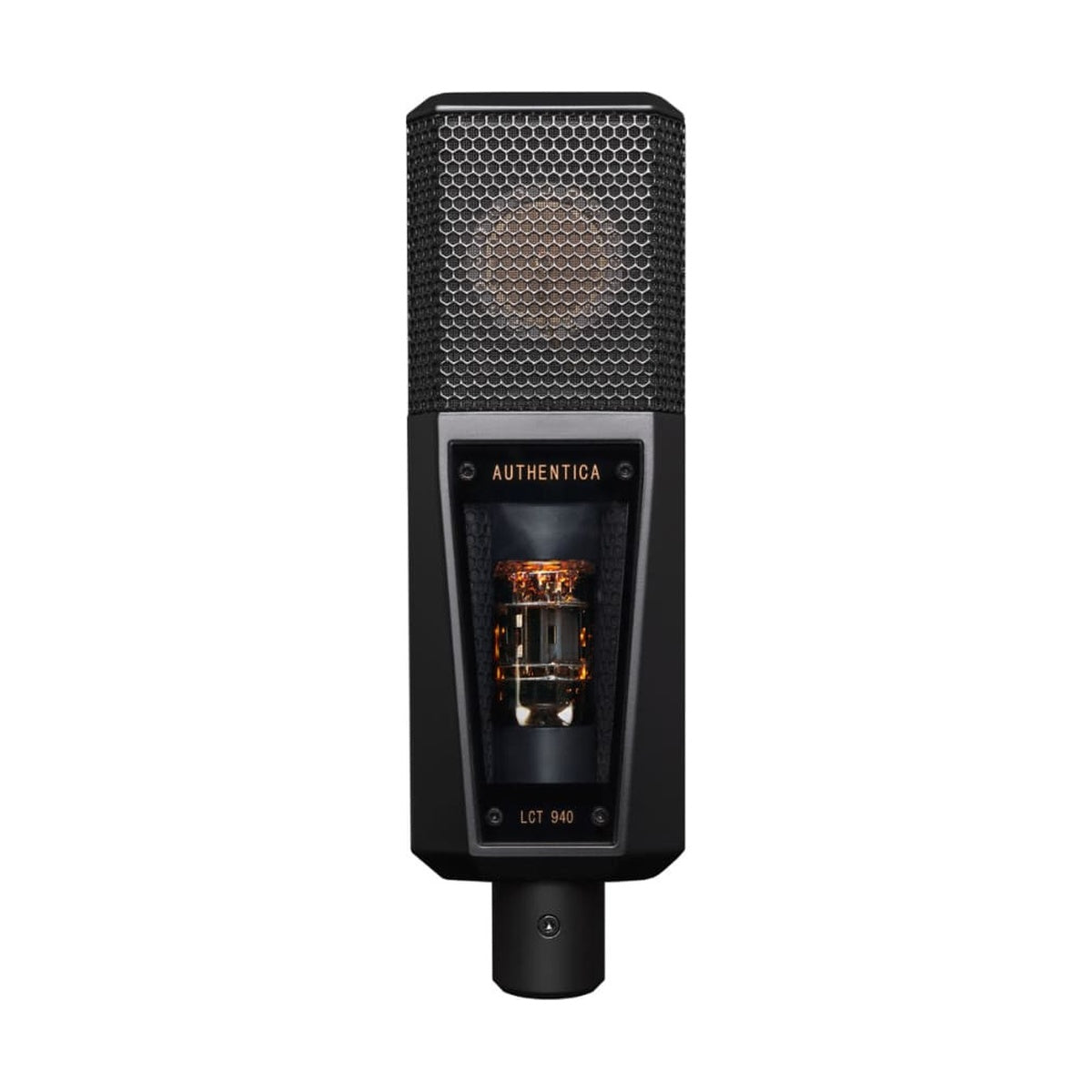
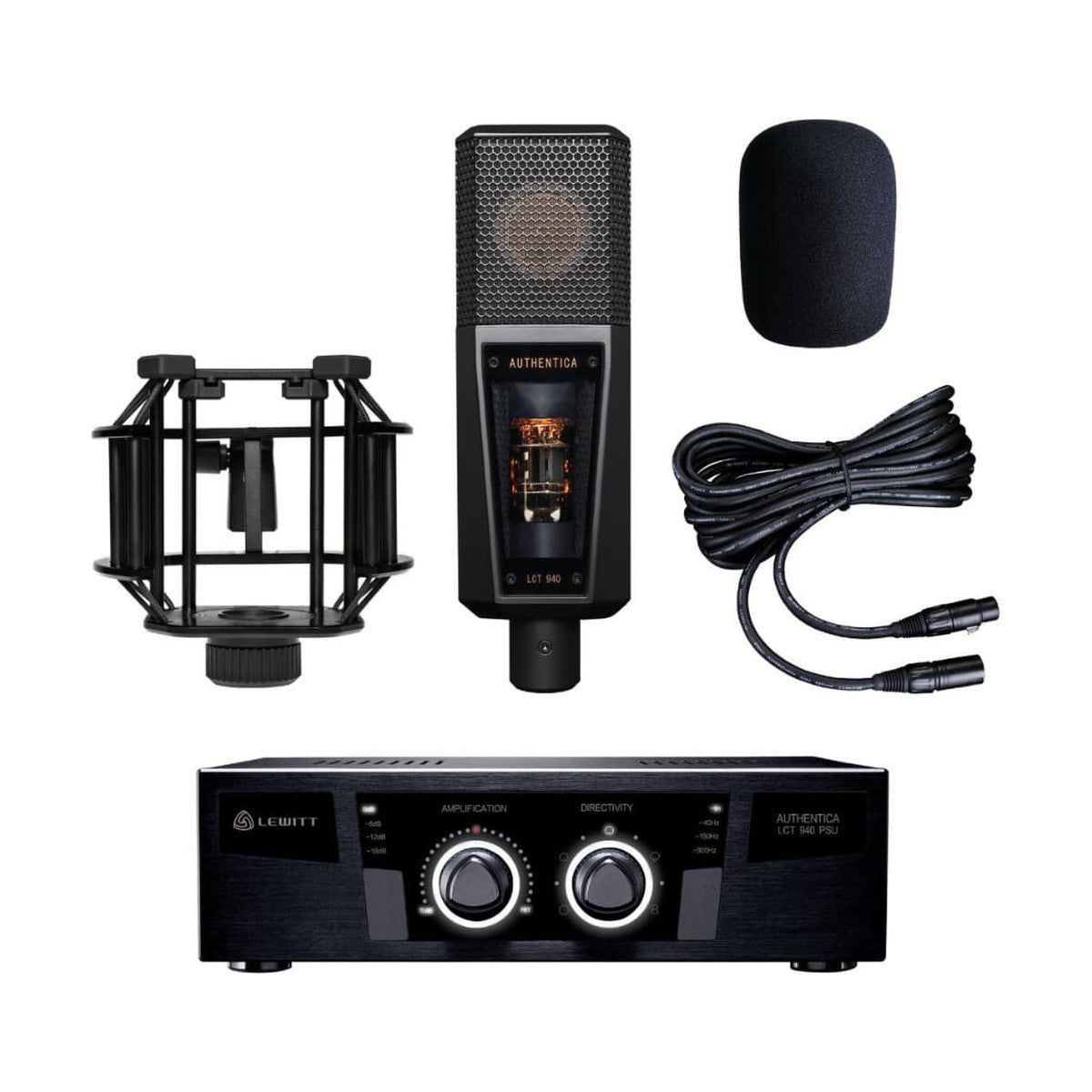
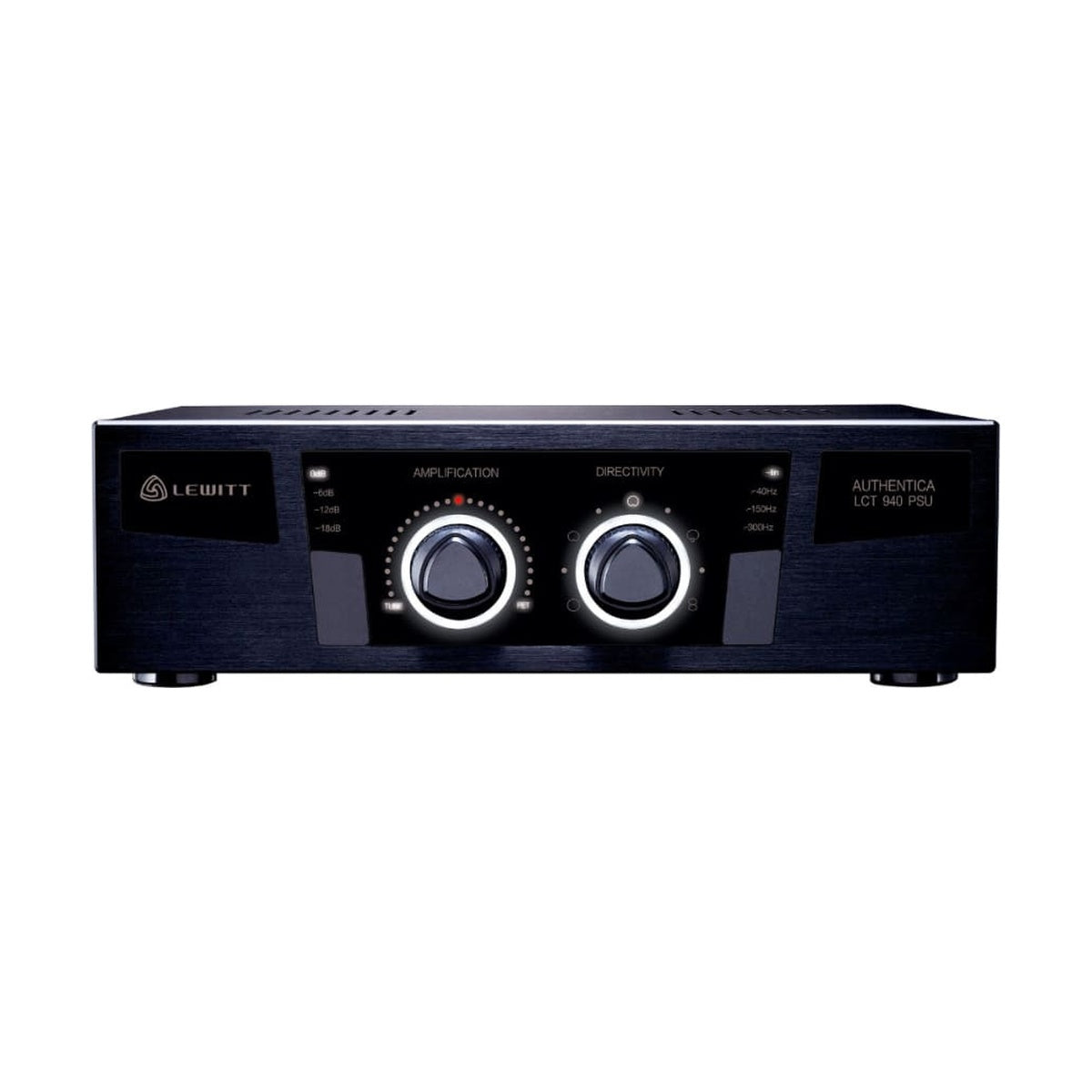
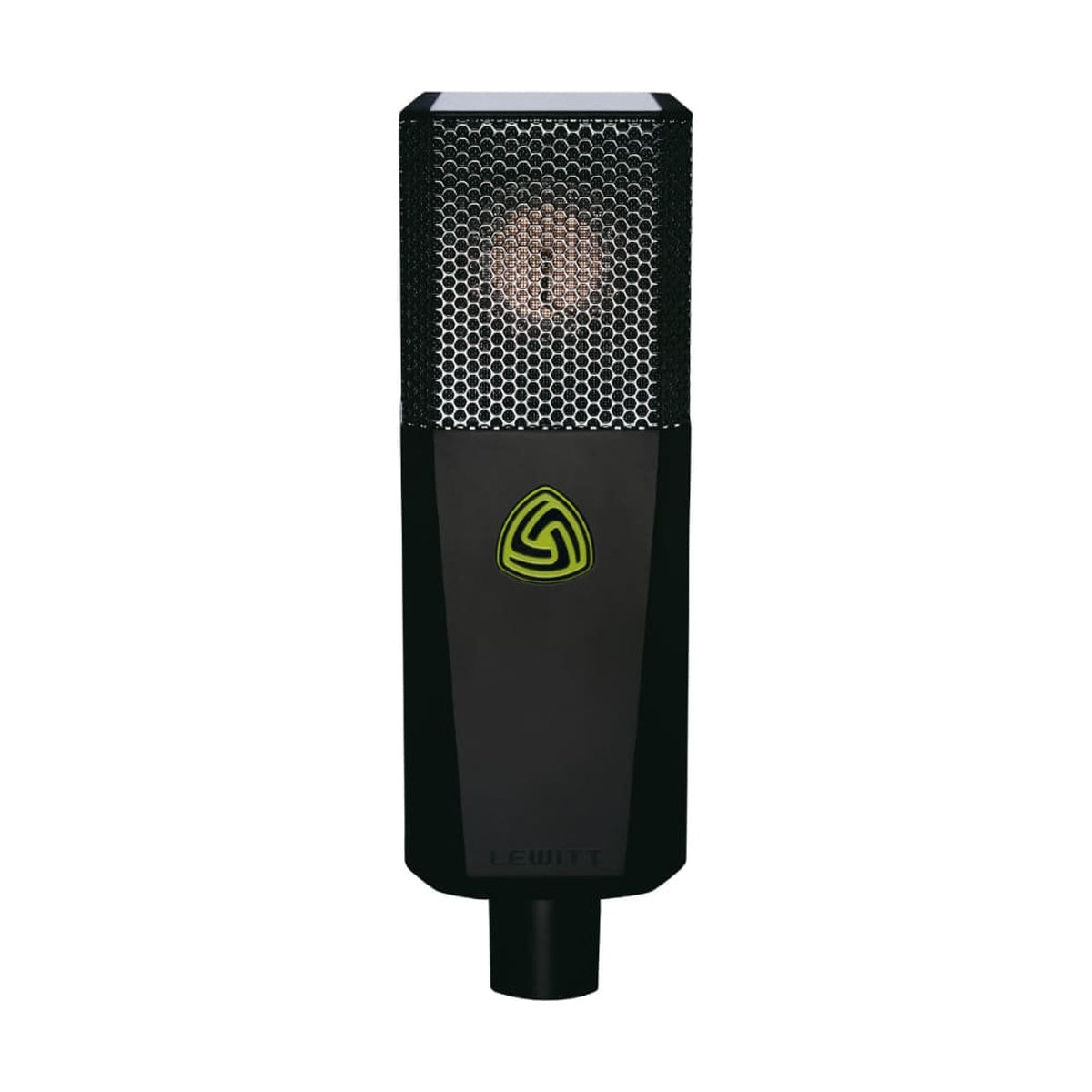
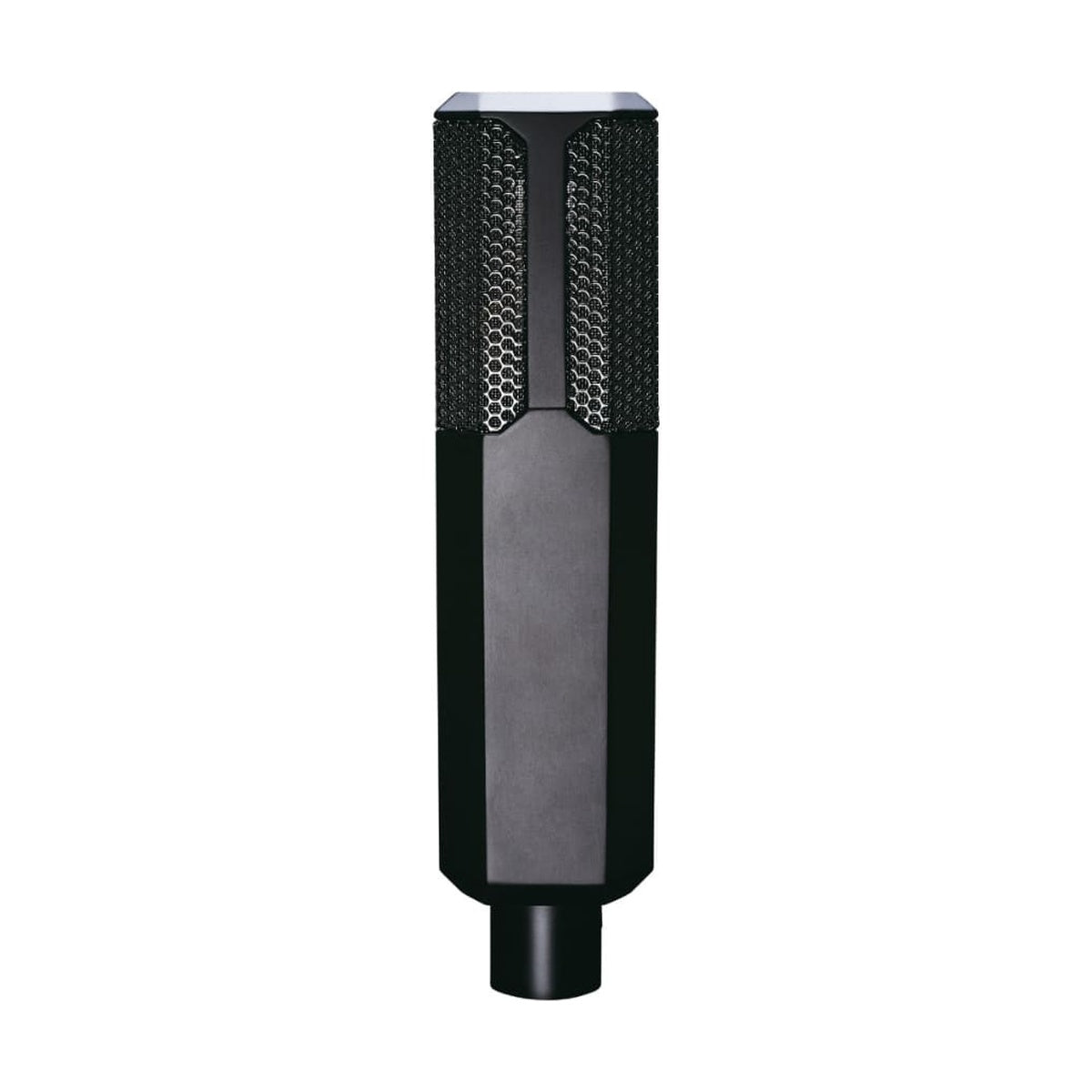
LEWITT LCT 940 is a large-diaphragm condenser microphone with two parallel signal paths – FET and tube (12AX7) – continuously blendable at any ratio via the Amplification control on the external PSU. Nine polar patterns, four-position PAD, four-position low-cut filter – all controlled from an illuminated remote power supply. One microphone housing, two complete sonic characters, and every point in between.
FET/Tube Blend – a Mixer, Not a Switch
What sets the LCT 940 apart is not simply having two circuits, but the ability to mix them in any proportion in real time. Full FET delivers transparent, detailed, linear sound – 8 dB(A) self-noise, 135 dB dynamic range, 143 dBSPL maximum SPL. The 12AX7 tube path introduces warm harmonics, softer transient shaping, and a denser midrange texture – self-noise rises to 12 dB(A), dynamic range to 128 dB, SPL ceiling to 140 dBSPL. Any intermediate setting produces a character neither circuit achieves alone. In tube mode the microphone's response scales with source dynamics: louder passages receive a more pronounced tube treatment naturally, which feels musical rather than processed.
Nine Patterns and PSU-Based Control
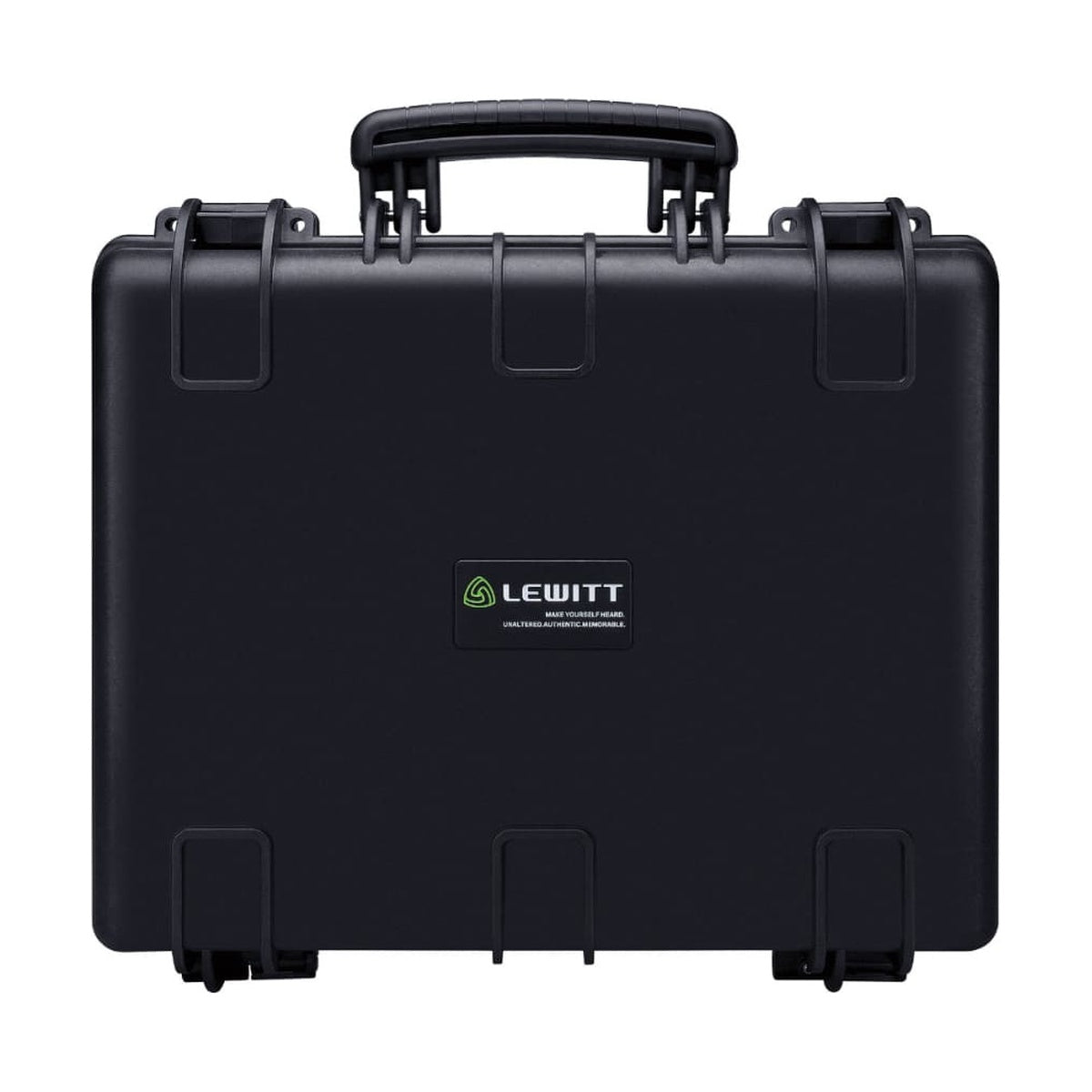
The PSU doubles as a remote control: a backlit encoder selects among nine polar patterns (omni, wide cardioid, cardioid, supercardioid, figure-8, and four intermediate positions) with no switching noise. Separate noiseless buttons handle the four-position PAD (0, –6, –12, –18 dB) and low-cut filter (linear, 40 Hz at 12 dB/oct, 150 Hz at 6 dB/oct, 300 Hz at 6 dB/oct). Key lock prevents accidental changes mid-session; clipping history and auto-attenuation are available for demanding applications. The microphone connects to the PSU via a dedicated 11-pin XLR cable (8 m included). The complete set includes a large shockmount, foam windscreen, leather carrying pouch, and a solid metal transport case.
KEY FEATURES
- Two parallel signal paths: FET and tube (12AX7) – continuously blendable at any ratio
- Self-noise: 8 dB(A) FET / 12 dB(A) tube (cardioid)
- Dynamic range: 135 dB (FET) / 128 dB (tube)
- Maximum SPL: 143 dBSPL FET / 140 dBSPL tube (0 dB pad)
- 9 polar patterns: omni, wide cardioid, cardioid, supercardioid, figure-8, and 4 intermediate
- PAD: 0 / –6 / –12 / –18 dB (noiseless switching)
- Low-cut filter: linear / 40 Hz (12 dB/oct) / 150 Hz (6 dB/oct) / 300 Hz (6 dB/oct)
- Illuminated PSU interface – readable in a dark studio
- Key lock, clipping history, auto-attenuation
- Zinc die-cast body with tube inspection window, ruthenium-galvanised steel mesh grille
- Connector: gold-plated 11-pin XLR (8 m cable included)
- Includes: shockmount, windscreen, leather pouch, metal transport case
TECHNICAL SPECIFICATIONS
- Transducer type: condenser, externally polarized
- Operating principle: pressure gradient transducer
- Transducer diameter: 25.4 mm (1")
- Polar patterns: omni / wide cardioid / cardioid / supercardioid / figure-8 + 4 intermediate
- Frequency range: 20 Hz – 20,000 Hz
- Sensitivity: 23 mV/Pa –33 dBV/Pa (cardioid) | 20 mV/Pa –34 dBV/Pa (omni) | 23 mV/Pa –33 dBV/Pa (figure-8)
- Self-noise FET: 8 dB(A) cardioid / 9 dB(A) omni / 8 dB(A) figure-8
- Self-noise tube: 12 dB(A) cardioid / 13 dB(A) omni / 12 dB(A) figure-8
- Maximum SPL FET (0.5% THD): 143 dBSPL
- Maximum SPL tube (0.5% THD): 140 dBSPL
- Signal-to-noise ratio: 86 dB(A) FET / 82 dB(A) tube
- Dynamic range: 135 dB (FET) / 128 dB (tube)
- Attenuation pad: 0 / –6 / –12 / –18 dB
- Low-cut filter: linear / 40 Hz (12 dB/oct) / 150 Hz (6 dB/oct) / 300 Hz (6 dB/oct)
- Internal impedance: 200 Ω
- Rated load impedance: 1,000 Ω
- PSU supply voltage: 230 V / 50 Hz or 110 V / 60 Hz, 170 mA current draw
- Connector: gold-plated 11-pin XLR
- Microphone dimensions: 192 × 60 × 46 mm (7.5" × 2.4" × 1.8")
- Microphone weight: 662 g (23.3 oz)
- PSU dimensions: 250 × 150 × 70 mm (9.8" × 5.9" × 2.8")
- PSU weight: 1,930 g (68.1 oz)