

Subtractive Synthesis - Explained
Subtractive synthesis is the art of starting with a bright, harmonically rich sound and carving away the parts you do not want with a filter. You begin loud and busy, then subtract. That is the whole idea, and the name says it plainly for once. Think of a sculptor with a block of marble, except the marble is a buzzing sawtooth wave and the chisel is a knob marked cutoff. Nearly every classic synth sound you have ever loved was made this way, which is a lot of history riding on one filter.
The short version. Subtractive synthesis takes a raw waveform full of harmonics, runs it through a filter that removes frequencies, then shapes the volume over time with an envelope. Oscillator makes the sound, filter carves it, amplifier decides when you hear it. It is the method behind most analog synths, from the Sequential Prophet 5 to the Arturia PolyBrute 12. You can learn it on a free plugin. You can master it in our Warsaw showroom with your hands on a real filter.
What subtractive synthesis actually is
Start with too much sound, then take away. That is subtractive synthesis in five words. A raw oscillator waveform, like a sawtooth, is packed with harmonics, the extra tones stacked above the note you played. On its own it sounds harsh and buzzy, the audio equivalent of every light in the house switched on at once. The filter walks through and turns most of them off, leaving the character you actually wanted.

This is the opposite of additive synthesis, which builds a sound up from pure sine waves, one harmonic at a time, like assembling a chord from single bricks. Subtractive starts with the finished wall and knocks holes in it. Most people find subtractive more intuitive, because carving is easier to hear than stacking, and because the tools are gloriously hands-on.
The signal path: oscillator, filter, amplifier
Every subtractive synth follows the same three-stage journey, and once you see it you see it everywhere. Sound is made, sound is shaped, sound is let out.
- Oscillator generates the raw waveform and sets the pitch. This is your marble block, the harmonically rich starting material.
- Filter removes frequencies to carve the tone. This is the heart of subtractive synthesis, and the knob you will spend the most time on.
- Amplifier controls the volume over time, so a note can pluck, swell, or fade instead of just switching on and off.
Signal flows left to right through those three, with a couple of helpers riding alongside to add movement. Learn this path once and every synth on earth stops looking like a spaceship dashboard and starts looking like a recipe.
Oscillators and the waveforms you start with
The oscillator is where the sound is born, and the waveform you pick decides how much raw material the filter has to work with. Four shapes do most of the heavy lifting.
- Sawtooth, the brightest and busiest, all the harmonics, the workhorse of strings, brass and big lead sounds.
- Square and pulse, hollow and woody, great for reeds, basses and that classic hollow lead.
- Triangle, soft and flute-like, only a few harmonics, gentle by nature.
- Sine, the pure tone with no harmonics at all, nothing to subtract, so it is mostly used for sub bass and blending.
Stack two oscillators slightly detuned and you get that thick, shimmering width every trance producer swears by. My intern Kuba once called two detuned saws just one saw with a cold. He is not wrong, and he is not allowed near the modular anymore either.
The filter, where the subtracting happens
The filter is the star of the show and the reason the whole method has its name. It removes frequencies, and the two you meet first are the low-pass, which keeps the lows and trims the highs, and the high-pass, which does the reverse. Low-pass is the one you will reach for nine times out of ten, because taming brightness is what most sounds need.
Two controls run the filter. Cutoff sets where it starts working, sweep it down and the sound goes from bright to muffled to gone. Resonance boosts the frequencies right at the cutoff point, adding a vocal, whistling emphasis that can sing or, pushed far enough, scream. A filter with the cutoff moving under an envelope is the single most recognisable sound in electronic music. If you have heard a synth go wow, you have heard a filter earning its keep.
Envelopes and LFOs, the movement
A sound that never changes is a sound nobody remembers. Envelopes and LFOs are how subtractive synths breathe. An envelope, usually ADSR for attack, decay, sustain and release, shapes how a parameter moves each time you press a key. Point it at the amplifier and you decide whether a note stabs or swells. Point the same shape at the filter and the tone opens and closes on its own, which is where the expressive magic lives.
An LFO, a low-frequency oscillator, is a wave too slow to hear that wobbles something else instead. Aim it at pitch for vibrato, at the filter for a rhythmic pulse, at volume for tremolo. Somewhere, a mastering engineer just felt a disturbance in the Force, because a slow LFO on a filter is how half of ambient music got made.
Subtractive versus the other types of synthesis
People usually name four families, and subtractive is only one, though it is the one you meet first. Additive builds sounds from pure sine waves added together. FM synthesis, the DX7 sound of the eighties, uses one oscillator to modulate another for metallic, bell-like tones. Wavetable scans through a table of single-cycle waveforms for evolving, digital textures. Subtractive stands apart by being the most physical, the most immediate, and the easiest to learn by ear. Our full breakdown of analog versus digital synths goes deeper if you want the buyer's angle, and if you are brand new, start with what a synthesizer actually is.
Who invented it, and why it still rules
Subtractive synthesis got its fame from Bob Moog. His voltage-controlled modules in the 1960s, and then the Minimoog in 1970, put oscillator, filter and amplifier into one playable box and defined the template every analog synth still follows. The now-legendary Moog ladder filter is the sound of that era, and it is why a fifty-year-old idea is still on the front page of every synth catalogue, including ours. Some methods age. This one just keeps getting reissued.
The synths that do subtractive synthesis beautifully
Here is the honest bit first. You do not need to spend a złoty to learn subtractive synthesis. A free plugin or a second-hand mono teaches the exact same three knobs, and I will happily talk you out of a big purchase if a cheap synth will get you there. But if you want to feel it under your fingers with no compromise, these five are the instruments that do it best, budget rising as you go. Prices are today's shelf, and shelf prices move.
- The expressive one. The Expressive E Osmose around 1,754 euro pairs a deep synth engine with a keybed that responds to pressure, wiggle and slide, so a filter sweep can follow your finger. Subtractive tones you can actually perform, not just program.
- The digital powerhouse. The Waldorf Iridium around 2,644 euro spans wavetable, granular and more, but its analog-modelled filters mean it does classic subtractive shaping as happily as it does the exotic stuff. One synth, most methods, proper filters.
- The modern Moog. The Moog Muse around 3,065 euro is Moog's polyphonic analog, the ladder filter people fell in love with, now with enough voices to play chords. This is subtractive synthesis with the Moog accent everyone recognises.
- The living legend. The Sequential Prophet 5 around 3,286 euro is the analog poly that defined records for forty years. If subtractive synthesis had a hall of fame, this is the plaque on the wall.
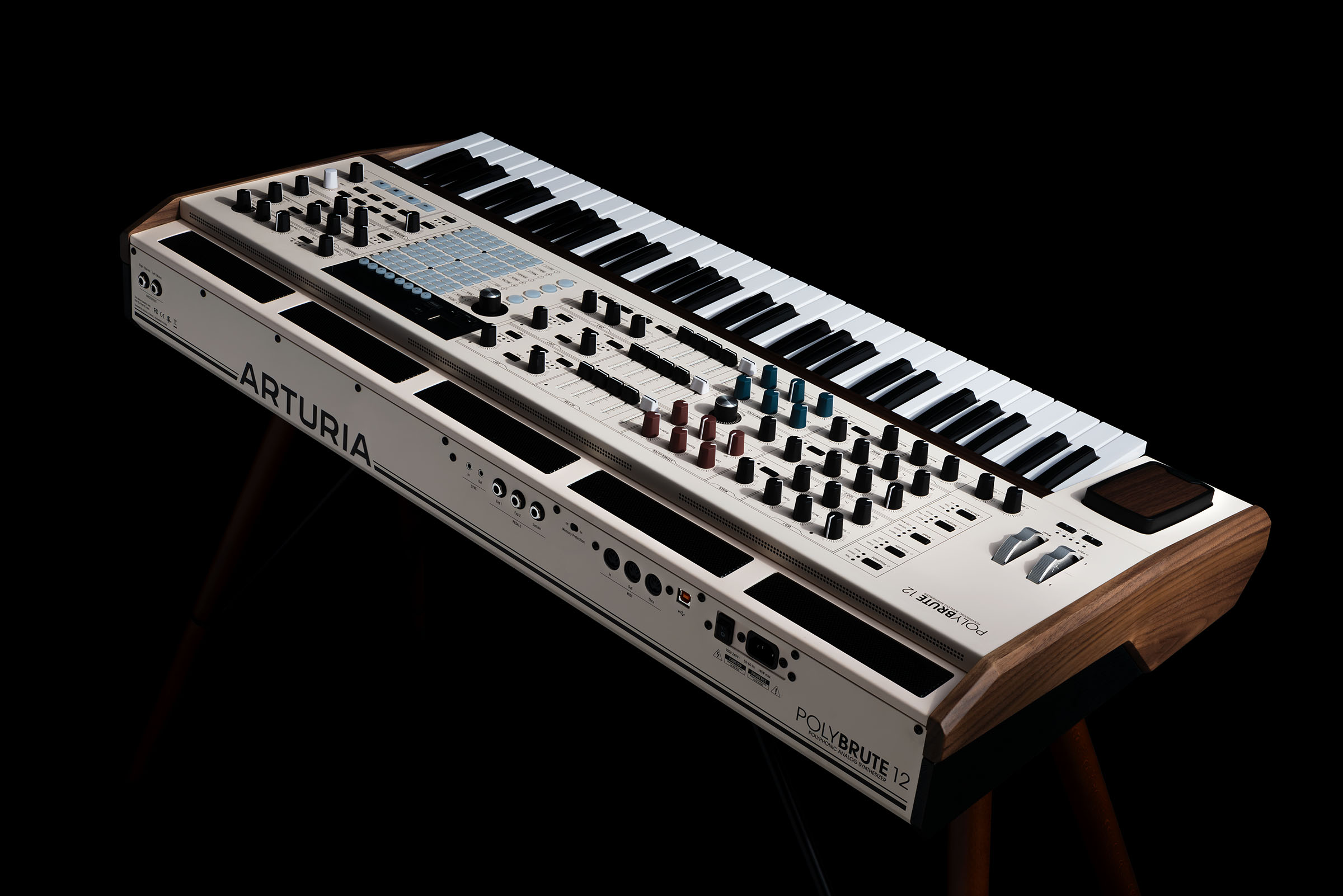
- The morphing flagship. The Arturia PolyBrute 12 around 3,346 euro is analog subtractive with a twist, a morph knob that slides between two whole sounds, plus polyphonic aftertouch. The most fun you can have carving a wave in 2026.

Whatever you land on, you get a 36-month warranty across the range, a 30-day return window, and delivery to every EU country. Better still, we run a 30-day Test-Drive on eligible gear, so you can sit with a synth in your own room, tweak a filter at 2am, and decide before you commit a euro. A synth that dazzles in the showroom and gathers dust at home has only taught you the showroom has better lighting.
Straight answers
What is subtractive synthesis for dummies?
Start with a loud, buzzy sound and remove the parts you do not want. An oscillator makes a harmonically rich waveform, a filter subtracts frequencies to shape the tone, and an amplifier controls the volume over time. That is it. The word subtractive means you are taking away, not adding, and it is the most beginner-friendly way to make synth sounds.
What are the four types of synthesis?
The four usually named are subtractive, additive, FM and wavetable. Subtractive filters harmonics out of a rich waveform. Additive builds a sound from pure sine waves. FM uses one oscillator to modulate another for metallic tones. Wavetable scans through single-cycle waveforms for evolving digital textures. Subtractive is the one most people learn first.
What is the difference between additive and subtractive synthesizers?
Direction. Additive builds a sound up from individual pure sine waves, adding harmonics one at a time. Subtractive starts with a harmonically full waveform and filters harmonics away. Additive gives fine control but is fiddly. Subtractive is faster, more physical and easier to hear, which is why most classic analog synths are subtractive.
Who invented subtractive synthesis?
It grew from early electronic instruments, but Bob Moog made it famous. His voltage-controlled synthesizers in the 1960s and the Minimoog in 1970 combined oscillator, filter and amplifier into one playable instrument and set the template. The Moog ladder filter remains the defining sound of subtractive synthesis to this day.
Do you need an analog synth for subtractive synthesis?
No. Subtractive synthesis is a method, not a technology, so a digital synth or a free software plugin does it just as truly as analog hardware. Analog is prized for the character of its filters and its hands-on feel, but you can learn every principle here on a laptop before you ever buy a knob.
So subtractive synthesis is just start rich, then carve, an oscillator for raw material, a filter to shape it, an envelope to bring it to life. Master those three and you can build almost any classic synth sound, on a laptop or on a Prophet. Come down to the showroom, put your hands on a real filter, and sweep the cutoff until it sings. We will supply the synth and the coffee. You supply the one patch you cannot stop playing.


About the author
Michał Kaniuszkiewicz is a content manager and SEO specialist at Wired Tunes. He creates and optimizes content that helps readers find useful information about music, gear, and sound. Beyond his editorial work, he has been making music for 8 years in hip-hop, pop, and electronic genres — giving him insight into the subject not just from an SEO perspective, but from the inside, as a practicing musician and producer. This experience allows him to create content that's equally useful and clear for both beginners and experienced listeners and music creators.