

FM Synthesis - Explained
FM synthesis is a way of making sound where one wave modulates the frequency of another, and the wobble between them creates brand new tones. FM stands for frequency modulation, the same idea as FM radio, only here you can hear the result as bells, electric pianos and gloriously metallic textures. Instead of carving a sound down like an analog synth does, you build complexity by letting two simple waves argue with each other. The argument is the sound, and it is a very productive argument.
The short version. In FM synthesis, a modulator wave bends the pitch of a carrier wave thousands of times a second, adding new harmonics that neither wave had alone. Those waves are called operators, and how you wire them is the algorithm. It is the sound of the 1980s, all glassy electric pianos and clanging bells, and it is brilliant for tones subtractive synths cannot reach. The dedicated modern FM machine is the Elektron Digitone II. Learn the idea on a free plugin, then come bend some waves in our Warsaw showroom.
What FM synthesis actually is
Take one wave and use it to shake the pitch of another, very fast. That is FM synthesis in a sentence. The wave doing the shaking is the modulator, and the wave being shaken is the carrier. When the modulator wobbles slowly, you hear vibrato. Speed it up past about twenty times a second and your ear stops hearing wobble and starts hearing a whole new timbre, packed with harmonics that were never in either wave to begin with.

This is the opposite trick to subtractive synthesis, which starts with a rich wave and filters harmonics away. FM starts with two plain waves, often just sine waves, and generates richness out of thin air. That is why FM is so good at metallic, glassy and bell-like sounds. It creates the kind of clangy harmonic content that a filter could only ever remove.
Operators and algorithms, the building blocks
An FM synth calls its oscillators operators, and that name matters because each one can be a carrier you hear or a modulator you feel. Stack a couple and one shapes the other. Stack six, the classic count, and the combinations get deep fast. A single operator on its own is just a sine wave, about as exciting as a dial tone. Point it at another and things get interesting.
The wiring diagram that says which operator modulates which is called the algorithm. Two operators in a line make a simple, punchy tone. Branch them into trees and you get evolving, complex timbres. This is where FM earned its scary reputation, because early synths made you navigate those algorithms through tiny menus. Modern ones draw the whole thing on screen, which we will come back to, because it changes everything.
What FM actually sounds like
FM has a signature, and once you know it you hear it on half the records from the eighties. Think the glassy electric pianos on every power ballad, the bright plucky basses, the tubular bells, the clav-like stabs. When people say a sound is digital, cold or glassy in a good way, they are usually describing FM. It nails anything with a metallic edge or a fast, percussive attack.
Where it struggles is the warm, thick pad an analog synth throws off without trying. FM can do warm, but it works for it. My intern Kuba once described an FM bass as a xylophone that went to the gym. He is not wrong, and that is exactly why you want one in the arsenal, right next to a subtractive synth, not instead of it.
FM never really left, either. It hides inside modern productions as growling festival basses, crisp digital percussion, and the razor-edged leads that cut through a crowded mix. Producers reach for it precisely when a warm analog patch would get lost, because FM keeps its bite even buried under a wall of other sounds. Old technique, current job, still showing up to work every day.
A short history, from Stanford to the DX7
FM synthesis was discovered by John Chowning at Stanford University in the late 1960s, almost by accident, while experimenting with vibrato taken to extremes. Stanford licensed the idea to Yamaha, and in 1983 Yamaha released the DX7. It went on to become one of the best-selling synthesizers of all time and defined the sound of a decade of pop. If you have heard the electric piano on a 1985 chart hit, you have heard a DX7, and so has everyone else, roughly a million times.
FM versus subtractive versus AM
These get mixed up, so here is the clean version. Subtractive starts rich and filters harmonics away. FM starts plain and generates harmonics by modulating frequency. AM, amplitude modulation, modulates volume instead of pitch, which produces a narrower set of extra tones and shows up more as an effect than a full synthesis method. FM is the one that builds genuinely new, complex timbres from almost nothing, which is why it stuck around while AM stayed a niche. If you want the fuller picture on the analog side, our guide to analog versus digital synths pairs nicely with this one, and total beginners should start with what a synthesizer actually is.
Is FM synthesis hard to learn?
It used to be, and here is my one strong opinion on the matter. FM got its fearsome reputation almost entirely from the DX7, a synth with six operators, dozens of algorithms, and two data-entry sliders to program all of it through a two-line screen. That was not FM being hard. That was an interface being cruel. On a modern synth with a knob for every operator and the algorithm drawn on a display, most of the difficulty simply evaporates, and you learn by ear in an afternoon. The maths did not get easier. The dashboard did.
The FM synths worth playing
Honest first, as always. You can learn FM synthesis on a free plugin tonight and never spend a złoty, and I will happily point you to one instead of selling you a box you do not need. But the dedicated FM hardware makes it click faster, because a knob per operator beats menu diving every time. Here is the ladder we stock and plug in daily, budget rising as you go. Prices are today's shelf, and shelf prices move.
- The hybrid all-rounder. The Arturia MiniFreak around 583 euro is a two-engine synth with an FM oscillator mode among its many tricks, so you can taste FM without committing your whole rig to it. A brilliant first hands-on with the technique.
- The deep modulator. The ASM Hydrasynth Desktop around 780 euro is a modulation monster, and its huge mod matrix lets you patch FM-style routings by hand alongside its wavetable core. FM as one colour on a very big palette.
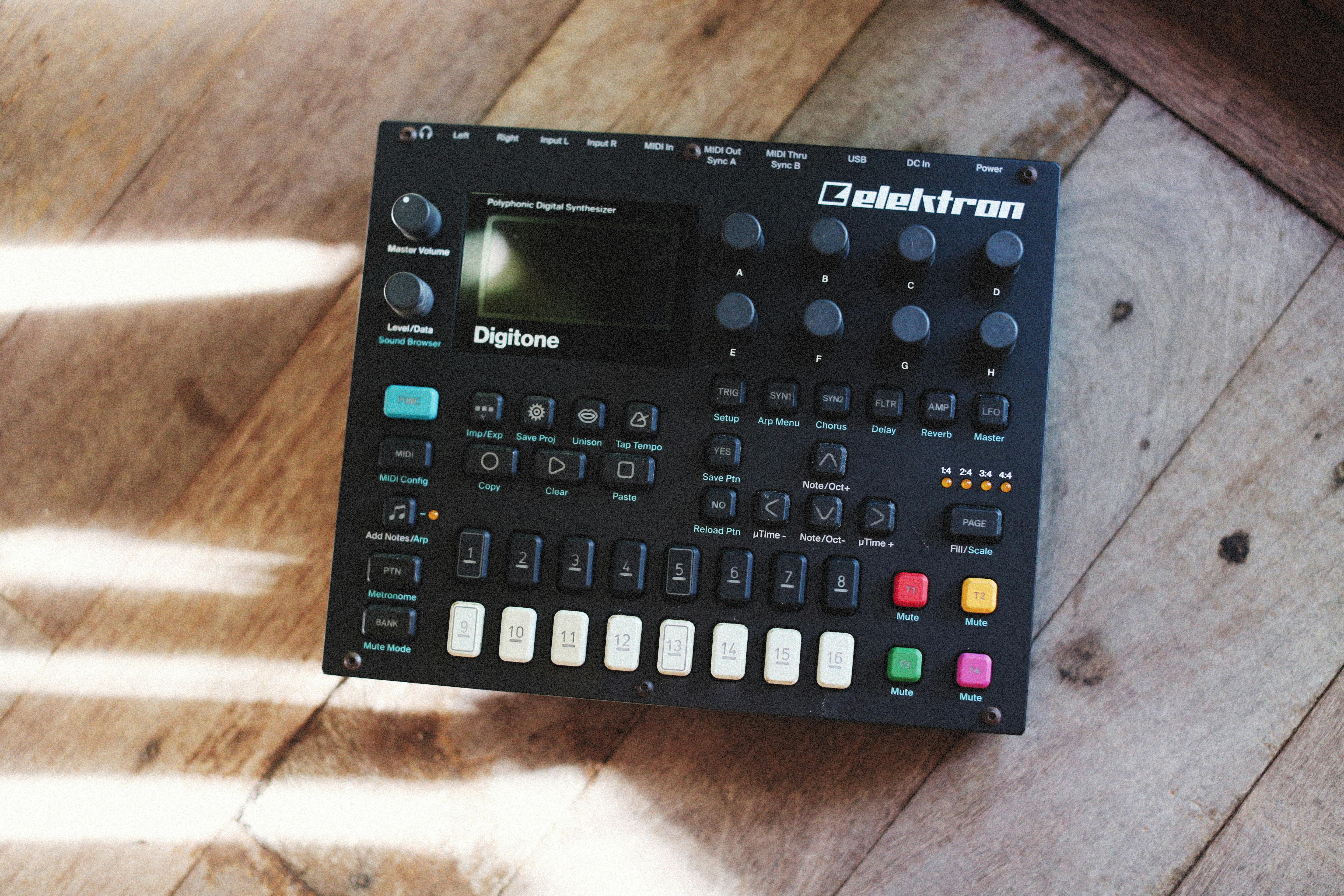
- The dedicated FM machine. The Elektron Digitone II around 960 euro is the one to buy if FM is the point. It puts multi-operator FM under proper knobs, wraps it in Elektron's legendary sequencer, and makes the once-terrifying technique genuinely playable. This is the hero of the list.
- The FM-and-analog hybrid. The Elektron Syntakt around 989 euro blends digital FM voices with analog drum engines in one box, so you can build an entire track, FM leads and punchy kicks together, without leaving the sequencer. The most fun per square centimetre on the list.
Whatever you land on, you get a 36-month warranty across the range, a 30-day return window, and delivery to every EU country. Better still, we run a 30-day Test-Drive on eligible gear, so you can program a few operators in your own room, at your own pace, before you commit a euro. A synth that dazzles in the showroom and baffles you at home has only taught you that the showroom has better lighting and a patient staff member nearby.
Straight answers
What is FM synthesis in simple terms?
One wave rapidly changes the pitch of another wave, and that interaction creates new harmonics you can hear as a fresh tone. FM stands for frequency modulation. The wave doing the modulating is the modulator, the wave being modulated is the carrier, and together they make sounds neither could make alone, especially bells, electric pianos and metallic tones.
Is FM synthesis hard to learn?
Not anymore. Its difficult reputation came from the Yamaha DX7, which hid everything behind tiny menus. On a modern synth with a knob for each operator and the algorithm shown on screen, you can learn FM by ear in an afternoon. The concept is simple, one wave modulates another. Only the old interfaces were hard.
What is the difference between AM and FM synthesis?
FM modulates frequency, the pitch of the carrier wave, which generates rich, complex new harmonics. AM modulates amplitude, the volume of the carrier, which produces a narrower set of extra tones. FM builds full, evolving timbres and became a complete synthesis method, while AM is used more as an effect or a flavour than a whole approach.
How do you make FM synthesis sounds?
Start with two operators, a carrier you hear and a modulator that shapes it. Raise the modulator's level to add harmonics, and change its frequency ratio to the carrier to move from smooth to metallic. Then use an envelope on the modulator so the brightness changes over time, which is how you get that classic FM pluck and decay.
Who invented FM synthesis?
John Chowning discovered FM synthesis at Stanford University in the late 1960s while experimenting with extreme vibrato. Stanford licensed the technique to Yamaha, who built it into the DX7 in 1983. The DX7 became one of the best-selling synthesizers ever and made FM the defining digital sound of the decade.


So FM synthesis is just one wave bending another until something new rings out, operators for the waves, an algorithm for the wiring, and an envelope to give it life. Learn those three and you can make bells, basses and electric pianos a filter could never dream of. Come down to the showroom, put your hands on a Digitone, and bend a sine wave until it clangs. We will supply the synth and the coffee. You supply the eighties power ballad you have been holding in.
About the author
Michał Kaniuszkiewicz is a content manager and SEO specialist at Wired Tunes. He creates and optimizes content that helps readers find useful information about music, gear, and sound. Beyond his editorial work, he has been making music for 8 years in hip-hop, pop, and electronic genres — giving him insight into the subject not just from an SEO perspective, but from the inside, as a practicing musician and producer. This experience allows him to create content that's equally useful and clear for both beginners and experienced listeners and music creators.